Condition

Colorectal cancer

Colorectal cancer news when it appears alongside Crohn's disease, ulcerative colitis, IBD risk, screening, or surveillance.

41 articles

Polysaccharide-based colon targeting drug delivery systems: Overview on challenges, opportunities and prospects
International Journal of Polymeric Materials

Polysaccharide-based colon targeting drug delivery systems: Overview on challenges, opportunities and prospects

Colon-targeted delivery systems aim to concentrate drugs in the colon, which could improve effectiveness and reduce systemic side effects for IBD and colorectal cancer treatments. Understanding these approaches helps...

Read Summary
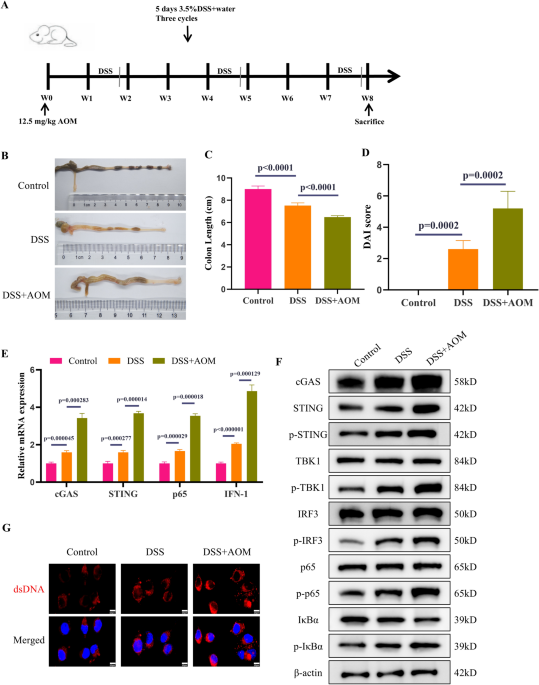
cGAS-STING Modulates the NF-κB Pathway to Influence the Occurrence of Ulcerative Colitis-Associated Colorectal Cancer
Digestive Diseases and Sciences

cGAS-STING Modulates the NF-κB Pathway to Influence the Occurrence of Ulcerative Colitis-Associated Colorectal Cancer

The study links activation of the cGAS–STING immune-sensing pathway to NF-κB–driven inflammation and tumor formation in UC models, which could help explain mechanisms behind colitis-associated colorectal cancer risk.

Read Summary
A Centimeter-Scale, Peristaltic Human Intestinal Organoid with Integrated Neuro-Immune-Vascular Systems Recapitulates Enteritis and Orthotopic Colorectal Cancer
Europe PMC

A Centimeter-Scale, Peristaltic Human Intestinal Organoid with Integrated Neuro-Immune-Vascular Systems Recapitulates Enteritis and Orthotopic Colorectal Cancer

This model could improve how researchers study IBD inflammation and early colorectal cancer in a human-derived, multicellular system that reproduces neuromuscular function and immune responses. That may speed preclinical...

Read Summary
Adaptive graph learning of microbial phylogeny enables accurate and interpretable microbiome-based host phenotype prediction.
Applied and environmental microbiology

Adaptive graph learning of microbial phylogeny enables accurate and interpretable microbiome-based host phenotype prediction.

The study introduces a phylogeny-aware AI method that may improve detection and interpretation of microbiome signatures linked to IBD and colorectal cancer, which could help research into microbial biomarkers relevant to...

Read Summary
Inflammation-driven carcinogenesis in ulcerative colitis: Molecular and immunological pathways
World Journal of Gastrointestinal Oncology

Inflammation-driven carcinogenesis in ulcerative colitis: Molecular and immunological pathways

People with ulcerative colitis face a higher colorectal cancer risk driven in part by chronic inflammation; this review explains the molecular and immune mechanisms behind that risk and highlights biomarkers and...

Read Summary
Enzyme/Reactive Oxygen Species-Dually Activated Hyaluronic Acid Nanocarriers Enable Celastrol Delivery for Site-Specific Therapy of Inflammatory Bowel Diseases and Colorectal Cancer.
International journal of nanomedicine

Enzyme/Reactive Oxygen Species-Dually Activated Hyaluronic Acid Nanocarriers Enable Celastrol Delivery for Site-Specific Therapy of Inflammatory Bowel Diseases and Colorectal Cancer.

The study reports a targeted nanoparticle designed to deliver celastrol selectively to inflamed intestinal tissue and colorectal tumors, which could—if translated successfully—address limitations of oral celastrol and...

Read Summary
Fucose metabolism as a central axis linking inflammation, immunity, and cancer in the gut.
Frontiers in immunology

Fucose metabolism as a central axis linking inflammation, immunity, and cancer in the gut.

Researchers and clinicians are exploring how fucose metabolism affects gut barrier function, immunity, and microbiota — processes central to IBD and colorectal cancer. If validated, fucosylation biomarkers or treatments...

Read Summary
C2 Integrative Analysis of Intestinal Transcriptomes UnderscoresUpregulation in IBD, AIG, EoE, and CRC.
Bioinformatics and biology insights

C2 Integrative Analysis of Intestinal Transcriptomes UnderscoresUpregulation in IBD, AIG, EoE, and CRC.

Researchers and clinicians looking for blood- or tissue-based molecular tests for IBD may find these integrated transcriptomic analyses useful because they identify candidate diagnostic biomarkers and highlight shared...

Read Summary
Integrated DIA proteomics of tissue and exudate reveals screening markers for early detection of ulcerative colitis and colorectal cancer.
Clinica chimica acta; international journal of clinical chemistry

Integrated DIA proteomics of tissue and exudate reveals screening markers for early detection of ulcerative colitis and colorectal cancer.

Early, noninvasive biomarkers could help detect ulcerative colitis and related colorectal cancer risk sooner. This study identifies four serum-accessible proteins with promising diagnostic accuracy in the reported...

Read Summary
Nonconventional Colorectal Dysplasia Is Less Prevalent and Has a More Limited Morphologic Spectrum in Patients Without Inflammatory Bowel Disease.
Human pathology

Nonconventional Colorectal Dysplasia Is Less Prevalent and Has a More Limited Morphologic Spectrum in Patients Without Inflammatory Bowel Disease.

This study helps distinguish patterns of colorectal dysplasia seen in people without IBD from those seen in IBD, which may affect how pathologists and clinicians interpret biopsy findings and consider cancer risk and...

Read Summary
The Fecal Immunoassay Occult Blood Test Combined With Calprotectin Sequential Linkage Imaging Endoscopy Screening Strategy for Monitoring Tumor Changes Associated With Long-duration Ulcerative Colitis
ClinicalTrials.gov

The Fecal Immunoassay Occult Blood Test Combined With Calprotectin Sequential Linkage Imaging Endoscopy Screening Strategy for Monitoring Tumor Changes Associated With Long-duration Ulcerative Colitis

This study could validate a noninvasive stool-test strategy (FIT + fecal calprotectin) to triage which long-standing UC patients need colonoscopy, potentially improving surveillance efficiency and adherence.

Read Summary
Pharmacological modulation of the PD-1/PD-L1 axis: from immune tolerance in colitis to immune escape in colorectal cancer.
European review for medical and pharmacological sciences

Pharmacological modulation of the PD-1/PD-L1 axis: from immune tolerance in colitis to immune escape in colorectal cancer.

The PD‑1/PD‑L1 pathway helps suppress harmful inflammation in IBD but can later allow colorectal tumors to avoid immune attack; understanding this balance matters for patients concerned about long‑term cancer risk and...

Read Summary
Oral hydrogel systems in lower gastrointestinal disorders: From disease-based therapy to microbiota-guided design.
Materials today. Bio

Oral hydrogel systems in lower gastrointestinal disorders: From disease-based therapy to microbiota-guided design.

IBD and other lower-GI disorders may benefit from oral hydrogel platforms that improve local drug delivery while deliberately engaging the gut microbiota. Understanding this research direction helps patients and...

Read Summary
Polygenic Risk Scores Show Distinct Genetic Architectures of IBD-Associated Comorbidities.
Digestive diseases and sciences

Polygenic Risk Scores Show Distinct Genetic Architectures of IBD-Associated Comorbidities.

Shows which IBD comorbidities may be driven in part by shared inherited genetic risk and which likely reflect non-genetic factors, information that could shape future risk stratification and screening approaches for...

Read Summary
Cell cycle dysregulation: a central hub in colitis-associated colorectal carcinogenesis.
Frontiers in immunology

Cell cycle dysregulation: a central hub in colitis-associated colorectal carcinogenesis.

The review connects molecular cell-cycle changes to the progression from chronic IBD to colorectal cancer, pointing to pathways and cell-cycle regulators that could become prevention or treatment targets for...

Read Summary
Siglec-E functions as a brake for intestinal inflammation to protect from colitis-associated cancer 2260102
The Journal of Immunology

Siglec-E functions as a brake for intestinal inflammation to protect from colitis-associated cancer 2260102

The paper identifies Siglec‑E as an immune brake that limits colitis severity and colitis‑associated tumor development in mice, connecting an immune‑regulatory pathway to inflammation‑driven colorectal cancer risk—an...

Read Summary
AhR—MMP—NK Cell Crosstalk Regulates Colonic Inflammation and Colitis-Associated Colorectal Cancer Progression 2256044
The Journal of Immunology

AhR—MMP—NK Cell Crosstalk Regulates Colonic Inflammation and Colitis-Associated Colorectal Cancer Progression 2256044

The paper identifies a biologic pathway that links epithelial AhR signaling to NK cell–mediated tumor surveillance in the colon. For people with IBD, mechanisms that increase immune escape could relate to...

Read Summary
RNA-binding protein RBM47 in health and disease: molecular mechanisms, preclinical evidence, and translational challenges.
Frontiers in immunology

RNA-binding protein RBM47 in health and disease: molecular mechanisms, preclinical evidence, and translational challenges.

Researchers are investigating RBM47 because it influences RNA processing and immune pathways that could modify inflammation and disease processes relevant to IBD. If borne out, RBM47 could become a biomarker or...

Read Summary
Characterization of Colorectal Dysplasic Lesions and Stratification of Their Evolving Risk in Inflammatory Bowel Disease Patients: a Prospective, Observational and Multicenter Study
ClinicalTrials.gov

Characterization of Colorectal Dysplasic Lesions and Stratification of Their Evolving Risk in Inflammatory Bowel Disease Patients: a Prospective, Observational and Multicenter Study

The study will prospectively evaluate how often dysplasia occurs, how lesions look and behave after endoscopic resection, and what factors predict local or distant recurrence—information that could change surveillance...

Read Summary
Fluorescent Probes for Intestinal Diseases: Design Strategies, Imaging Mechanisms and Biomedical Applications
Advanced Functional Materials

Fluorescent Probes for Intestinal Diseases: Design Strategies, Imaging Mechanisms and Biomedical Applications

New or improved fluorescent probes could enable more sensitive, noninvasive imaging of biochemical changes in the gut, which may aid research, earlier diagnosis, or monitoring of IBD and colorectal cancer.

Read Summary
Gegen Qinlian Decoction, a classic traditional Chinese medicine formula: a potential therapeutic strategy for ulcerative colitis and colorectal cancer
Frontiers in Pharmacology

Gegen Qinlian Decoction, a classic traditional Chinese medicine formula: a potential therapeutic strategy for ulcerative colitis and colorectal cancer

This review collects preclinical evidence that a traditional Chinese medicine formula (Gegen Qinlian Decoction) may act on inflammation, the gut barrier, immunity, and microbiota — all relevant to ulcerative colitis and...

Read Summary
Nanoparticle technologies in the diagnosis and therapy of gastrointestinal diseases: Progress, challenges, and future directions.
Clinica chimica acta; international journal of clinical chemistry

Nanoparticle technologies in the diagnosis and therapy of gastrointestinal diseases: Progress, challenges, and future directions.

Nanoparticle technologies could eventually enable more targeted drug delivery and improved imaging for IBD and related GI diseases, which may lead to better diagnosis and less systemic side effects. However, translation...

Read Summary
Potential role of PPARGC1A in linking ulcerative colitis to colorectal cancer: a novel prognostic biomarker and therapeutic target.
Translational cancer research

Potential role of PPARGC1A in linking ulcerative colitis to colorectal cancer: a novel prognostic biomarker and therapeutic target.

People with long-standing ulcerative colitis face an increased risk of colorectal cancer; this study highlights PPARGC1A as a gene that may be downregulated early in that progression, which could eventually help identify...

Read Summary