The study links activation of the cGAS–STING immune-sensing pathway to NF-κB–driven inflammation and tumor formation in UC models, which could help explain mechanisms behind colitis-associated colorectal cancer risk.
Who Should Pay Attention
Researchers (immune pathways, cancer biology), clinicians treating UC, and patients interested in CAC research
Study Snapshot
Story typeResearch paper
Evidence typeResearch paper
Source depthMetadata only
What To Know
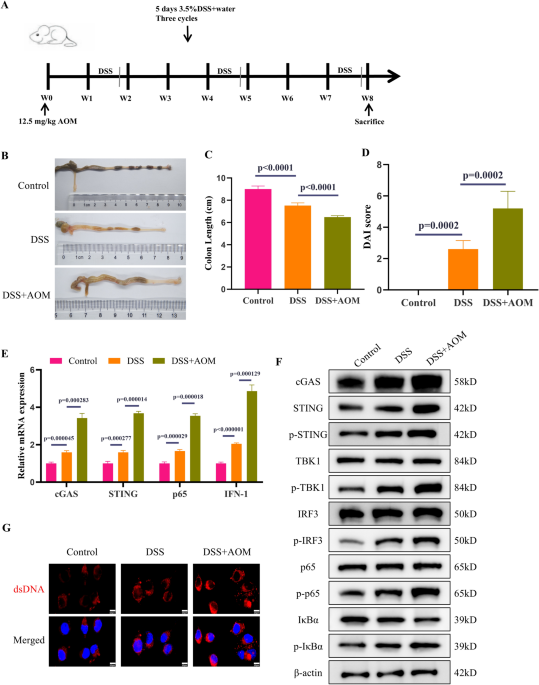
The authors measured cGAS–STING and NF-κB pathway activation in tissue, organoid, and mouse models of DSS-induced colitis and AOM/DSS colitis-associated cancer. They report increased pathway activation and cytoplasmic dsDNA during progression from inflammation to tumorigenesis.
A STING agonist (SR-717) worsened inflammation, promoted p65 (NF-κB) nuclear translocation, and increased tumor formation in mice, while a STING inhibitor (H-151), cGAS knockdown, or an NF-κB inhibitor (Bay11-7082) reduced these effects.
This article provides mechanistic, preclinical evidence linking cGAS–STING activation to inflammation-driven colorectal tumorigenesis, but it does not report clinical data or establish therapeutic recommendations.
Keep In Mind
This is preclinical work using organoids and mouse models; it does not provide clinical trial data or immediate implications for treatment. Modulating cGAS–STING has complex, context-dependent effects in cancer and immunity.
Source Details
Review the original publication for the complete reporting, methods, and context.
This Cure8 brief is based on source text from the linked article. Cure8 is informational only and is not a substitute for professional medical advice, diagnosis, or treatment.
The study will prospectively evaluate how often dysplasia occurs, how lesions look and behave after endoscopic resection, and what factors predict local or distant recurrence—information that could change surveillance...
Colon-targeted delivery systems aim to concentrate drugs in the colon, which could improve effectiveness and reduce systemic side effects for IBD and colorectal cancer treatments. Understanding these approaches helps...
People with longstanding ulcerative colitis face higher colorectal cancer risk; this project focuses on a specific immune/stromal cell population (ST2+ cells responding to IL-33) that may help explain how chronic...