LRMDA may be a previously unrecognized protein important for mucus production and intestinal barrier integrity — processes directly relevant to IBD flares, infection risk, and colorectal cancer development. Understanding it could point to new research directions for protecting the mucosal barrier.
Who Should Pay Attention
Researchers in mucosal immunology, IBD clinicians and investigators, and patients interested in basic research on intestinal barrier function.
Study Snapshot
Story typeResearch paper
Evidence typeResearch paper
Source depthJournal abstract
What To Know
Researchers report that the protein LRMDA is reduced in inflamed intestinal tissue from people with IBD and in colorectal tumors, and that mice lacking LRMDA develop worse DSS colitis, have more colorectal tumors in AOM/DSS models, and show thinner mucus and impaired goblet-cell mucin handling.
The study links LRMDA to mucin-related gene expression, mucus-layer thickness, and barrier integrity, and suggests LRMDA loss increases susceptibility to enteric infection. These findings are based on animal models and tissue analyses reported in an iScience abstract.
This work highlights LRMDA as a potential contributor to intestinal barrier function and a candidate for further mechanistic and translational research, not as an established clinical biomarker or therapeutic target.
Keep In Mind
Summary based on the article abstract in iScience via PubMed. Results derive from human tissue observations and mouse genetic and disease models; clinical relevance requires further study.
Source Details
Review the original publication for the complete reporting, methods, and context.
Research paperEvidence type derived from source or registry metadata.
PublicationiScience
AuthorsLiping Yang, Yuyao Guo, Bikun Xiao +4 more
InstitutionCancer Center, Renmin Hospital of Wuhan University, Department of Gastrointestinal Surgery, Zhongnan Hospital of Wuhan University, Medical Research Institute, Frontier Science Center of Immunology and Metabolism, State Key Laboratory of Metabolism and Regulation in Complex Organisms, State Key Laboratory of Virology and Biosafety, Hubei Provincial Research Center for Basic Biological Sciences, College of Life Sciences, Wuhan University, Wuhan 430071, China.
Conflict statement: The authors declare no competing interests.
This Cure8 brief is based on source text from the linked article. Cure8 is informational only and is not a substitute for professional medical advice, diagnosis, or treatment.
The paper identifies Siglec‑E as an immune brake that limits colitis severity and colitis‑associated tumor development in mice, connecting an immune‑regulatory pathway to inflammation‑driven colorectal cancer risk—an...
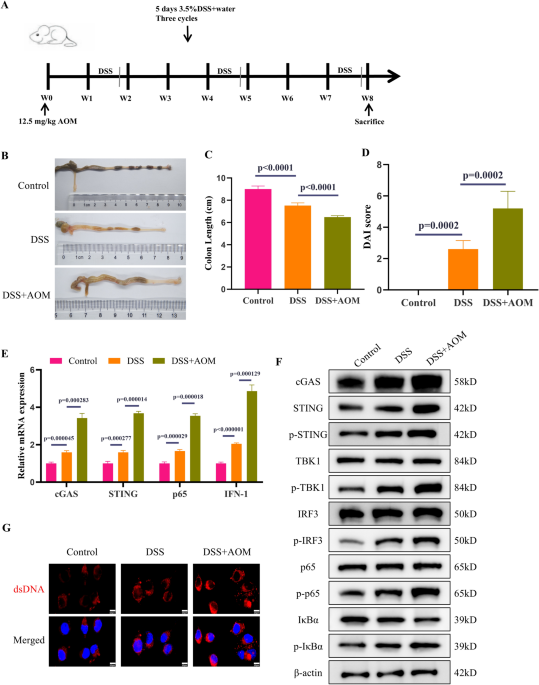
The study links activation of the cGAS–STING immune-sensing pathway to NF-κB–driven inflammation and tumor formation in UC models, which could help explain mechanisms behind colitis-associated colorectal cancer risk.
The paper identifies a biologic pathway that links epithelial AhR signaling to NK cell–mediated tumor surveillance in the colon. For people with IBD, mechanisms that increase immune escape could relate to...