Evidence types

Observational Study

Observational study articles covering real-world data, cohort studies, registries, and non-interventional IBD research.

Page 1 of 2 · 83 articles

Assessment of serum levels of vitamin D and tumor necrosis factor alpha in ulcerative colitis patients at Egyptian Military Hospitals: Cross-sectional observational study.
The Egyptian journal of immunology

Assessment of serum levels of vitamin D and tumor necrosis factor alpha in ulcerative colitis patients at Egyptian Military Hospitals: Cross-sectional observational study.

The study links lower vitamin D and higher TNF‑alpha with greater UC severity and with each other, suggesting these measurable biomarkers may reflect inflammation in ulcerative colitis.

Read Summary
Incidence and prevalence of hidradenitis suppurativa across spondyloarthritis-related diseases: cohort study using electronic health records
Frontiers in Immunology

Incidence and prevalence of hidradenitis suppurativa across spondyloarthritis-related diseases: cohort study using electronic health records

The study found higher recorded rates of hidradenitis suppurativa in people with Crohn’s disease and psoriatic arthritis, and a smaller increase in ulcerative colitis, suggesting clinicians should consider asking about...

Read Summary
Time trends in patients with ulcerative colitis and crohn's disease not receiving IBD-specific pharmacological treatment within one and three years of diagnosis - a nationwide cohort study.
Scandinavian journal of gastroenterology

Time trends in patients with ulcerative colitis and crohn's disease not receiving IBD-specific pharmacological treatment within one and three years of diagnosis - a nationwide cohort study.

A sizable minority of people newly diagnosed with IBD—about 1 in 5 with Crohn’s and 1 in 10 with ulcerative colitis—received no IBD-specific drugs within the first year. Understanding who is untreated and why could...

Read Summary
Clinical Course and Predictors of Biologic Therapy, Hospitalisation and Surgery: A Five-Year Prospective Study in Newly Diagnosed Inflammatory Bowel Disease.
Alimentary pharmacology & therapeutics

Clinical Course and Predictors of Biologic Therapy, Hospitalisation and Surgery: A Five-Year Prospective Study in Newly Diagnosed Inflammatory Bowel Disease.

This study describes how often people newly diagnosed with IBD go on biologic or JAK inhibitor therapy and what happened to them over five years — including hospital visits and surgery — which helps set expectations for...

Read Summary
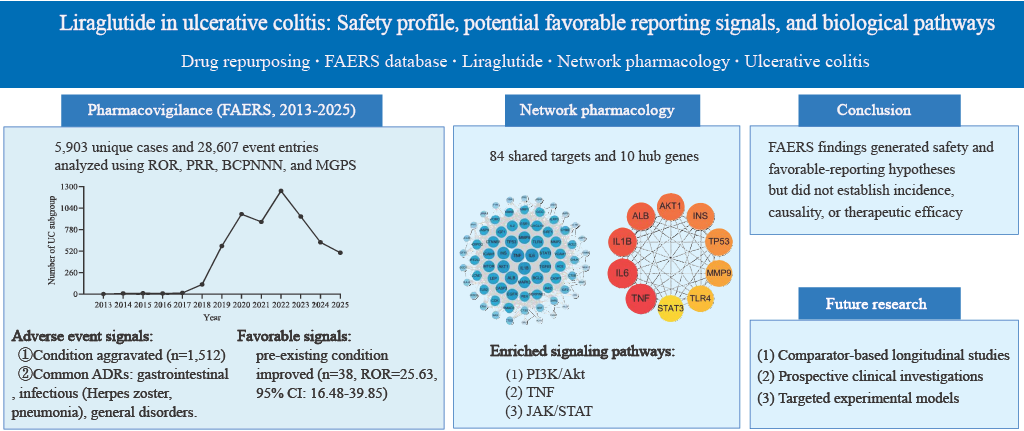
Safety profile and potential favorable reporting signals of liraglutide in patients with ulcerative colitis: A FAERS pharmacovigilance and network pharmacology study
Pakistan Journal of Pharmaceutical Sciences

Safety profile and potential favorable reporting signals of liraglutide in patients with ulcerative colitis: A FAERS pharmacovigilance and network pharmacology study

This study raises pharmacovigilance signals and mechanistic hypotheses about liraglutide in people with ulcerative colitis — important because GLP-1 drugs are widely used and are being studied for inflammatory effects....

Read Summary
Changing Prescription Patterns in Pharmacologically Treated Patients with Newly Diagnosed Inflammatory Bowel Disease in German Gastroenterology Practices: A Real-World Study, 2015–2024
Pharmaceuticals

Changing Prescription Patterns in Pharmacologically Treated Patients with Newly Diagnosed Inflammatory Bowel Disease in German Gastroenterology Practices: A Real-World Study, 2015–2024

The study documents shifting real-world prescribing for newly diagnosed IBD in Germany, with more biologic use and less mesalazine/thiopurine in recent years — changes that could affect treatment expectations and access.

Read Summary
Hospitalized Infection Risk and Organ-specific Infection Patterns Across Advanced Therapies in Ulcerative Colitis: A Japanese Claims Analysis.
Internal medicine (Tokyo, Japan)

Hospitalized Infection Risk and Organ-specific Infection Patterns Across Advanced Therapies in Ulcerative Colitis: A Japanese Claims Analysis.

Patients and clinicians choosing among advanced therapies for ulcerative colitis may consider infection-related hospitalization risk as one factor; this study suggests lower risk with ustekinumab versus TNF antagonists...

Read Summary
The sustainability and environmental impact of virtual care for inflammatory bowel disease: a population-based retrospective cohort study
Journal of the Canadian Association of Gastroenterology

The sustainability and environmental impact of virtual care for inflammatory bowel disease: a population-based retrospective cohort study

Based on the title and source metadata, this appears to be an observational study related to Inflammatory bowel disease and Research and clinical trials. The original article is from Journal of the Canadian Association...

Read Summary
Timing of complementary food introduction is not associated with inflammatory bowel disease risk: A prospective birth cohort study
PubMed Central

Timing of complementary food introduction is not associated with inflammatory bowel disease risk: A prospective birth cohort study

Parents and clinicians often worry that when solids are started might change a child’s future risk of IBD. This large prospective study found no clear link between timing or patterns of complementary feeding and later...

Read Summary
Upadacitinib Is Associated with the Lowest Risk of Treatment Failure Among Advanced Therapies for Ulcerative Colitis: A Real-World Administrative Claims Study.
Clinical gastroenterology and hepatology : the official clinical practice journal of the American Gastroenterological Association

Upadacitinib Is Associated with the Lowest Risk of Treatment Failure Among Advanced Therapies for Ulcerative Colitis: A Real-World Administrative Claims Study.

This large real-world study found upadacitinib was associated with lower risk of treatment failure and more corticosteroid-free stability compared with several other advanced therapies for ulcerative colitis —...

Read Summary
Genetically predicted circulating polyunsaturated fatty acids and Crohn's disease susceptibility: A two-sample mendelian randomization study.
Medicine

Genetically predicted circulating polyunsaturated fatty acids and Crohn's disease susceptibility: A two-sample mendelian randomization study.

If confirmed, genetic evidence that higher omega-3 levels or a lower omega-6/omega-3 ratio relate to lower Crohn’s disease risk could point to biological pathways worth studying and might guide research into prevention...

Read Summary
Bidirectional causal associations between Sjögren syndrome and gastrointestinal disorders: A two-sample Mendelian randomization study.
Medicine

Bidirectional causal associations between Sjögren syndrome and gastrointestinal disorders: A two-sample Mendelian randomization study.

People with Sjögren syndrome or clinicians caring for them may be interested because genetic data suggest Sjögren syndrome could modestly raise gastric ulcer risk and — unexpectedly — associate with lower IBS risk, while...

Read Summary
Patterns and factors associated with dose escalation during maintenance treatment for inflammatory bowel disease: a population-based cohort study.
Sage open chronic disease

Patterns and factors associated with dose escalation during maintenance treatment for inflammatory bowel disease: a population-based cohort study.

Dose increases are common during IBD maintenance and vary a lot by drug and patient profile. Knowing which treatments and patient factors are linked to escalation can help patients and clinicians plan monitoring and...

Read Summary
Rising burden of inflammatory Bowel disease in Northeastern Italy: a population-based analysis of prevalence and incidence trends from 2012 to 2024.
Digestive and liver disease : official journal of the Italian Society of Gastroenterology and the Italian Association for the Study of the Liver

Rising burden of inflammatory Bowel disease in Northeastern Italy: a population-based analysis of prevalence and incidence trends from 2012 to 2024.

The study documents substantial increases in Crohn’s disease and ulcerative colitis prevalence and changing incidence patterns in Northeastern Italy from 2012–2024, which may affect healthcare demand and resource...

Read Summary
Serum osmolality as a potential marker of inflammatory bowel disease in patients with anxiety: a cross-sectional analysis based on the MIMIC-IV database
BMC Psychiatry

Serum osmolality as a potential marker of inflammatory bowel disease in patients with anxiety: a cross-sectional analysis based on the MIMIC-IV database

If validated, serum osmolality — a routine, low-cost blood measure — could become an additional marker to help identify IBD in certain hospitalized patients with anxiety. This could aid research and possibly improve...

Read Summary
Leveraging electronic health records for subtype-dependent directionality in depression and gastrointestinal disease: a retrospective cohort study.
Journal of psychosomatic research

Leveraging electronic health records for subtype-dependent directionality in depression and gastrointestinal disease: a retrospective cohort study.

Depression and GI diseases often co-occur; knowing which tends to appear first — and that this varies by subtype — can help clinicians prioritize screening and integrated care.

Read Summary
Carga e desigualdades subnacionais da Doença de Crohn e da colite ulcerativa no Brasil, 1990-2023
CONTRIBUCIONES A LAS CIENCIAS SOCIALES

Carga e desigualdades subnacionais da Doença de Crohn e da colite ulcerativa no Brasil, 1990-2023

Knowing how IBD burden has changed over time and varies across states helps patients, clinicians, and health systems anticipate needs for diagnosis, specialized care, and resource planning. Rising Crohn’s burden in some...

Read Summary
Increasing Global Burden of Inflammatory Bowel Disease and Its Attributable Anemia in Adults Aged 60 Years and Older: A Comprehensive Analysis of the Global Burden of Disease Study 2021.
Journal of digestive diseases

Increasing Global Burden of Inflammatory Bowel Disease and Its Attributable Anemia in Adults Aged 60 Years and Older: A Comprehensive Analysis of the Global Burden of Disease Study 2021.

Older adults (≥60) with IBD are an increasing population worldwide, and IBD-related anemia is rising—this affects screening needs, healthcare planning, and resource allocation. The findings point to widening...

Read Summary
Influence of socioeconomic development on incidence and disease phenotype in inflammatory bowel disease: a population-based incident study across 16 regions.
Clinical gastroenterology and hepatology : the official clinical practice journal of the American Gastroenterological Association

Influence of socioeconomic development on incidence and disease phenotype in inflammatory bowel disease: a population-based incident study across 16 regions.

Differences in urbanisation and socioeconomic development may help explain rising IBD rates in newly industrialised regions and point to where earlier diagnosis and healthcare planning might be needed. The association...

Read Summary
Age, Rather Than Social Vulnerability, Is Associated With Disparities in Prescription Patterns in Inflammatory Bowel Disease: An Epic Cosmos Study.
Gastro hep advances

Age, Rather Than Social Vulnerability, Is Associated With Disparities in Prescription Patterns in Inflammatory Bowel Disease: An Epic Cosmos Study.

The findings highlight that older adults are less likely to be prescribed advanced IBD therapies, which could reflect prescribing patterns, comorbidities, insurance factors, or access issues relevant to treatment...

Read Summary
Intrinsic capacity, genetic susceptibility and incident inflammatory bowel disease: a prospective cohort study in UK Biobank
Scientific Reports

Intrinsic capacity, genetic susceptibility and incident inflammatory bowel disease: a prospective cohort study in UK Biobank

The study suggests that a simple, multidomain functional measure (intrinsic capacity) is linked to later IBD risk and that combining it with genetic risk may better identify people at higher risk—especially for Crohn’s...

Read Summary
Building on Routinely Collected Health Data for Precision Population Care in Inflammatory Bowel Disease.
Healthcare quarterly (Toronto, Ont.)

Building on Routinely Collected Health Data for Precision Population Care in Inflammatory Bowel Disease.

Identifying common multimorbidity patterns and using machine learning to predict premature mortality could help health systems and clinicians prioritize integrated care for people with IBD, potentially improving outcomes...

Read Summary
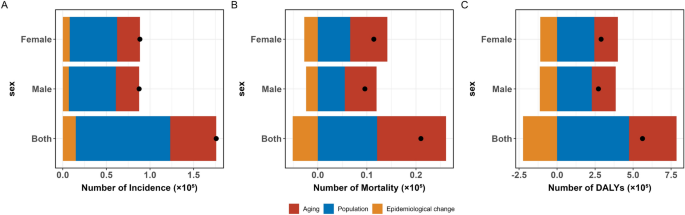
Temporal Trends and Socio-Demographic Disparities in Inflammatory Bowel Disease: Insights from the Global Burden of Disease Study 2021
Digestive Diseases and Sciences

Temporal Trends and Socio-Demographic Disparities in Inflammatory Bowel Disease: Insights from the Global Burden of Disease Study 2021

This large, population-level analysis summarizes long-term global trends in IBD burden and shows rising incidence and persistent geographic and socio-demographic inequalities. Patients and clinicians may see why...

Read Summary
Serious infections in patients with inflammatory bowel disease and corticosteroids: A propensity score-matched study.
Clinical gastroenterology and hepatology : the official clinical practice journal of the American Gastroenterological Association

Serious infections in patients with inflammatory bowel disease and corticosteroids: A propensity score-matched study.

Corticosteroid use during IBD treatment periods was associated with higher rates of serious infections across drug classes and age groups, which may affect decisions about steroid use and infection-prevention planning.

Read Summary
Frequency and prognostic outcomes of emergency diagnosis in 13 non-neoplastic conditions in England: A population-based cohort study using linked electronic health records of 1.7 million patients.
PLoS medicine

Frequency and prognostic outcomes of emergency diagnosis in 13 non-neoplastic conditions in England: A population-based cohort study using linked electronic health records of 1.7 million patients.

Patients diagnosed with IBD during or shortly after emergency hospital care had substantially worse 1-year outcomes in this large, population-based analysis — highlighting that late or emergency presentation is linked to...

Read Summary
Twenty-Five-Year Trends in Mortality Associated with Clostridioides difficile Infection Among Patients with Inflammatory Bowel Disease in the United States: A Population-Based Analysis of Demographic and Geographic Disparities
Medical Sciences

Twenty-Five-Year Trends in Mortality Associated with Clostridioides difficile Infection Among Patients with Inflammatory Bowel Disease in the United States: A Population-Based Analysis of Demographic and Geographic Disparities

CDI is a serious infection that raises the risk of death for people with IBD. This study shows mortality linked to IBD+CDI changed over the last 25 years and that racial, geographic, and urban–rural disparities...

Read Summary
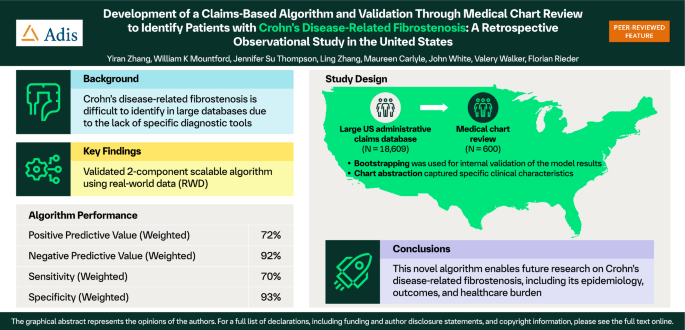
Development of a Claims-Based Algorithm and Validation Through Medical Chart Review to Identify Patients with Crohn’s Disease-Related Fibrostenosis: A Retrospective Observational Study in the United States
Advances in Therapy

Development of a Claims-Based Algorithm and Validation Through Medical Chart Review to Identify Patients with Crohn’s Disease-Related Fibrostenosis: A Retrospective Observational Study in the United States

A validated claims-based algorithm could enable larger, more efficient studies of fibrostenosis in Crohn’s disease using real-world data — helping researchers and clinicians better measure how often stricturing...

Read Summary
Comparative Effectiveness and Safety of Risankizumab vs Ustekinumab in Crohn's Disease: A Real-World Retrospective Cohort Study from Taiwan.
Journal of inflammation research

Comparative Effectiveness and Safety of Risankizumab vs Ustekinumab in Crohn's Disease: A Real-World Retrospective Cohort Study from Taiwan.

Comparative real-world data may help patients and clinicians weigh expected benefits and risks of risankizumab versus ustekinumab in Crohn’s disease, including effects on steroid-free remission and fistula healing.

Read Summary
Country-year agreement between GBD 2023 ulcerative colitis and Crohn’s disease rates and GIVES population-based observations: an ecological agreement study
Springer Science and Business Media LLC

Country-year agreement between GBD 2023 ulcerative colitis and Crohn’s disease rates and GIVES population-based observations: an ecological agreement study

Compares widely used modelled GBD rates with population-based observations and finds they are not interchangeable for country-year estimates—important for research, surveillance, and policy that rely on these numbers.

Read Summary
Bridging the Pregnancy Knowledge Gap: A Real-World Analysis of Medication Use and Drug-Drug Interaction Risk in Crohn's Disease and Multiple Sclerosis.
Clinical and translational science

Bridging the Pregnancy Knowledge Gap: A Real-World Analysis of Medication Use and Drug-Drug Interaction Risk in Crohn's Disease and Multiple Sclerosis.

Pregnant people with Crohn’s disease are often prescribed disease‑modifying therapies, yet clinical trial data in pregnancy are limited. Understanding real‑world medication use and potential drug–drug interactions helps...

Read Summary
Early life exposures association with later diagnosis of spondyloarthritis: A population-based case-control study.
The Journal of rheumatology

Early life exposures association with later diagnosis of spondyloarthritis: A population-based case-control study.

If confirmed, the results suggest early-life exposures that perturb the gut microbiome may influence later risk of spondyloarthritis, which could be relevant for parents and clinicians weighing risks and benefits of...

Read Summary