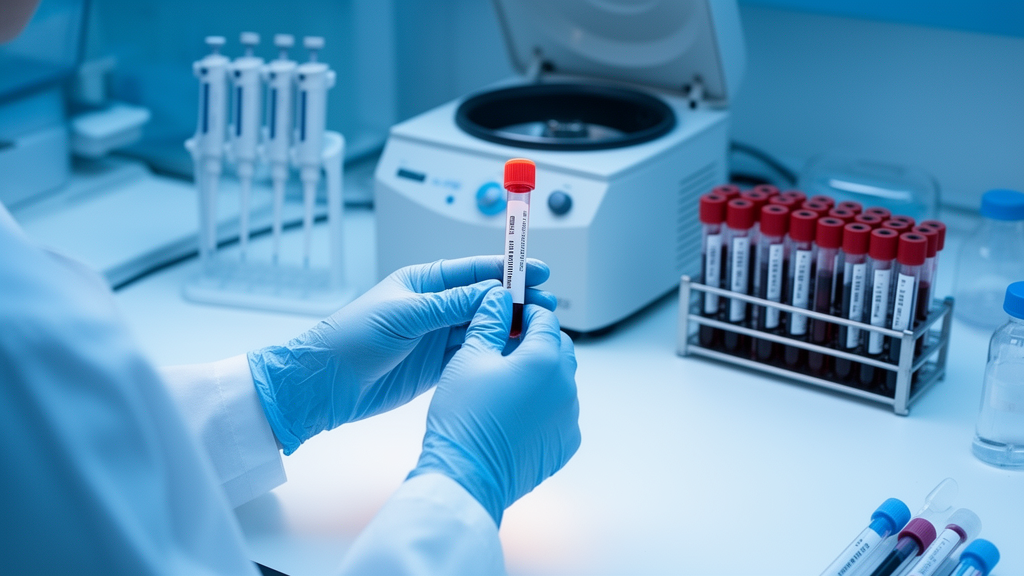
This study suggests a relationship between higher ustekinumab trough concentrations and clinical remission in adults with Crohn’s disease, which could be relevant to patients and clinicians considering drug-level monitoring or optimization.
Who Should Pay Attention
Adults with Crohn’s disease on ustekinumab, clinicians managing biologic therapy, patients on biologics concerned about drug levels, and researchers studying therapeutic drug monitoring or biologic response.
Study Snapshot
Story typeResearch news
Evidence typeObservational study
Source depthFull source text
What To Know
This was an observational, single-center convenience sample from Baghdad with 76 participants on maintenance ustekinumab (90 mg every eight weeks) who had at least 24 weeks of treatment. Each patient provided one pre-dose trough sample and a concurrent Crohn’s Disease Activity Index score.
The authors grouped patients by a 1 μg/mL trough threshold and found higher remission rates and lower inflammatory markers in the higher-exposure group, and very low anti-ustekinumab antibody detection. The study reports associations, not proof that raising drug levels will cause remission.
Limitations include modest size, single-center convenience sampling, possible selection bias, storage delays before lab analysis, and concurrent (cross-sectional) measurement that cannot establish directionality. The authors call for larger multicenter studies to confirm findings and clarify therapeutic drug-monitoring strategies.
Keep In Mind
Results are from a single-center convenience sample in Baghdad with cross-sectional sampling; the study shows association not causation and its generalizability is limited. The investigators used a 1 μg/mL threshold drawn from prior literature; larger multicenter studies are needed before changing practice.
Source Details
Review the original publication for the complete reporting, methods, and context.
Observational studyArticle type assigned from Cure8 classification; confirm details in the original source.
Publicationbioengineer.org
Indexed viaGoogle News
Source typeWeb article
PublishedOct 20, 2026, 9:29 PM
Content availableFull source text
This Cure8 brief is based on source text from the linked article. Cure8 is informational only and is not a substitute for professional medical advice, diagnosis, or treatment.
Measuring mucosal healing across the whole gut with stool markers, ultrasound, and capsule endoscopy may give a clearer picture of whether biologic treatment is working and help guide decisions about continuing or...
Patients on biologic therapy often have drug levels and antidrug antibodies measured to guide care. This study suggests prior biologic history, disease type (UC vs CD) and which biologic is currently used may affect...
If validated, a blood biomarker (LRG) could help predict which people with Crohn’s disease are more likely to achieve remission and which biologic might be sustained over a year, informing treatment planning and...