Cure8 research brief
Why This Matters
Corticosteroid use during IBD treatment periods was associated with higher rates of serious infections across drug classes and age groups, which may affect decisions about steroid use and infection-prevention planning.
Who Should Pay Attention
Patients with IBD (adults and children) who are taking or may need corticosteroids, clinicians managing IBD therapies, and researchers studying treatment safety and infection risk.
Study Snapshot
What To Know
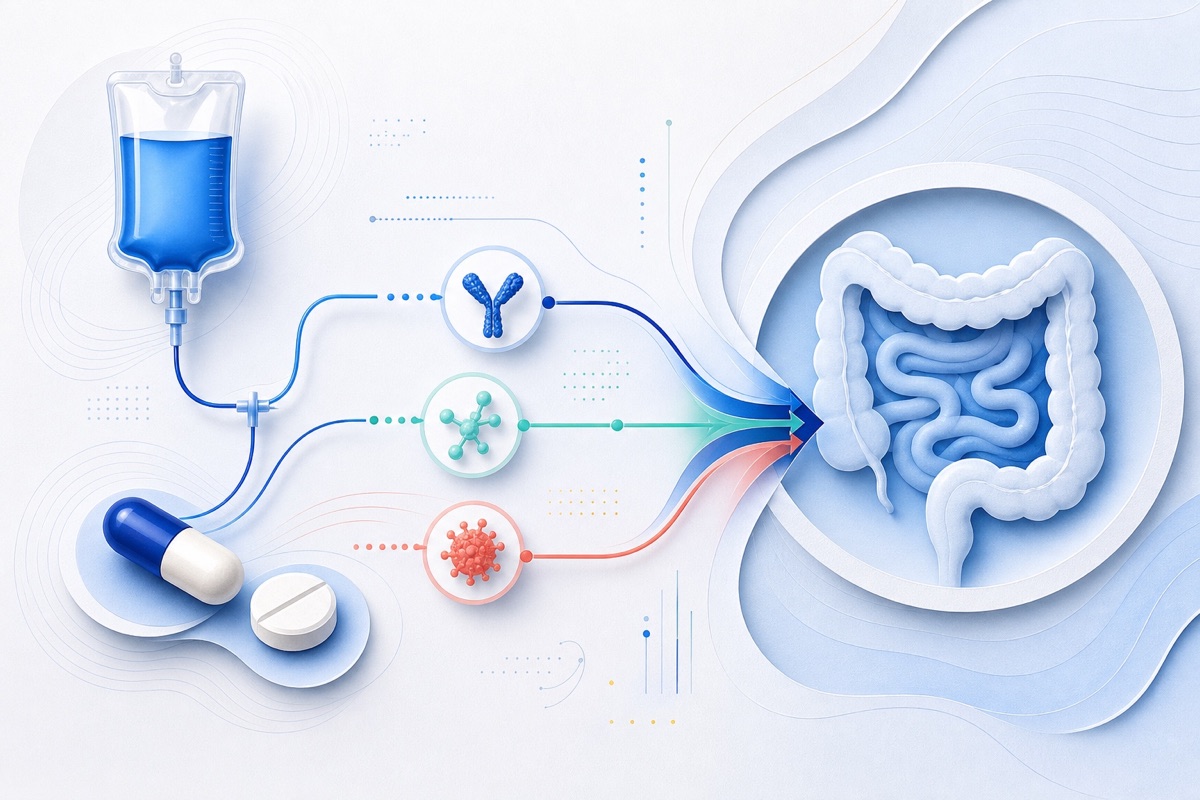
This study used registry data to estimate infection risk tied to corticosteroid exposure in real-world IBD treatment periods. Risk differences were reported both versus the general population and within therapy groups using propensity-score matching.
The findings reinforce that corticosteroid exposure is associated with increased serious infection rates across multiple classes of IBD therapies. The paper does not provide treatment recommendations; it reports observational associations and stratified incidence estimates that could inform individualized infection-prevention discussions with clinicians.
Keep In Mind
This is an observational, register-based study using propensity-score matching to reduce confounding, but residual confounding and limitations of registry data remain. The abstract summarizes results; full article review is needed for detailed methods, absolute risks by specific drug combinations, and definitions of serious infection. Summary confidence: high.
Source Details
Review the original publication for the complete reporting, methods, and context.
This Cure8 brief is based on source text from the linked article. Cure8 is informational only and is not a substitute for professional medical advice, diagnosis, or treatment.