Medication classes

Aminosalicylates

Aminosalicylate articles covering 5-ASA medicines such as mesalamine and sulfasalazine in IBD care. Medication context emphasizes treatment decisions, safety, approvals, and therapy access.

29 articles

Rosuvastatin and Engeletin Ameliorate Acetic Acid-Induced Ulcerative Colitis through Modulation of TXNIP/NLRP3-Related Inflammatory Signaling pathway.
Immunopharmacology and immunotoxicology

Rosuvastatin and Engeletin Ameliorate Acetic Acid-Induced Ulcerative Colitis through Modulation of TXNIP/NLRP3-Related Inflammatory Signaling pathway.

The study links TXNIP/NLRP3 inflammatory signaling to disease features in an animal UC model and tests engeletin and rosuvastatin as interventions that lowered inflammatory markers—information relevant to researchers...

Read Summary
Mesalazine enteric-coated tablets combined with retention enema for symptom alleviation in mild to moderate E2-type active ulcerative colitis: A retrospective comparative cohort study
Pakistan Journal of Pharmaceutical Sciences

Mesalazine enteric-coated tablets combined with retention enema for symptom alleviation in mild to moderate E2-type active ulcerative colitis: A retrospective comparative cohort study

Adding a mesalazine retention enema to oral mesalazine improved short-term symptom relief and endoscopic signs of mucosal healing in mild-to-moderate left-sided ulcerative colitis in this retrospective study. That could...

Read Summary
Aminosalicylate use Increases Corticosteroid Exposure and Decreases Biologic Durability in Pediatric Crohn's Disease.
Clinical gastroenterology and hepatology : the official clinical practice journal of the American Gastroenterological Association

Aminosalicylate use Increases Corticosteroid Exposure and Decreases Biologic Durability in Pediatric Crohn's Disease.

This study suggests that using 5‑ASA drugs early in children with Crohn’s disease was common but linked to more steroid use, delayed biologic treatment, and lower biologic durability — outcomes that matter for long‑term...

Read Summary
Synchronous collagenous and ulcerative colitis: A case report and review of the literature.
Revista espanola de patologia : publicacion oficial de la Sociedad Espanola de Anatomia Patologica y de la Sociedad Espanola de Citologia

Synchronous collagenous and ulcerative colitis: A case report and review of the literature.

Coexistence of ulcerative colitis and collagenous colitis is rare but can change diagnosis and management. Stool calprotectin and biopsies helped identify and monitor disease activity, and adjusting mesalazine coincided...

Read Summary
Continued concomitant antibiotic or immunosuppression therapies reduce the risk of pouchitis among patients with ileal pouch-anal anastomosis and primary sclerosing cholangitis.
Crohn's & colitis 360

Continued concomitant antibiotic or immunosuppression therapies reduce the risk of pouchitis among patients with ileal pouch-anal anastomosis and primary sclerosing cholangitis.

Patients with ulcerative colitis and PSC face higher risk of pouch inflammation after IPAA. The study reports fewer pouchitis events among the small group who received antibiotics or immunosuppression, which could...

Read Summary
Characterization of remission levels in patients with ulcerative colitis treated with 5-aminosalicylates: results of the cross-sectional CARUC-ASA study by the Belgian IBD Research and Development Group.
Journal of Crohn's & colitis

Characterization of remission levels in patients with ulcerative colitis treated with 5-aminosalicylates: results of the cross-sectional CARUC-ASA study by the Belgian IBD Research and Development Group.

The study evaluates how well first-line 5-ASA therapy achieves modern treatment targets (endoscopic, histologic, and biomarker remission) in real-world UC patients who are clinically in remission. Patients and clinicians...

Read Summary
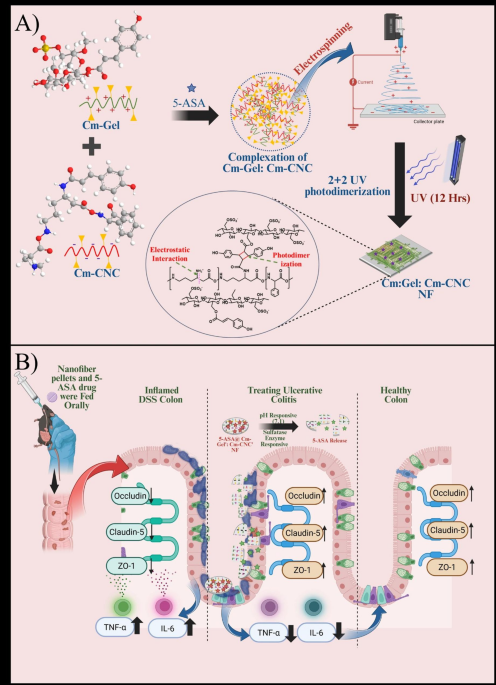
Orally administrable photo-crosslinked coumaroyl-modified gelatin-CNC nanofibers for ulcerative colitis environment-triggered release of 5-aminosalicylic acid
Journal of Nanobiotechnology

Orally administrable photo-crosslinked coumaroyl-modified gelatin-CNC nanofibers for ulcerative colitis environment-triggered release of 5-aminosalicylic acid

Targeted release of mesalamine to the colon could increase local drug levels and reduce upper-GI exposure and systemic side effects. New delivery platforms may improve effectiveness for ulcerative colitis without...

Read Summary
Efficacy and Safety of Azathioprine in Ulcerative Colitis with 5-aminosalicylic acid Intolerance: A Single-Center Retrospective Cohort Study
Springer Science and Business Media LLC

Efficacy and Safety of Azathioprine in Ulcerative Colitis with 5-aminosalicylic acid Intolerance: A Single-Center Retrospective Cohort Study

Patients with ulcerative colitis who cannot tolerate 5-ASA need alternative maintenance options. This study suggests azathioprine showed comparable continuation, safety, and endoscopic outcomes whether or not patients...

Read Summary
SURGICAL APPROACH, BIOLOGICAL THERAPIES, AND INFLAMMATORY MECHANISMS ASSOCIATED WITH ULCERATIVE COLITIS AND CROHN'S DISEASE
Artefactum - revista de estudos interdisciplinares

SURGICAL APPROACH, BIOLOGICAL THERAPIES, AND INFLAMMATORY MECHANISMS ASSOCIATED WITH ULCERATIVE COLITIS AND CROHN'S DISEASE

The review links specific therapies and surgical options to outcomes that matter to people with IBD — mucosal healing, lower hospitalizations, and reduced need for surgery — and highlights that combining medical and...

Read Summary
Management of Ulcerative Colitis after Mesalamine-Induced Myocarditis: Successful Treatment with Upadacitinib - A Case Report.
Inflammatory intestinal diseases

Management of Ulcerative Colitis after Mesalamine-Induced Myocarditis: Successful Treatment with Upadacitinib - A Case Report.

Mesalamine can rarely cause myocarditis, creating a challenge for ongoing UC treatment. This report shows upadacitinib was used successfully as an alternative when biologics were considered higher cardiac risk and...

Read Summary
Impact of 5-aminosalicylic acid intolerance on progression to difficult-to-treat ulcerative colitis: a retrospective cohort study.
Journal of gastroenterology

Impact of 5-aminosalicylic acid intolerance on progression to difficult-to-treat ulcerative colitis: a retrospective cohort study.

If you have ulcerative colitis and cannot tolerate 5-ASA (mesalamine), this study suggests you may be at higher risk of progressing to difficult-to-treat disease, particularly if your intolerance fits an acute...

Read Summary
Optimised mesalazine therapy reduces ulcerative colitis recurrence across the mild-to-moderate disease spectrum: the IMPACT study
Frontiers in Gastroenterology

Optimised mesalazine therapy reduces ulcerative colitis recurrence across the mild-to-moderate disease spectrum: the IMPACT study

Higher, optimised doses of prolonged-release mesalazine were linked with fewer clinical recurrences over 12 months in adults with mild-to-moderate UC, which could influence treatment decisions about mesalazine dose and...

Read Summary
Very early onset inflammatory bowel disease in Jordan: a single-center case series of clinical, genetic, and therapeutic features
BMC Pediatrics

Very early onset inflammatory bowel disease in Jordan: a single-center case series of clinical, genetic, and therapeutic features

VEOIBD often has a strong genetic component and different clinical needs than adult IBD; this study shows genetic findings and treatment challenges in a Middle East pediatric center, which may affect diagnosis and access...

Read Summary
Hepatic and splenic tuberculosis following infliximab therapy for refractory ulcerative colitis: a case report and literature review
BMC Gastroenterology

Hepatic and splenic tuberculosis following infliximab therapy for refractory ulcerative colitis: a case report and literature review

Extrapulmonary TB can be triggered or revealed during immunosuppressive biologic therapy and may mimic other causes of liver injury; early recognition and TB-specific testing are important for timely treatment and to...

Read Summary
Rescue Vedolizumab Therapy for a Rare Case of Complicated Severe Ulcerative Colitis: A Case Report and Literature Review.
Journal of clinical medicine

Rescue Vedolizumab Therapy for a Rare Case of Complicated Severe Ulcerative Colitis: A Case Report and Literature Review.

This case report describes successful use of vedolizumab to treat severe UC in a patient who also had PSC and SLE — a rare and complex combination. Patients and clinicians may find it relevant when considering biologic...

Read Summary

Sulfasalazine- and Cerium Ion-Loaded Polymersomes with Enhanced RONS Scavenging and Colonic Mucosal Repair Ameliorate Experimental Colitis.

The work targets oxidative/nitrosative stress and mucosal repair—mechanisms important in IBD—using a novel delivery vehicle that pairs an approved anti-inflammatory drug with catalytic cerium ions. If translated, this...

Read Summary