Continued concomitant antibiotic or immunosuppression therapies reduce the risk of pouchitis among patients with ileal pouch-anal anastomosis and primary sclerosing cholangitis.
Patients with ulcerative colitis and PSC face higher risk of pouch inflammation after IPAA. The study reports fewer pouchitis events among the small group who received antibiotics or immunosuppression, which could influence postoperative management discussions.
Who Should Pay Attention
Patients with ulcerative colitis and PSC considering or living with an IPAA, clinicians managing postoperative pouch care, and researchers studying pouchitis prevention.
Study Snapshot
Story typeResearch paper
Evidence typeResearch paper
Source depthJournal abstract
What To Know
The study pooled 172 patients from seven tertiary centers (1994–2023); only 13 received postoperative antibiotics or immunosuppression. Antibiotics and probiotics were the most common interventions. Patients receiving these therapies had lower proportions of IP and CP in this cohort, but the analysis is retrospective and the treated group was small.
Decisions about prophylactic antibiotics or immunosuppression after IPAA are individualized. This study adds observational data suggesting a possible protective association in a high-risk group (UC with PSC), but it does not establish causation or define which specific regimen is optimal.
If you are considering pouch surgery or postoperative medication strategies, discuss the potential risks and benefits with your gastroenterologist or colorectal surgeon; this study alone is not sufficient to recommend routine prophylaxis for all patients.
Keep In Mind
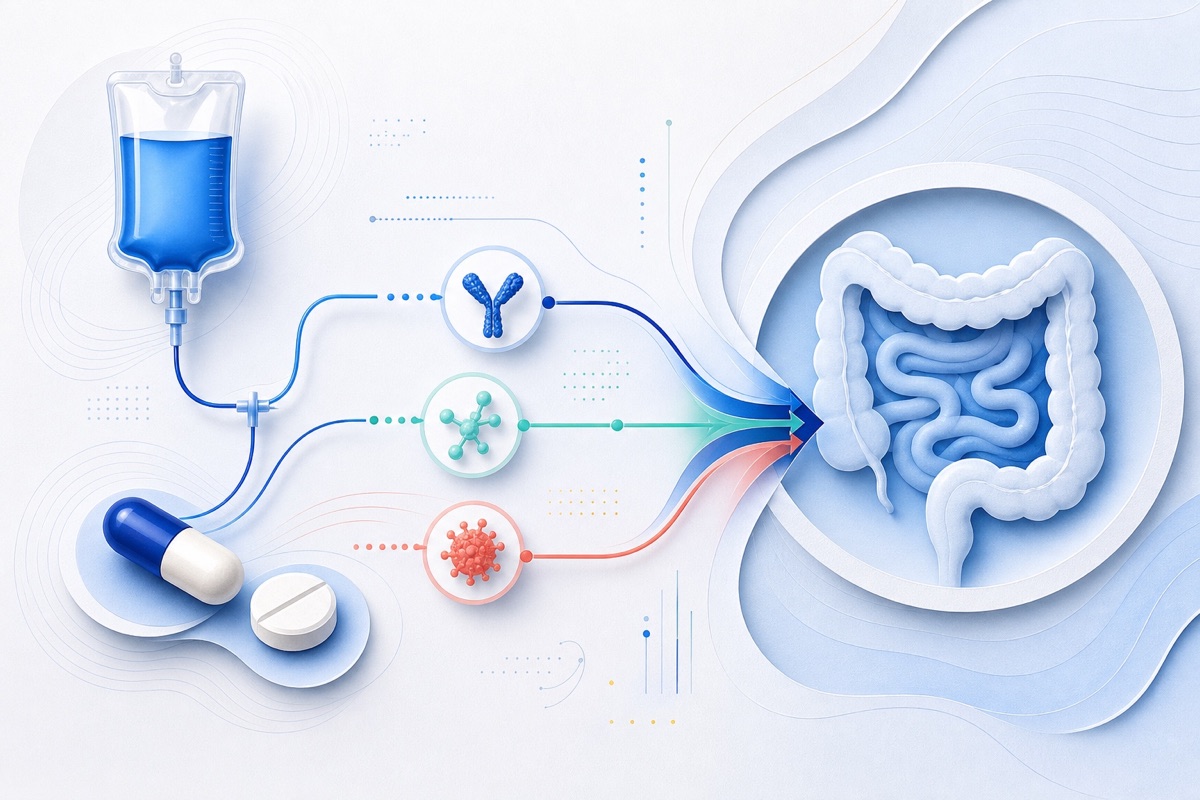
This is a retrospective cohort with a small treated subgroup (13 of 172). Therapies varied (antibiotics, probiotics, biologics, small molecules, immunomodulators, mesalamine), so the study cannot specify an optimal agent, dose, or duration. The finding is associative, not proof of benefit.
Source Details
Review the original publication for the complete reporting, methods, and context.
This Cure8 brief is based on source text from the linked article. Cure8 is informational only and is not a substitute for professional medical advice, diagnosis, or treatment.
The review links specific therapies and surgical options to outcomes that matter to people with IBD — mucosal healing, lower hospitalizations, and reduced need for surgery — and highlights that combining medical and...
Severe ulcerative colitis can be linked to rare cardiac rhythm disturbances; recognizing bradycardia during flares may prompt appropriate evaluation and monitoring. The case signals clinicians to consider cardiac causes...
This case report describes successful use of vedolizumab to treat severe UC in a patient who also had PSC and SLE — a rare and complex combination. Patients and clinicians may find it relevant when considering biologic...