Understanding and quantifying placebo-driven endoscopic changes can improve design and interpretation of Crohn’s disease trials, which may ultimately speed development of effective therapies and clarify who benefits from specific treatments.
Who Should Pay Attention
Researchers and clinical trialists working on IBD drug development; clinicians involved in clinical research; patients interested in how trials are designed and how placebo effects are handled.
Study Snapshot
Story typeResearch paper
Evidence typeClinical trial
Source depthJournal abstract
What To Know
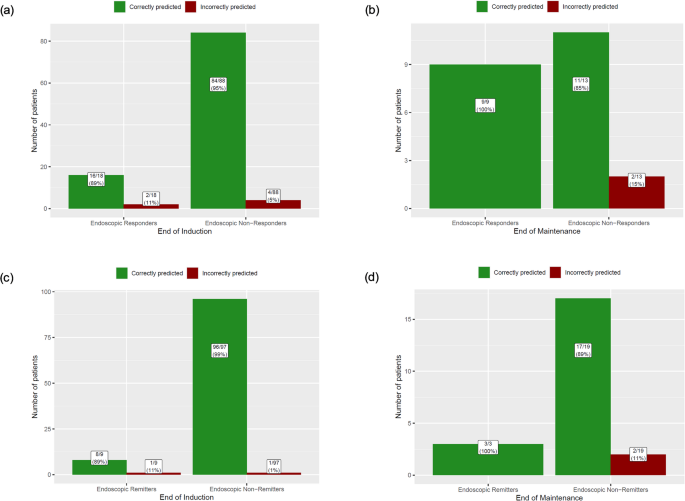
This paper presents a placebo-based longitudinal disease progression model for Crohn’s disease using item-level SES-CD scores from 155 placebo-treated patients in the phase 3 BERGAMOT trial (NCT02394028).
The authors built an IRT-bounded-integer model with full random effects to capture a latent disease trajectory and to predict endoscopic response (≥50% SES-CD reduction) and remission (SES-CD 0–2) over 66 weeks.
The model quantified a population maximum placebo response and identified baseline CRP and fecal calprotectin as covariates associated with reduced placebo response, while TNF-naïve status was linked to increased placebo response.
The work is framed as a tool to help separate drug effects from placebo effects and to support model-informed trial design consistent with FDA priorities. What this means: the study is about statistical modeling of endoscopic outcomes in Crohn’s disease trials rather than a new treatment.
It may help researchers and trialists design more efficient studies and interpret trial results by accounting for placebo trajectories. Practical takeaways: clinicians and patients should not take this as a treatment finding; it’s a methodological advance that could improve future trial accuracy and efficiency.
The model uses commonly measured biomarkers (CRP, fecal calprotectin) and standard endoscopic scoring (SES-CD), which supports clinical relevance. Limitations to note: this brief summarizes the article abstract provided by the journal (structured content depth: abstract) and does not represent a full critical appraisal of the full manuscript.
Keep In Mind
Summary is grounded in the article abstract (structured content depth: abstract). This is a methodological/analytic study using placebo-arm data from a registered phase 3 trial; it does not report effects of a specific investigational drug. The model’s performance and generalizability would require review of the full paper and external validation.
Source Details
Review the original publication for the complete reporting, methods, and context.
Study typeClinical trial, phase iii, im, randomized controlled trial, journal article
Indexed viaEurope PMC
Source typeResearch paper
PublishedJul 11, 2026, 12:00 AM
Content availableJournal abstract
This Cure8 brief is based on source text from the linked article. Cure8 is informational only and is not a substitute for professional medical advice, diagnosis, or treatment.
New oral TYK2 inhibitor data show promise on endoscopic healing and inflammatory markers in Crohn’s disease, which is important because oral treatment options are limited. However, the trial missed its main symptom-based...
Early Phase 2 data suggest VTX958 may improve endoscopic healing and lower inflammatory markers in Crohn’s disease, outcomes that matter for long-term disease control. The report also notes the trial missed its primary...
This reports Phase 2 clinical data for an oral TYK2 inhibitor (VTX958) in Crohn’s disease — a potential new oral treatment approach. The drug showed meaningful endoscopic improvements and reductions in inflammatory...