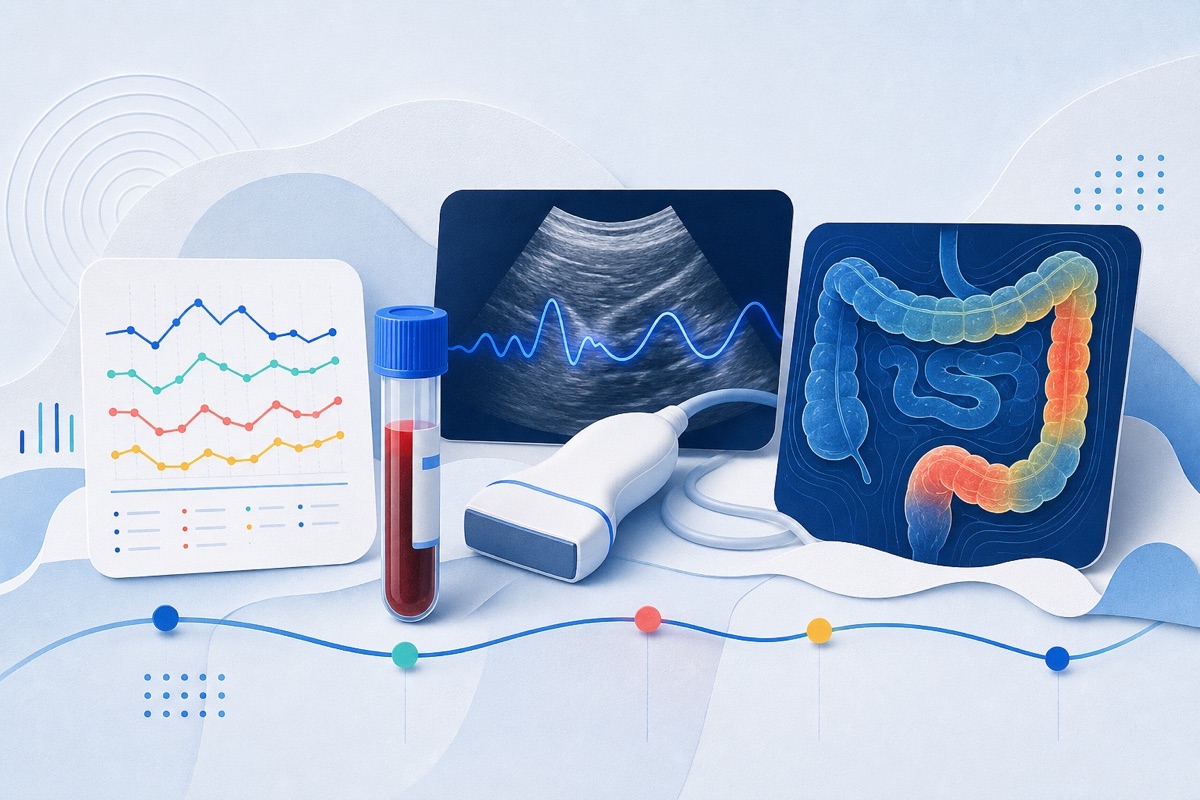
Artificial intelligence assessment of endoscopic severity and extent: A machine learning approach to continuous evaluation of endoscopic inflammation in ulcerative colitis
A more detailed, reproducible measure of endoscopic inflammation could better reflect total disease burden and reduce variability from human readers. That may matter for monitoring disease activity, judging treatment response, and designing trials.
Who Should Pay Attention
Clinicians who perform or interpret colonoscopy in ulcerative colitis, researchers developing endoscopy endpoints or AI tools, and patients interested in how inflammation is measured in trials and care.
Study Snapshot
Story typeResearch paper
Evidence typeResearch paper
Source depthJournal abstract
What To Know
Researchers developed and validated AI-ESe to preprocess colonoscopy video, detect endoscope stalling to avoid oversampling, and score local disease severity to generate an inflammatory heatmap. Against human references the stalling model reduced temporal disagreement and the severity model achieved strong agreement (quadratic weighted kappa 0.80).
The AI output correlated with conventional endoscopy subscores but revealed wide variation in the proportion of inflamed mucosa within the same conventional score.
Potential implications: AI-ESe could offer a more granular, reproducible way to quantify mucosal inflammation in trials or clinical practice, helping to track total inflammatory burden rather than only the worst segment. Further work would be needed to test clinical utility, reproducibility across centers, and links to outcomes.
Keep In Mind
This record is an abstract-level report of a validation study in endoscopic video datasets (structured content depth: abstract). It describes algorithm performance metrics but does not by itself demonstrate improved patient outcomes or broad real-world implementation.
Source Details
Review the original publication for the complete reporting, methods, and context.
Funding disclosed by the source: Eli Lilly and Company and Iterative Health, Inc
This Cure8 brief is based on source text from the linked article. Cure8 is informational only and is not a substitute for professional medical advice, diagnosis, or treatment.
Measuring both how severe inflammation is and how much of the colon is affected could give a fuller picture of disease burden than current focal endoscopic scores. For patients with UC, that may affect risk assessment...
A validated AI biomarker that predicts which IBD treatments are likely to work could reduce trial-and-error in treatment choices, potentially shortening time to effective therapy for people with Crohn's disease or...