ClinicalTrials.gov
Cure8 trial brief
Cure8 trial brief
Children starting infliximab for Crohn’s disease could benefit from blood-based biomarkers that predict who will have a durable response, helping personalize treatment and avoid ineffective exposure to biologics.
Pediatric Crohn's patients and their caregivers, clinicians who prescribe biologics, researchers studying IBD biomarkers, and teams developing predictive tests for biologic response.
The study prospectively collected blood at baseline and at scheduled visits (including week 14 and week 54) for RNA and serum banking and ran SOMAscan proteomic assays to discover pretreatment and longitudinal protein biomarkers. Planned analyses include developing predictor models from baseline serum and monitoring changes over the first year of treatment.
The cohort was pediatric (ages 3–20) and allowed concurrent standard IBD therapies; patients on home infusions or with major prior bowel surgery were excluded.
Practical point: These data are aimed at personalized medicine — identifying minimally invasive blood-based tests that could someday help decide which children will have lasting benefit from infliximab and when treatment is failing.
The record is a trial registry entry (completed observational study) and does not in itself report validated clinical tests or clinical outcome results.
This is a ClinicalTrials.gov record for a completed observational discovery study using SOMAscan proteomics; registry entries describe study design and planned analyses but do not constitute peer-reviewed results. Any predictive biomarker models would need independent validation and regulatory review before clinical use.
Review the original publication for the complete reporting, methods, and context.
This Cure8 brief is based on source text from the linked article. Cure8 is informational only and is not a substitute for professional medical advice, diagnosis, or treatment.
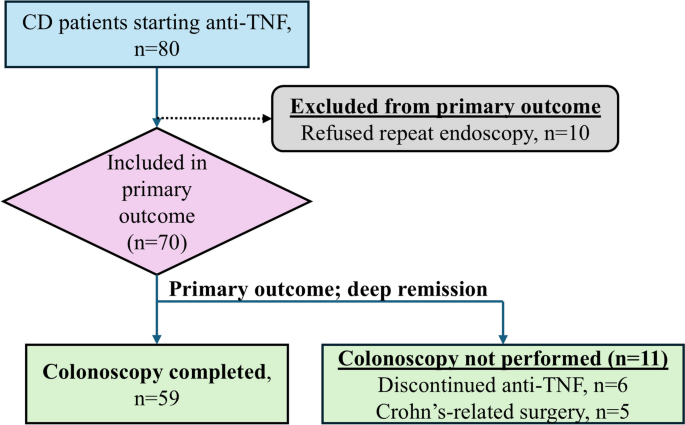
The study identifies specific induction exposure targets and biomarkers tied to higher chances of deep remission at 12 months in children on anti-TNF therapy, which could inform earlier dose optimization to improve...
If validated, blood microRNAs could become noninvasive biomarkers to help track inflammation and predict biochemical response to infliximab or vedolizumab in Crohn’s disease, complementing CRP and fecal calprotectin.
A blood biomarker that predicts anti-TNF response could help people with IBD and their clinicians choose the right biologic sooner, avoiding ineffective treatment. This study reports that lower baseline serum oncostatin...