The study offers a simple immune‑cell interaction model that can produce patterns resembling Crohn’s flares and remissions, which may help researchers generate testable hypotheses about mechanisms and targets.
Who Should Pay Attention
Researchers, clinicians, and informed patients interested in IBD immune mechanisms, disease dynamics, and theoretical models.
Study Snapshot
Story typeResearch paper
Evidence typeResearch paper
Source depthJournal abstract
What To Know
The authors built a system of coupled differential equations representing production, growth, suppression, and decay of auto‑reactive and regulatory T cells, and added a stochastic noise term to model unpredictable triggers (diet, infections, stress, etc.).
Simulations produced four qualitative disease states: persistent healthy, regular oscillations, persistent inflammatory, and irregular flare‑remission cycles. During simulated flares, increases in auto‑reactive T cells were followed by rises in regulatory T cells that could return the system toward remission.
The paper frames auto‑reactive T‑cell amplification as a potential treatment target but explicitly notes that the model omits many real‑world factors (microbiome, tissue damage, other immune cells, clinical data) and that further work is needed before clinical implications can be drawn.
Keep In Mind
Modeling studies are hypothesis‑generating and depend on assumptions; this paper notes missing factors (microbiome, tissue damage, other immune cells) and calls for additional research and clinical data before translating findings to patient care.
Source Details
Review the original publication for the complete reporting, methods, and context.
This Cure8 brief is based on source text from the linked article. Cure8 is informational only and is not a substitute for professional medical advice, diagnosis, or treatment.
The study identifies an epithelial cell death signature (necroptosis then apoptosis) that appears before major inflammation and which correlated with relapse over 24–36 months, suggesting a possible early biomarker to...
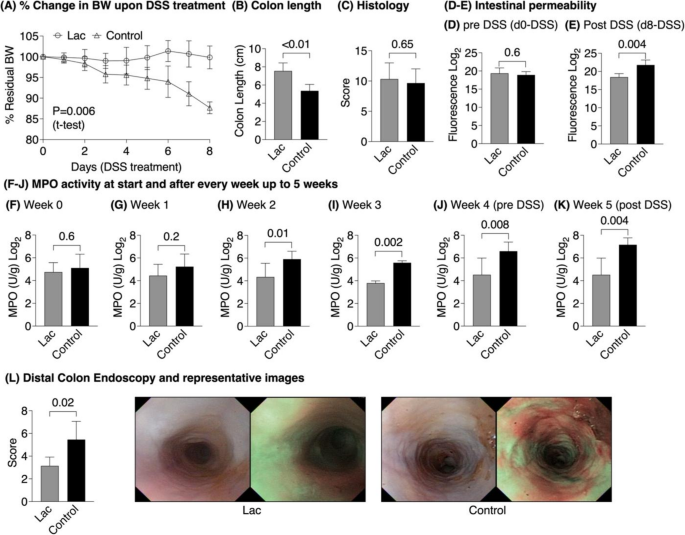
The study suggests a probiotic strain (Lactobacillus plantarum) reduced inflammation and prolonged remission in multiple mouse models of Crohn’s-like disease, indicating microbiome-based approaches might be promising to...
Early effective treatment may change long-term outcomes in Crohn's disease. Understanding the timing of a potential "window of opportunity" could affect decisions about when to start or escalate therapy.