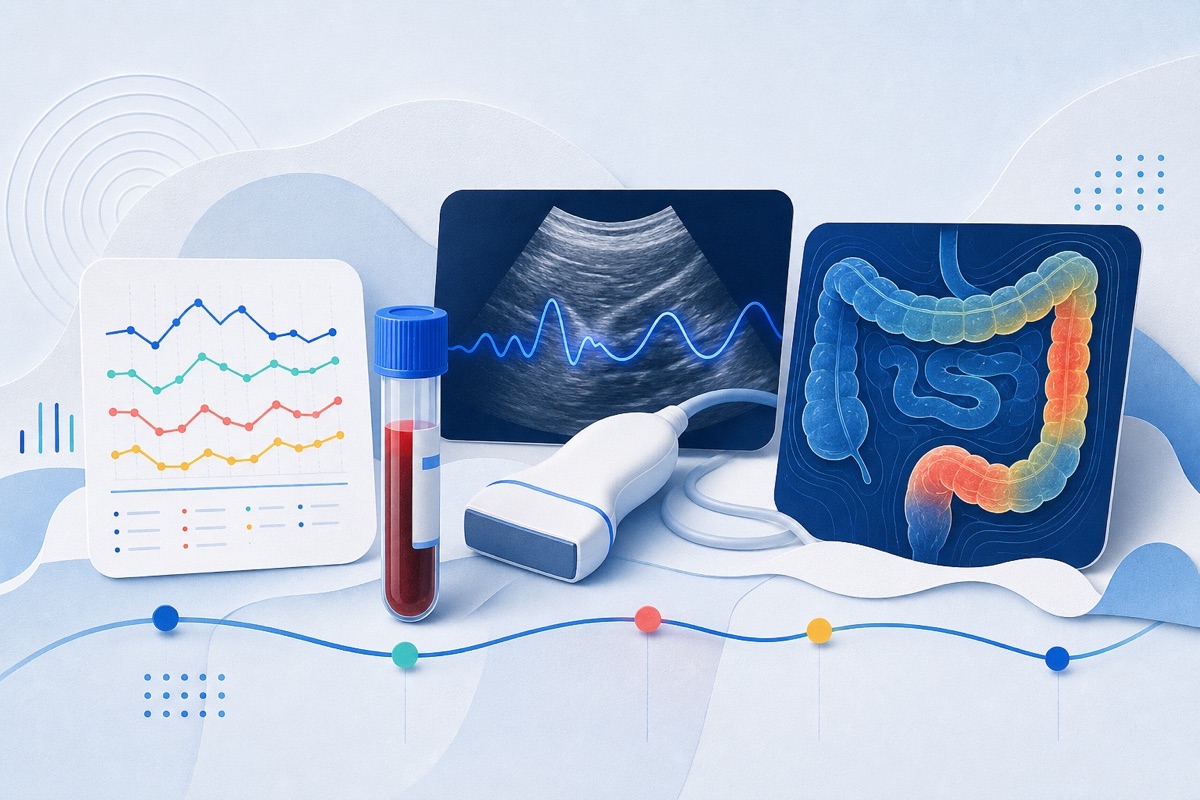
Patients with Crohn's who develop intra-abdominal abscesses often face decisions about antibiotics, drainage, or surgery. Predictors like abscess size and imaging appearance may help estimate the chance of needing surgery within a year.
Who Should Pay Attention
Clinicians managing Crohn's-related abscesses, radiologists, IBD surgeons, researchers studying surgical outcomes in IBD, and adult patients facing abscess treatment decisions.
Study Snapshot
Story typeResearch paper
Evidence typeResearch paper
Source depthJournal abstract
What To Know
This retrospective single-center study reviewed 145 Crohn's patients with confirmed intra-abdominal abscesses managed from 2012–2022 and followed them for one year. Larger abscess long-axis diameter and older age at abscess diagnosis were associated with a higher risk of delayed surgery.
Factors linked with a lower surgical risk included receiving intravenous antibiotics, having a well-defined collection with mass effect (versus infiltrative morphology), and older age at Crohn's diagnosis.
How this might be used: Imaging measurements (abscess size and morphology) and initial treatment choice (IV antibiotics) were prominent predictors in their analysis; these are things clinicians already use and may weigh when deciding between continued medical management versus earlier intervention.
Study limits: This is a retrospective, single-center study and reports associations rather than causal effects. That means findings may not generalize to all centers or replace individualized clinical judgment.
Keep In Mind
The study is retrospective and single-center (2012–2022), so results show associations and may not apply to every practice. Imaging review and IV antibiotic use were central to the reported associations.
Source Details
Review the original publication for the complete reporting, methods, and context.
This Cure8 brief is based on source text from the linked article. Cure8 is informational only and is not a substitute for professional medical advice, diagnosis, or treatment.
Noninvasive tests at 3 months after ileocecal resection (ultrasound + fecal calprotectin) may identify patients at high risk of endoscopic recurrence by 6 months. That could help avoid or target postoperative endoscopy...
Noninvasive TUS can help detect small-bowel inflammation and stenosis in Crohn's disease with high specificity, potentially reducing the need for immediate invasive testing. However, its sensitivity varies by small-bowel...
Capsule endoscopy can be helpful for small-bowel assessment in Crohn’s disease but carries a risk of retention when strictures are present. Retained capsules may be asymptomatic yet still require surgery, so better...