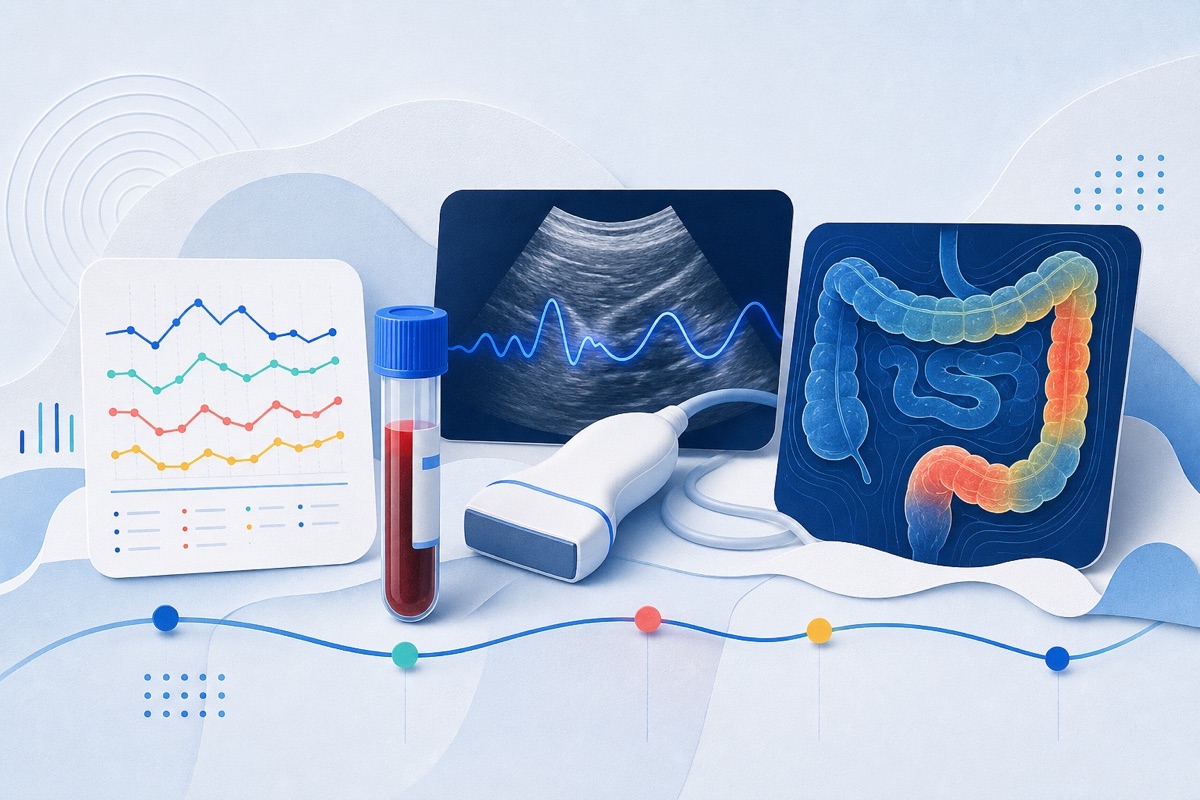
Noninvasive tests at 3 months after ileocecal resection (ultrasound + fecal calprotectin) may identify patients at high risk of endoscopic recurrence by 6 months. That could help avoid or target postoperative endoscopy and guide earlier treatment decisions if validated.
Who Should Pay Attention
Adults with Crohn’s disease who had ileocecal resection, clinicians managing post-surgical IBD care, and researchers studying postoperative recurrence or noninvasive monitoring strategies.
Study Snapshot
Story typeResearch news
Evidence typeClinical study
Source depthFull source text
What To Know
This report describes a research finding (INSIGHT study) suggesting that a simple ultrasound plus calprotectin at 3 months after surgery could help stratify recurrence risk and guide timing of endoscopy or treatment decisions.
It does not provide practice guidelines or definitive recommendations; the investigators say the approach needs validation before changing standard care. Clinical context: The study focuses on early prediction of endoscopic recurrence after ileocecal resection—a common post-surgical issue in Crohn’s disease.
The tests discussed are noninvasive and already used in many IBD clinics, which could make implementation practical if validated. Limitations and next steps: These are results presented at a conference and summarized in a news piece; clinicians should await peer-reviewed publication and validation studies before changing individual patient management.
Keep In Mind
These are preliminary clinical-study results reported at DDW 2026 and summarized by a medical news site. Authors recommend validation in further studies before this algorithm is used routinely. The article does not replace individualized medical advice.
Source Details
Review the original publication for the complete reporting, methods, and context.
Clinical studyArticle type assigned from Cure8 classification; confirm details in the original source.
Publicationdocwirenews.com
Indexed viaGoogle News
Source typeResearch news
PublishedJul 1, 2026, 5:35 PM
Content availableFull source text
This Cure8 brief is based on source text from the linked article. Cure8 is informational only and is not a substitute for professional medical advice, diagnosis, or treatment.
This study suggests using both faecal calprotectin and intestinal ultrasound together can better identify patients who reach deeper, transmural healing — and those patients had lower risk of bowel-damage progression....
After bowel resection, Crohn’s often returns quietly at the surgical join (anastomosis). Early, planned monitoring can detect inflammation before symptoms appear and help prevent symptomatic recurrence or repeat surgery.
This study suggests intestinal ultrasound findings early after diagnosis — especially achieving “transmural remission” within 3 months — may predict better 1-year outcomes (sustained steroid-free remission and less need...