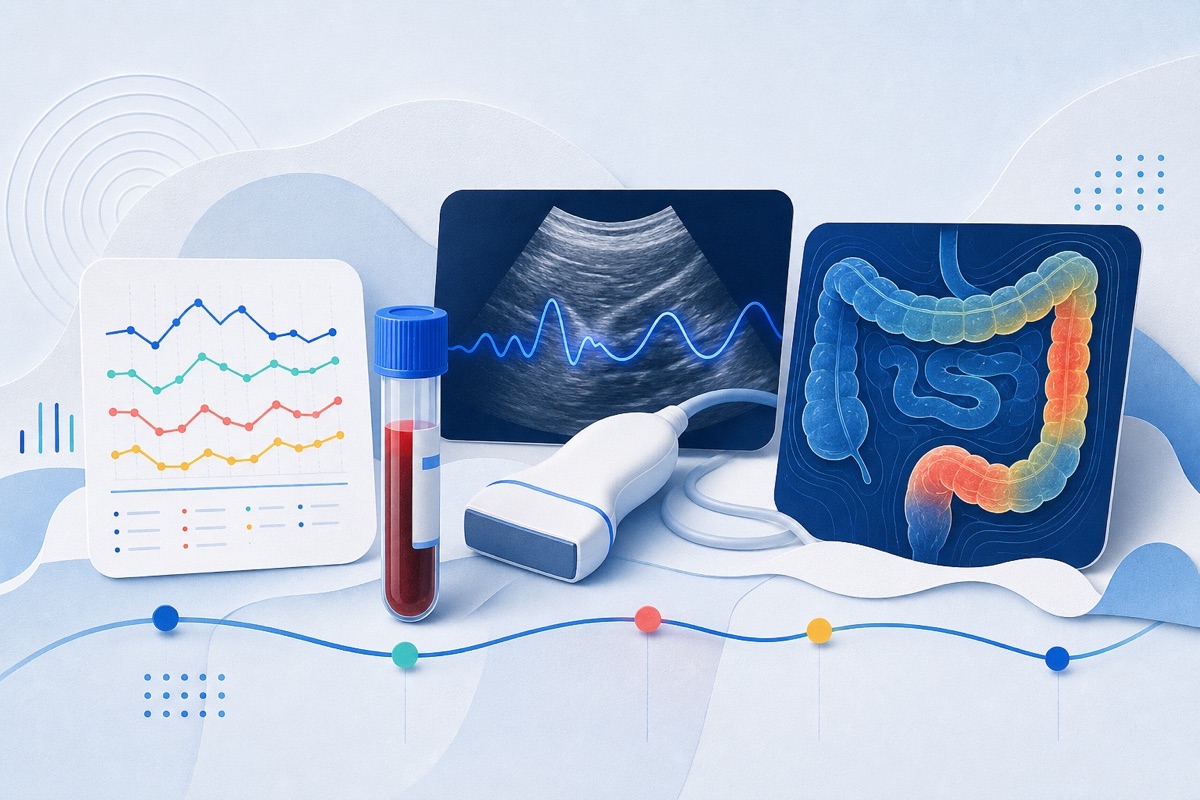
This study suggests using both faecal calprotectin and intestinal ultrasound together can better identify patients who reach deeper, transmural healing — and those patients had lower risk of bowel-damage progression. That could affect how monitoring is done in Crohn’s disease.
Who Should Pay Attention
Clinicians managing Crohn’s disease, adult patients with Crohn’s disease interested in monitoring strategies, researchers studying biomarkers and imaging in IBD, and patients on maintenance therapy concerned about long-term bowel damage.
Study Snapshot
Story typeResearch news
Evidence typeClinical study
Source depthFull source text
What To Know
This Medscape report summarizes a prospective single-centre observational study that compared faecal calprotectin (FC) plus intestinal ultrasound (IUS) results in people with Crohn’s disease and grouped patients by concordant/discordant test results.
The authors found that patients with "transmural healing" (normal FC <100 μg/g and normal IUS) had lower risk of bowel-damage progression and fewer relapse-related drug discontinuations than patients in the other groups. The study also reported poor agreement between the two tests and higher patient acceptability for IUS than for FC.
Study limitations and practical points: The study used a single sonographer, lacked central IUS reading, was single-centre with relatively short follow-up and small subgroup sizes, and did not routinely use central endoscopy or MRI outcomes for all participants.
These limitations mean findings are hypothesis-generating rather than definitive practice-changing evidence.
What this might mean for care: The report suggests combining biochemical (FC) and transmural (IUS) assessment could better identify patients with deeper healing who have lower risk of structural bowel progression, and that IUS is generally well accepted by patients.
Decisions about monitoring strategies should still rely on clinical judgment and available local resources, and further larger/longer studies would strengthen these findings. Source note: Article summarizes a study published in Inflammatory Bowel Diseases (April 25, 2025) and was posted on Medscape.
Keep In Mind
Findings come from a single-centre observational study with one sonographer, limited follow-up, and small subgroup event counts. The study is useful for hypothesis generation and highlights the complementary roles of FC and IUS, but it does not on its own mandate changes to standard monitoring protocols.
Source Details
Review the original publication for the complete reporting, methods, and context.
Clinical studyArticle type assigned from Cure8 classification; confirm details in the original source.
Publicationmedscape.com
Indexed viaGoogle News
Source typeResearch news
PublishedMay 2, 2025, 12:00 PM
Content availableFull source text
This Cure8 brief is based on source text from the linked article. Cure8 is informational only and is not a substitute for professional medical advice, diagnosis, or treatment.
Noninvasive tests at 3 months after ileocecal resection (ultrasound + fecal calprotectin) may identify patients at high risk of endoscopic recurrence by 6 months. That could help avoid or target postoperative endoscopy...
People with Crohn's disease who have an ileostomy need reliable, noninvasive tools to monitor for postoperative small-bowel inflammation. This study suggests fecal calprotectin measured from ileostomy output may help...
Faecal calprotectin from ileostomy output could provide a non-invasive way to detect small-bowel inflammation after surgery, helping to guide monitoring and reduce reliance on invasive tests for postoperative Crohn’s...