Researchers are exploring non-drug approaches to support gut health in IBD. If certain C. butyricum strains prove effective and safe, they could become an adjunctive therapy that targets the microbiome and inflammation.
Who Should Pay Attention
Clinicians and researchers interested in microbiome-based therapies, adult IBD patients curious about probiotics, and those involved in designing clinical trials of microbial therapies.
Study Snapshot
Story typeResearch paper
Evidence typeResearch paper
Source depthJournal abstract
What To Know
This article is a review of preclinical and clinical studies about C. butyricum rather than a single new trial.
It highlights possible beneficial mechanisms (butyrate production, microbiota modulation, antimicrobial activity, reduced oxidative stress, and immune regulation) but also notes important gaps: variable effects between strains, sparse high-quality clinical trials, and safety concerns for immunocompromised people.
The review recommends future research that tests defined strains with clear mechanisms, and that considers host genetics when designing trials. For patients, that means probiotic use should be discussed with clinicians, especially for those on immunosuppressive therapy.
Keep In Mind
This is a journal review (abstract-level content provided). The authors stress that evidence is currently limited and strain-specific; clinical recommendations should await robust, controlled trials. Safety in immunocompromised patients is an unresolved concern.
Source Details
Review the original publication for the complete reporting, methods, and context.
Research paperEvidence type derived from source or registry metadata.
PublicationProbiotics and antimicrobial proteins
AuthorsYuqiang Zhou, Yufeng Guan, Pinyi Sun +4 more
InstitutionDepartment of Microbiology and Immunology, College of Medical Technology, Shanghai University of Medicine & Health Sciences, Shanghai, 201318, P. R. China.
Conflict statement: Declarations. Institutional review board statement: Not applicable. Informed consent: Not applicable. Competing interests: The authors declare no competing interests.
This Cure8 brief is based on source text from the linked article. Cure8 is informational only and is not a substitute for professional medical advice, diagnosis, or treatment.
Adherent-invasive E. coli (AIEC) is implicated in Crohn’s disease inflammation in some patients. This review maps possible ways to target AIEC specifically, which could lead to therapies that reduce infection-driven...
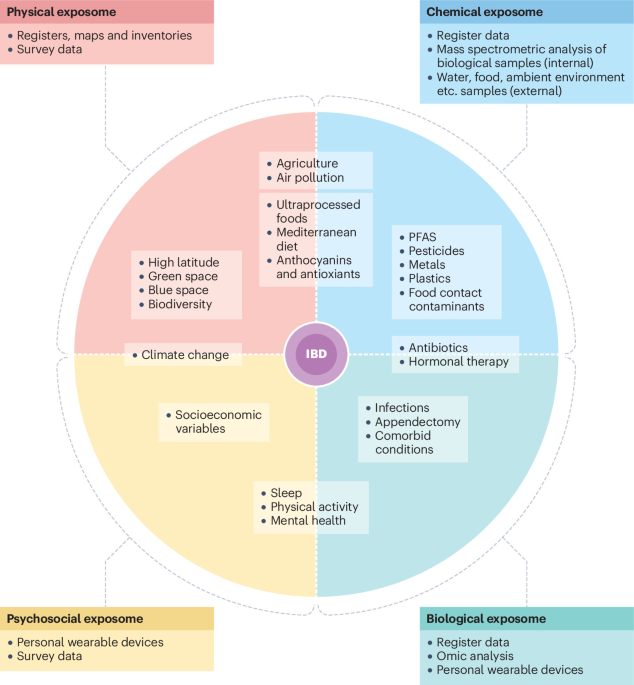
The exposome perspective emphasizes that many non-genetic, potentially modifiable environmental factors likely influence IBD risk. Understanding these factors could help guide prevention research and public-health...
FMT is of direct interest to people with IBD because it targets the gut microbiome — a factor implicated in disease activity — and may offer new options for treatment or relapse prevention. The review highlights delivery...