imt.ie
Cure8 news brief
Cure8 news brief
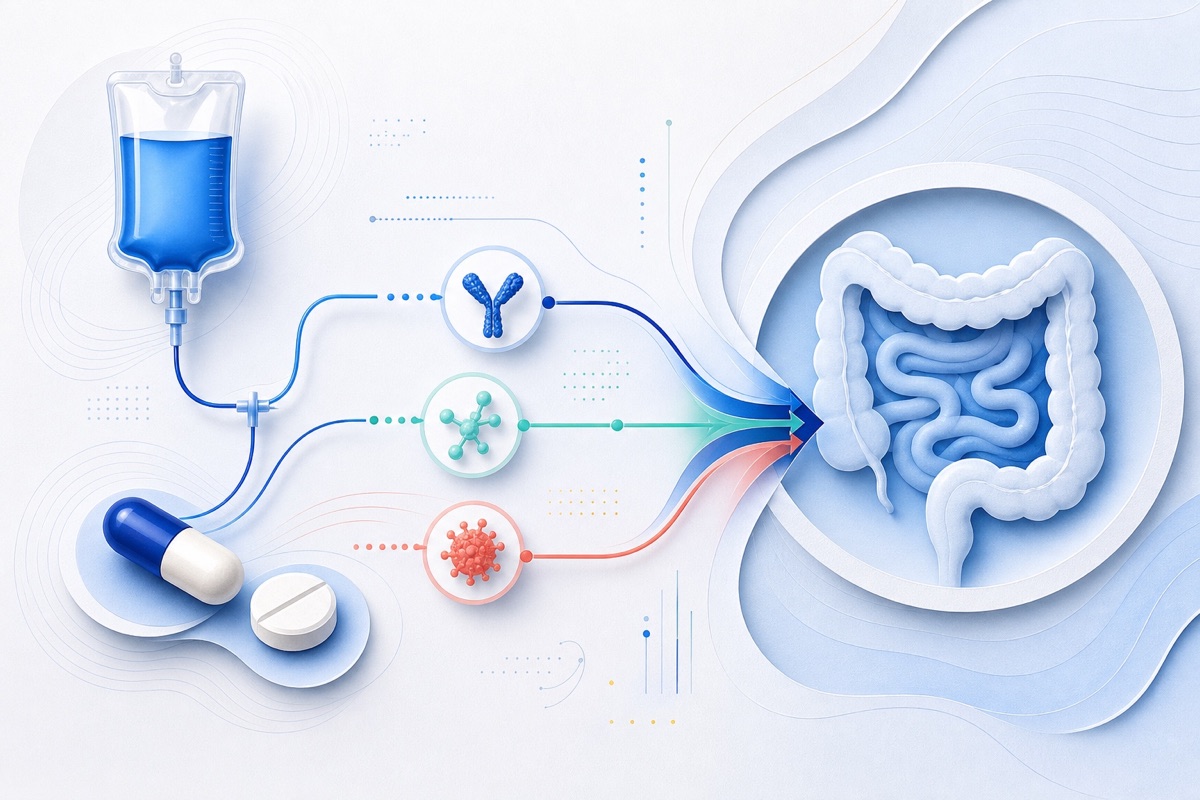
Psoriasis and Crohn’s disease share immune pathways that affect treatment choices. Some biologics work across both conditions while others (notably IL-17 inhibitors) may be inappropriate for patients with active IBD.
Awareness helps patients and clinicians avoid therapies that could worsen the other condition and prompts appropriate screening.
Dermatologists, gastroenterologists, adult patients with psoriasis or Crohn’s disease, patients on biologic therapies, and researchers interested in immune pathways linking skin and gut.
The piece summarizes why psoriasis and Crohn’s disease can co-occur and why the IL-12/23 axis is relevant to both conditions.
It explains that while some biologics targeting IL-23 or the shared p40 subunit have efficacy in both diseases, IL-17 inhibitors work in psoriasis but can worsen or lack efficacy in Crohn’s disease, so they are generally advised against when active IBD is present.
Clinically, the article stresses the need to screen for gastrointestinal symptoms in patients with psoriasis and to document new skin findings in patients with Crohn’s disease.
It also notes that eruptions can be paradoxical during anti-TNF therapy and that dermatology–gastroenterology communication and consideration of product-specific safety information are recommended.
The article is a clinical review summarizing existing epidemiological, genetic and immunological evidence and current European/UK guidance. It is not reporting a single new clinical trial result; product-specific safety and SmPC recommendations should be consulted for prescribing decisions.
Review the original publication for the complete reporting, methods, and context.
This Cure8 brief is based on source text from the linked article. Cure8 is informational only and is not a substitute for professional medical advice, diagnosis, or treatment.
This report outlines which drugs and companies are shaping Crohn’s disease treatment options and predicts market shifts that may affect treatment availability, costs, and future therapy choices.
This video quickly outlines the range of medical treatments now available for Crohn’s disease, including newer approvals. Knowing drug classes and recent options can help patients and clinicians discuss treatment plans...
Researchers and clinicians are increasingly studying combinations of IBD drugs because single‑drug remission rates have plateaued; dual therapy may improve outcomes for patients who have failed prior treatments.