Bratislava Medical Journal
Cure8 research brief
Cure8 research brief
The study suggests ED presentation symptoms predict admission differently in UC versus CD, which could affect triage and short-term risk assessment for IBD patients. Knowing which symptoms are stronger predictors by disease type may help clinicians and patients prioritize evaluation.
ED clinicians, gastroenterologists, researchers studying IBD outcomes or triage, and adult patients with Crohn’s disease or ulcerative colitis concerned about emergency symptoms.
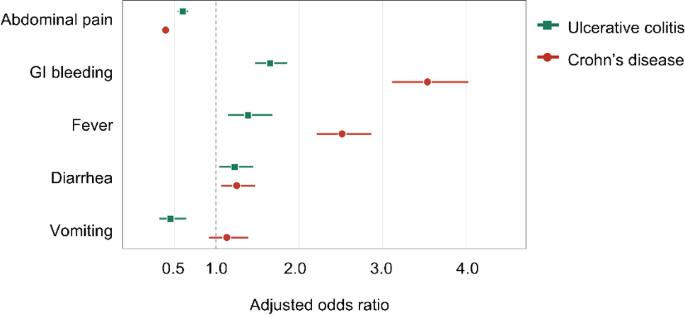
This nationwide emergency-department study from South Korea analyzed over 33,000 ED visits for IBD to compare how presenting symptoms predict hospital admission in Crohn’s disease (CD) versus ulcerative colitis (UC).
Key findings reported: overall admission rates were higher for UC than CD, but certain symptoms — notably gastrointestinal bleeding, fever, and vomiting — showed stronger adjusted associations with admission in CD, while abdominal pain was more strongly associated with admission in UC.
The study used multivariable logistic regression adjusting for age, sex, triage acuity, and ED level. The article is a journal publication and the data come from a national ED database (NEDIS) covering 2019–2023; the full dataset is controlled and not publicly available without application.
This analysis used a large national administrative ED dataset from South Korea (NEDIS, 2019–2023). Results reflect associations with hospital admission rather than causal effects or long-term outcomes. The underlying data are not publicly available without formal application, and the article preview notes some content may require subscription access.
Review the original publication for the complete reporting, methods, and context.
This Cure8 brief is based on source text from the linked article. Cure8 is informational only and is not a substitute for professional medical advice, diagnosis, or treatment.
Endoscopy in this pediatric multicenter series found a high diagnostic yield and confirmed IBD and other treatable conditions; this matters for families and clinicians in resource-limited settings because improving...
The study suggests most adults with chronic diarrhea in this tertiary setting had organic/inflammatory disease and identifies accessible clinical and lab predictors that could help prioritize endoscopic evaluation.
Clinical trials are how new IBD tests and treatments are developed; joining one can give access to interventions and helps improve care for people with Crohn’s disease or ulcerative colitis. The article gives practical...


