The Egyptian Journal of Internal Medicine· via Crossref
Cure8 research brief
Diagnostic strategies for differentiating Crohn’s disease from intestinal tuberculosis: a systematic review of clinical, endoscopic, radiological, histopathological and microbiological features
Distinguishing Crohn’s disease from intestinal tuberculosis can change treatment (immune suppression versus anti‑tubercular therapy) and outcomes. This review summarizes which findings have tended to favor one diagnosis or the other, and warns that no single finding is definitive because of study limitations.
Who Should Pay Attention
Gastroenterologists, radiologists, pathologists, infectious disease clinicians, researchers studying diagnostic markers, and patients undergoing evaluation for ileocecal inflammatory disease.
Study Snapshot
Story typeResearch paper
Evidence typeResearch paper
Source depthJournal abstract
What To Know
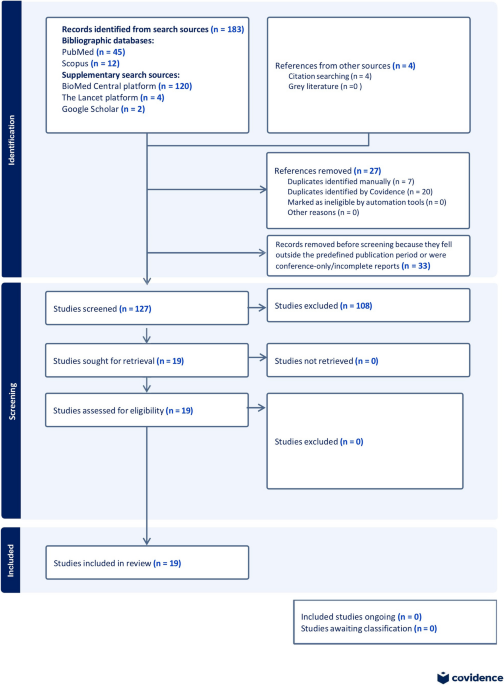
This systematic review compared clinical, endoscopic, radiologic, histopathologic and microbiological features used to distinguish Crohn’s disease (CD) from intestinal tuberculosis (ITB). The authors screened recent studies (2020–2025) and synthesized findings from 19 studies.
Features that tended to favor CD included perianal disease, gastrointestinal bleeding, longitudinal ulcers, skip lesions, cobblestoning, asymmetrical mural thickening, and the comb sign.
Features that tended to favor ITB included ascites, evidence of pulmonary tuberculosis, transverse/annular ulcers, continuous ileocecal involvement, short concentric strictures, and necrotic mesenteric lymph nodes.
The review found that methodological limitations were common: most included studies had high risk of bias (especially in patient selection, flow/timing, and reference standards), and 17 of 19 studies were rated at high overall risk.
Because of these limitations, the review concludes that no single sign or test reliably distinguishes CD from ITB and recommends a multidisciplinary, multimodal diagnostic approach.
Practical points: clinicians and diagnostic teams should interpret individual signs and imaging findings in context and consider combining clinical, endoscopic, histologic, microbiologic and radiologic data. This review does not provide a validated diagnostic algorithm or new diagnostic test; it summarizes patterns reported in the recent literature.
Keep In Mind
The review covers studies from 2020–2025 and reports high risk of bias in most included studies; findings are patterns from heterogeneous studies rather than definitive diagnostic rules. The article is a systematic-review abstract (structured content depth: abstract), not a guideline or new diagnostic test study.
Source Details
Review the original publication for the complete reporting, methods, and context.
This Cure8 brief is based on source text from the linked article. Cure8 is informational only and is not a substitute for professional medical advice, diagnosis, or treatment.
Risk stratification helps identify people with Crohn's who are more likely to develop strictures, fistulas, or need surgery so clinicians can monitor and treat them more aggressively early on. Objective tests like fecal...
People with Crohn’s disease who have an ileostomy have limited noninvasive ways to monitor small-bowel inflammation. This study suggests measuring fecal calprotectin from ileostomy output could help detect postoperative...
New PET tracers like FAPI could better detect fibrosis and stromal activity than standard FDG-PET, which may improve imaging of fibrostenotic Crohn's disease. For people with IBD, improved imaging might eventually help...