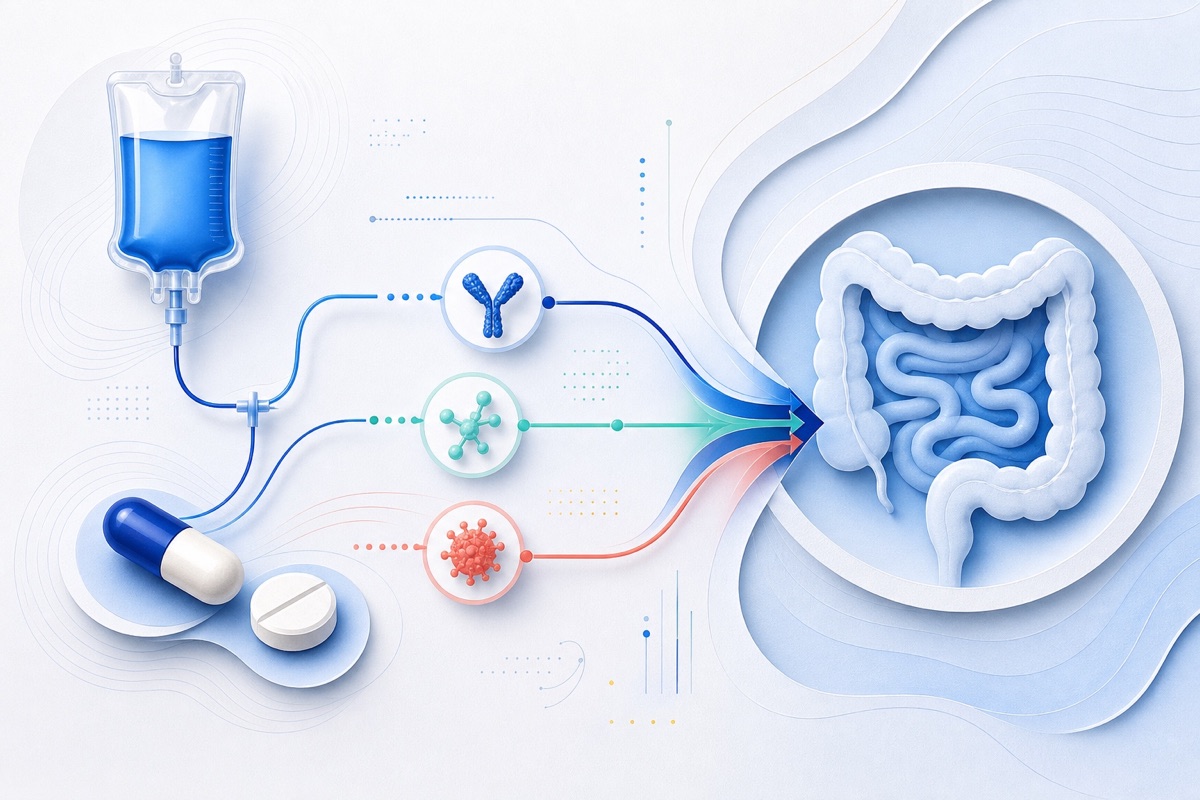
This paper systematically catalogs drugs that have been reported with new or worsening IBD in two large pharmacovigilance databases. Knowing which medications generate strong reporting signals can help clinicians and patients consider medication-related causes when new GI symptoms arise and guide closer monitoring.
Who Should Pay Attention
Clinicians prescribing immunomodulators, biologics, antibiotics, dermatology or acne medications; researchers studying drug-associated IBD or pharmacovigilance; adult patients on or starting medications linked to reported IBD.
Study Snapshot
Story typeResearch paper
Evidence typeResearch paper
Source depthJournal abstract
What To Know
This study mined two large adverse-event reporting databases (FAERS and JADER) to identify drugs most frequently reported in association with new or worsening inflammatory bowel disease.
The authors applied four disproportionality algorithms and did time-to-onset and subgroup analyses; they report that anti-TNF agents were frequent by count while isotretinoin showed strong signal intensity, and that many positive signals had median onset within one year.
Reports in FAERS and JADER are voluntarily submitted and can include duplicate reports, incomplete clinical detail, and reporting bias. The study identifies pharmacovigilance signals (patterns of reporting) but does not establish causation; the authors note that prospective cohort studies would be needed for confirmation.
If you read the paper, focus on which specific drugs produced consistent signals across both databases and the reported time-to-onset; clinicians may use this information to inform monitoring plans or differential diagnosis when new GI symptoms appear after starting a medication.
Keep In Mind
Pharmacovigilance analyses detect signals in spontaneous reports and are useful for hypothesis generation but cannot prove a drug causes IBD. Reporting rates can reflect prescribing volume, publicity, or reporting practices; the authors call for prospective studies to confirm associations.
Source Details
Review the original publication for the complete reporting, methods, and context.
This Cure8 brief is based on source text from the linked article. Cure8 is informational only and is not a substitute for professional medical advice, diagnosis, or treatment.
The study suggests starting anti-TNF drugs early in children with Crohn's could strongly lower the chance of developing anal fistulas, a serious complication that often requires surgery. Preventing fistulas can reduce...
You can have active intestinal inflammation even without clear symptoms; early monitoring and tailored treatment aim to prevent complications and preserve quality of life.