If true, prenatal and early-life exposures could influence long-term IBD risk by shaping immune development and the gut microbiome, which may help explain why some people develop IBD and others don’t.
The review highlights antibiotics in early life as a repeatedly observed association and describes biological mechanisms from animal models that could underlie such links.
Who Should Pay Attention
Researchers studying IBD pathogenesis, clinicians interested in developmental origins of disease, pregnant patients with IBD and their caregivers, and parents concerned about early-life antibiotic exposure.
Study Snapshot
Story typeResearch paper
Evidence typeResearch paper
Source depthJournal abstract
What To Know
This is a narrative mechanistic review (abstract-level) exploring how prenatal and early-life exposures — especially maternal microbiota and repeated early-life antibiotics — might shape immune development and later IBD risk.
The authors synthesize human cohort, animal, and cellular studies, propose a “developmental inflammatory set-point” model, and emphasize that the model is plausible but unvalidated in humans. Key points: Human cohorts link repeated early-life antibiotics to higher later IBD risk, but confounding limits conclusions.
Animal and mechanistic studies show maternal microbial signals and microbial metabolites can program offspring immune tolerance or inflammatory tendencies. The review highlights gaps: causality in humans, timing-specific effects, and genotype interactions.
Practical takeaways: This review summarizes emerging biological pathways connecting the maternal–fetal exposome, neonatal microbiota, and pattern-recognition receptor signaling to IBD susceptibility. It is hypothesis-generating rather than practice-changing; people should not interpret it as proof that specific prenatal exposures will cause or prevent IBD.
Keep In Mind
This article is a narrative review (mechanistic focus) drawing on observational human cohorts and experimental models. Associations in human studies are vulnerable to confounding, and the proposed “developmental inflammatory set-point” model remains unvalidated as a predictor of human IBD.
The source provides an abstract-summary level synthesis rather than new clinical trial data.
Source Details
Review the original publication for the complete reporting, methods, and context.
This Cure8 brief is based on source text from the linked article. Cure8 is informational only and is not a substitute for professional medical advice, diagnosis, or treatment.
Environmental pollutants are increasingly linked to Crohn's disease risk, especially when exposures occur in early life. Understanding these links may help explain rising IBD rates and guide future prevention research.
Timing of therapies and daily behaviors may affect drug metabolism, immune activity, and symptom patterns in IBD. Considering when treatments are given could potentially improve response, reduce toxicity, and help...
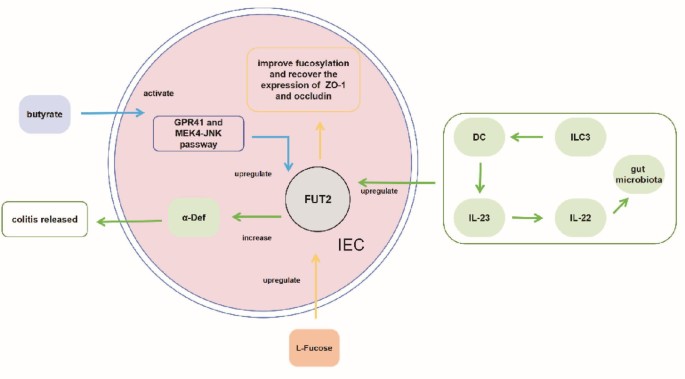
FUT2-mediated fucosylation shapes gut glycans and the microbiome, mechanisms relevant to inflammation and mucosal barrier function in IBD. Understanding these pathways could point to future biomarkers or therapeutic...