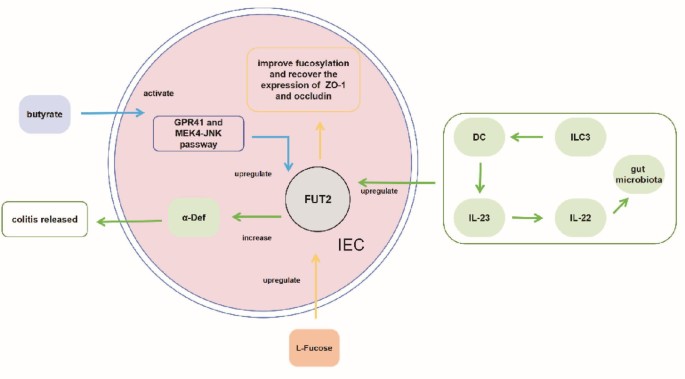
FUT2-mediated fucosylation shapes gut glycans and the microbiome, mechanisms relevant to inflammation and mucosal barrier function in IBD. Understanding these pathways could point to future biomarkers or therapeutic strategies.
Who Should Pay Attention
Researchers (glycobiology, microbiome, IBD), clinicians following emerging biomarkers/targets, and patients interested in IBD biology and genetics.
Study Snapshot
Story typeResearch paper
Evidence typeResearch paper
Source depthMetadata only
What To Know
The paper surveys mechanistic studies and translational potential of FUT2 and α1,2-fucosylation in IBD. It cites genetic association studies, animal models showing fucosylation deficiency can worsen colitis, and work connecting FUT2 to microbiome composition and epithelial barrier function.
The article appears to synthesize basic science and preclinical findings rather than report a new clinical trial or approved treatment. It may discuss experimental interventions (for example, dietary or molecular approaches that modify fucosylation) in preclinical settings, but does not itself establish clinical recommendations.
Keep In Mind
The article appears to be a mechanistic/translational review drawing on genetic association and preclinical studies. Translational implications are exploratory and not evidence of clinical therapies.
Source Details
Review the original publication for the complete reporting, methods, and context.
This Cure8 brief is based on source text from the linked article. Cure8 is informational only and is not a substitute for professional medical advice, diagnosis, or treatment.
The review highlights how microbial metabolites, epigenetic regulation, and mitochondrial metabolism interact to shape inflammation and barrier function in IBD. Understanding these links could help identify new...
Identifies gene and microbiome patterns linked to progression from inflammation to irreversible bowel fibrosis in Crohn’s disease, which could eventually help predict who is at higher risk and inform prevention...
Fibrosis (irreversible bowel scarring) is a major cause of surgery in Crohn’s disease. This study points to molecular and microbiome patterns that may help predict or distinguish fibrosis from active inflammation, which...