Researchers are working to link specific gut microbes and their metabolites to host molecular changes in ulcerative colitis. This study maps candidate microbe–metabolite–host gene connections that could point to new biomarkers or therapeutic targets for UC.
Who Should Pay Attention
Researchers studying the microbiome, metabolite-mediated host interactions, and biomarker discovery in IBD; translational clinicians interested in molecular mechanisms of UC.
Study Snapshot
Story typeResearch paper
Evidence typeResearch paper
Source depthMetadata only
What To Know
This paper used integrative multi-omics and computational methods to nominate candidate links between gut microbes, their metabolites, and host genes in ulcerative colitis (UC).
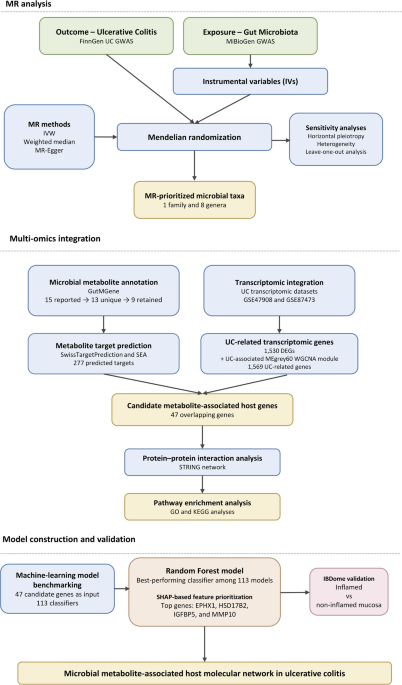
The authors combined Mendelian randomization using microbiome GWAS data, metabolite annotation databases, in silico target prediction, colonic transcriptomics, network analysis, and machine learning to prioritize a set of candidate microbe–metabolite–host gene relationships for UC.
Their workflow prioritized a small number of microbial genera tied to annotated metabolites, predicted human protein targets for those metabolites, and intersected those targets with UC-related genes identified from colonic transcriptomic datasets.
The intersect produced 47 candidate genes enriched for metabolic and lipid-related processes; machine learning methods highlighted several genes (for example, EPHX1, HSD17B2, IGFBP5, MMP10) for further study.
This is a hypothesis-generating, genomics-informed computational study rather than a report of experimental validation; the authors present prioritized targets and pathways intended to guide future laboratory or clinical research.
Keep In Mind
This is a computational, integrative analysis that generates hypotheses; the paper notes that MR findings were nominal and did not survive FDR correction, and the prioritized relationships require experimental validation. The article is behind a subscription paywall for full PDF access.
Source Details
Review the original publication for the complete reporting, methods, and context.
This Cure8 brief is based on source text from the linked article. Cure8 is informational only and is not a substitute for professional medical advice, diagnosis, or treatment.
The study expands the map of gut archaea and identifies archaeal species associated with IBD/UC, suggesting new microbial biomarkers and potential microbe–microbe interactions that might influence inflammation.
Researchers report links between copper-driven cell death pathways and IBD biology; identifying cuproptosis-related biomarkers or drugs could open new diagnostic or therapeutic avenues for people with Crohn's disease or...
The work suggests a microbe–metabolite–immune pathway (B. pseudolongum → taurine metabolites → M2 macrophages) that could point to future microbiome- or metabolite-targeted therapies for ulcerative colitis, which may be...