If you or a loved one are treated with vedolizumab for ulcerative colitis, estimates of how long patients stay on the drug can be influenced by more than drug effectiveness — missed infusions, scheduling, or local rules (like no dose escalation) can affect persistence numbers.
Understanding these limits helps set realistic expectations and informs decisions about monitoring and switching therapy.
Who Should Pay Attention
Patients on vedolizumab or other biologics, IBD clinicians, pharmacists, and researchers studying real-world biologic persistence and treatment sequencing.
Study Snapshot
Story typeResearch paper
Evidence typeResearch paper
Source depthMetadata only
What To Know
The letter does not present new trial results; it critiques methodology and interpretation. Its main point is that, without adherence or implementation metrics, persistence (continuation without formal discontinuation) may mix up biological nonresponse with missed infusions, scheduling problems, or system-level barriers.
The authors note that lack of approved dose escalation in Japan during the study may also affect persistence and that clinician-assessed loss of response can vary across centers.
Implication: The correspondence suggests that future real-world VDZ studies should incorporate adherence measures (e.g., medication possession or infusion attendance metrics) and explicitly account for local regulatory constraints when interpreting persistence and predictors of discontinuation.
Keep In Mind
This is a commentary on a published retrospective multicenter study in Japan; it does not present new patient-level data. The authors’ critique focuses on study methodology (lack of adherence measurement and local regulatory limits on dose escalation) and is intended to guide interpretation and future study design.
Source Details
Review the original publication for the complete reporting, methods, and context.
This Cure8 brief is based on source text from the linked article. Cure8 is informational only and is not a substitute for professional medical advice, diagnosis, or treatment.
If you or your clinician are choosing between advanced therapies for ulcerative colitis, this study suggests past vedolizumab use may be linked to lower likelihood of responding to ustekinumab.
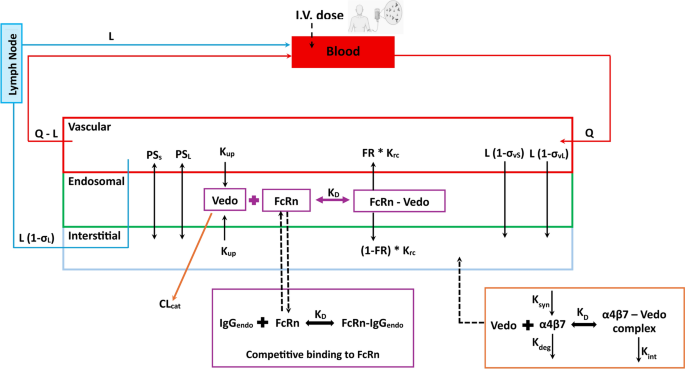
Vedolizumab blood levels can vary with disease activity; a model that links intestinal α4β7 expression to drug exposure helps explain why some patients have lower drug levels and may need different dosing. This could...
The study suggests that about one-quarter of IBD patients treated with advanced therapies develop difficult-to-treat disease, and identifies timing of therapy, age, and specific therapy choice as predictors.