Frequency and Risk Factors for Difficult-to-Treat Inflammatory Bowel Disease among Patients Receiving Advanced Therapies in a Korean Tertiary-Care Cohort.
The study suggests that about one-quarter of IBD patients treated with advanced therapies develop difficult-to-treat disease, and identifies timing of therapy, age, and specific therapy choice as predictors.
For people with IBD, this highlights the importance of monitoring responses to advanced therapies and discussing treatment planning with clinicians.
Who Should Pay Attention
Adult patients with Crohn's disease or ulcerative colitis considering or receiving advanced therapies, gastroenterologists, and researchers studying treatment response and surgical recurrence in IBD.
Study Snapshot
Story typeResearch paper
Evidence typeResearch paper
Source depthJournal abstract
What To Know
This abstract reports a retrospective analysis from a Korean tertiary-care cohort of IBD patients who received at least one advanced therapy (AT). The authors defined difficult-to-treat IBD (DTT-IBD) as multidrug failure (MF; failure after ≥2 ATs with different mechanisms) or multiple resections (MR; ≥2 intestinal resections with recurrence in CD).
About 25% of the 512 patients met MF criteria. Cumulative MF risk rose over time for both UC and CD; UC patients who started ATs within 2 years of diagnosis and older age were at higher risk, while in CD older age and vedolizumab as first-line AT were associated with MF. CD patients undergoing a second surgery had high cumulative risk of MR during follow-up.
What to take away: this is an observational cohort study (abstract-level summary) highlighting that a substantial minority of patients on advanced therapies progress to difficult-to-treat disease, and that timing of therapy initiation, patient age, and choice of first-line AT were associated with higher risk.
The findings support the value of close monitoring and consideration of strategies to prevent repeated surgery in CD.
Limitations and tone: the source is an abstract of a retrospective cohort from a single tertiary center; causality cannot be assumed and details on definitions, confounding factors, or statistical adjustments beyond the abstract are not available here.
Keep In Mind
This is an abstract-level report from a retrospective, single-center cohort; results describe associations, not causal effects. Full-text review would be needed for methods, adjustments, and granular outcomes. The cohort is Korean, which may affect generalizability.
Source Details
Review the original publication for the complete reporting, methods, and context.
This Cure8 brief is based on source text from the linked article. Cure8 is informational only and is not a substitute for professional medical advice, diagnosis, or treatment.
If validated, metabolite patterns could help predict which children will reach remission on vedolizumab, potentially guiding treatment choices and avoiding ineffective therapy.
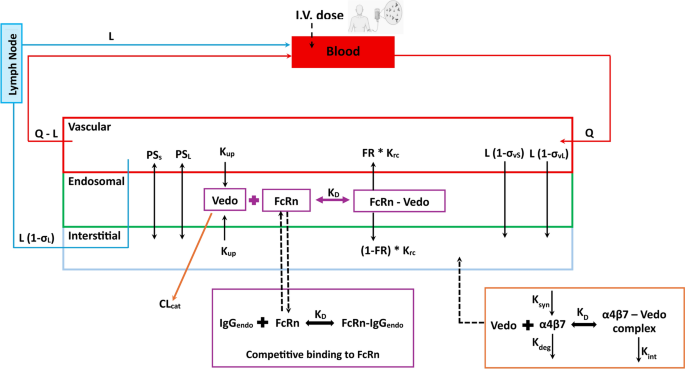
Vedolizumab blood levels can vary with disease activity; a model that links intestinal α4β7 expression to drug exposure helps explain why some patients have lower drug levels and may need different dosing. This could...
ECCO 2026 presented multiple studies that could change IBD care across prevention, medical therapy (including pediatric data), complication‑directed strategies (perianal fistula), and technology‑assisted monitoring....