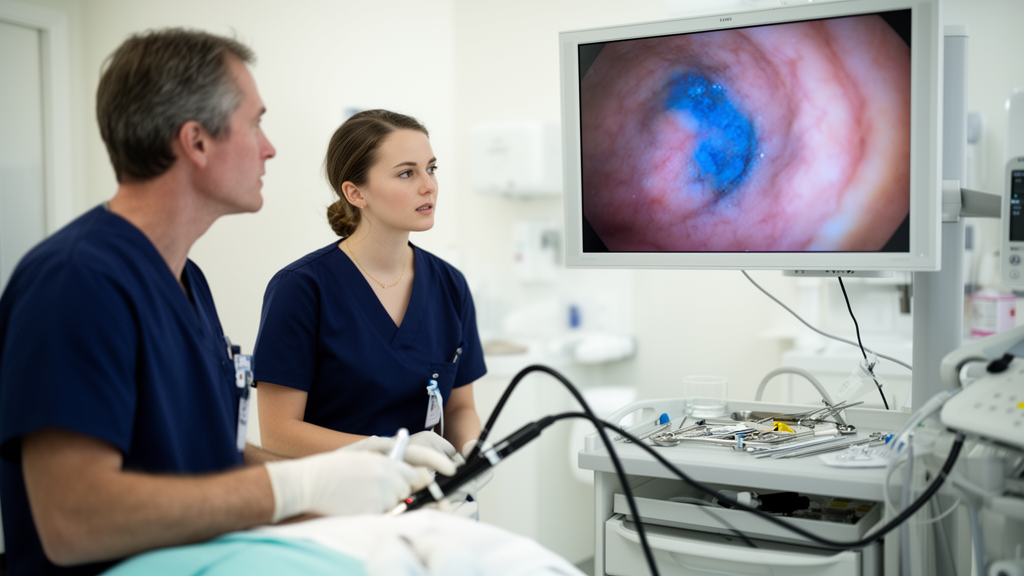
This large UK study links better polyp detection during IBD surveillance endoscopy to operator experience, longer procedure time, and use of dye—factors that could affect early detection of precancerous changes in people with colonic IBD.
Who Should Pay Attention
Patients with colonic IBD (Crohn’s or ulcerative colitis), gastroenterologists/endoscopists, IBD nurses, endoscopy service managers, and researchers focused on surveillance quality.
Study Snapshot
Story typeResearch news
Evidence typeObservational study
Source depthFull source text
What To Know
This UK-wide analysis of almost 16,000 IBD surveillance endoscopies (from the National Endoscopy Database) found that polyp detection rates were higher when checks were done by endoscopists who perform surveillance regularly, when more procedure time was allocated, and when a dye (chromoendoscopy) was used to enhance visibility.
The dataset covered about 65% of UK endoscopy units and included procedures by 4,669 endoscopists in 2024. The authors note a key limitation: the database did not contain pathology results for removed polyps, so the study cannot say whether the higher detection led to fewer cancers.
The study is published in the Journal of Crohn’s and Colitis and is presented as the first national analysis linking operator experience, time, and dye use to polyp detection in IBD surveillance.
Keep In Mind
Observational analysis of National Endoscopy Database records; pathology results for removed polyps were not available in the dataset, so impact on cancer outcomes is unknown.
Source Details
Review the original publication for the complete reporting, methods, and context.
This Cure8 brief is based on source text from the linked article. Cure8 is informational only and is not a substitute for professional medical advice, diagnosis, or treatment.
A sizable minority of people newly diagnosed with IBD—about 1 in 5 with Crohn’s and 1 in 10 with ulcerative colitis—received no IBD-specific drugs within the first year. Understanding who is untreated and why could...
PROM completion is important for monitoring symptoms and disease control between visits. The study shows a single empowerment campaign produced a short‑term boost in PROM response but not sustained engagement,...
A new CE-marked food-intolerance diagnostic could give people with Crohn’s or UC a non-invasive tool to explore dietary triggers alongside clinical care. Regulatory certification means the products met EU safety and...