Journal of the Science of Food and Agriculture· via Crossref
Cure8 research brief
Identification of characteristic markers in Castanopsis fissa honey and its anti‐inflammatory mechanism in ulcerative colitis: a multi‐strategy approach
This paper identifies specific anti‑inflammatory compounds in a type of monofloral honey and shows benefit in a mouse model of ulcerative colitis, suggesting diet‑derived molecules might influence intestinal inflammation and the gut microbiome.
Who Should Pay Attention
Adult patients with ulcerative colitis or IBD interested in diet and functional foods, clinicians advising on complementary approaches, and researchers studying microbiome‑diet interactions or natural product therapeutics.
Study Snapshot
Story typeResearch paper
Evidence typeResearch paper
Source depthJournal abstract
What To Know
The experiments were preclinical and used a mouse model of ulcerative colitis, not human patients. Metabolomics and in silico docking suggest possible molecular targets (MPO, PTGS2, AKT1) and pathways, but these are predictive and require validation in humans.
If you’re curious about dietary approaches, this work highlights specific honey components with anti‑inflammatory potential, but it does not establish clinical efficacy, dosing, or safety for people with IBD.
For patients considering dietary supplements, discuss with your clinician before trying new products, especially if you have active disease, are on immunosuppressants, or have diabetes or allergies.
Keep In Mind
Findings come from metabolomics, computational predictions and a DSS mouse model; animal results do not equal clinical benefit. The authors note further studies are needed to test therapeutic efficacy after disease onset and in humans.
Source Details
Review the original publication for the complete reporting, methods, and context.
This Cure8 brief is based on source text from the linked article. Cure8 is informational only and is not a substitute for professional medical advice, diagnosis, or treatment.
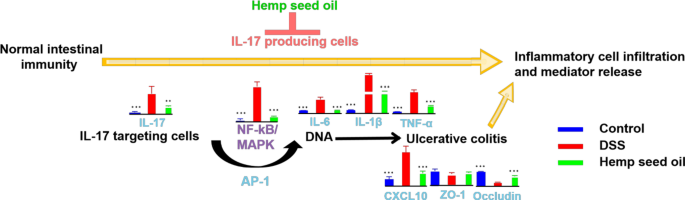
The study uses a mouse model of ulcerative colitis to test hemp seed oil and reports molecular and metabolic changes alongside reduced disease in the model. Patients and researchers may be interested because it explores...
This preclinical study suggests Antarctic krill oil may reduce inflammation and alter the gut microbiome in a mouse model of ulcerative colitis, which could point toward microbiota-targeted nutritional strategies worth...
The study suggests a dietary protein (ovotransferrin) can reduce colitis severity in mice by changing the gut microbiota and increasing certain secondary bile acids that lower inflammation and gut permeability.