
Naunyn-Schmiedeberg's Archives of Pharmacology
Cure8 research brief
Cure8 research brief
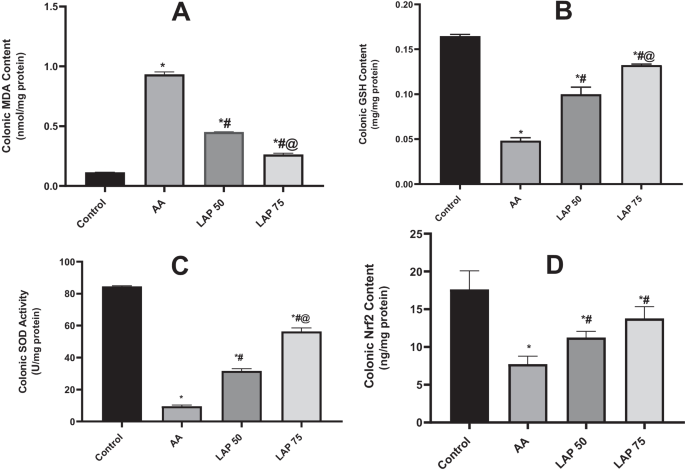
This study suggests the cancer drug lapatinib reduced colon damage and liver changes in a rat model of chemical colitis, which could point to new research directions for IBD treatments or gut–liver injury mechanisms.
Researchers and clinicians studying IBD pathophysiology, drug-repurposing or gut–liver interactions; patients interested in IBD research updates (not for treatment guidance).
This paper reports an animal (rat) study testing the anti-cancer drug lapatinib in an acetic acid–induced model of ulcerative colitis and associated liver injury. The authors present mechanistic discussion linking effects to inflammatory and oxidative-stress pathways.
The findings are preclinical: the experiment used chemically induced colitis in rats rather than human patients, so results do not directly translate into clinical benefit for people with UC or Crohn’s disease.
Lapatinib is not an approved IBD therapy; this work suggests possible drug-repurposing hypotheses that would require further study, including safety evaluation in relevant clinical settings. If you are reading because of personal IBD care, this is early-stage research and not a basis for changing treatment.
Clinicians and researchers interested in drug-repurposing, tyrosine kinase inhibitors, or gut–liver axis mechanisms may find the methodology and pathway analyses most relevant.
Preclinical animal-model results are hypothesis-generating only. Lapatinib is an oncology drug with its own safety profile; human trials would be needed before any clinical use in IBD. The article is a full-text experimental study in an academic journal (Naunyn-Schmiedeberg’s Archives of Pharmacology).
Review the original publication for the complete reporting, methods, and context.
This Cure8 brief is based on source text from the linked article. Cure8 is informational only and is not a substitute for professional medical advice, diagnosis, or treatment.
This study identifies a plant-derived polysaccharide (from the stem of Dendrobium huoshanense) that reduced inflammation and tissue injury in a mouse model of ulcerative colitis and points to GLP-1 signaling as a likely...
Researchers used a standard mouse colitis model to show a traditional herbal formula reduced inflammation and improved gut barrier markers, implicating the IL-33/ST2 immune pathway. This could guide future preclinical...
The study identifies a plant extract that reduced colitis-like injury in mice and altered gut microbes and intestinal barrier markers, which could inform future preclinical work. For people with IBD, this is early-stage...

