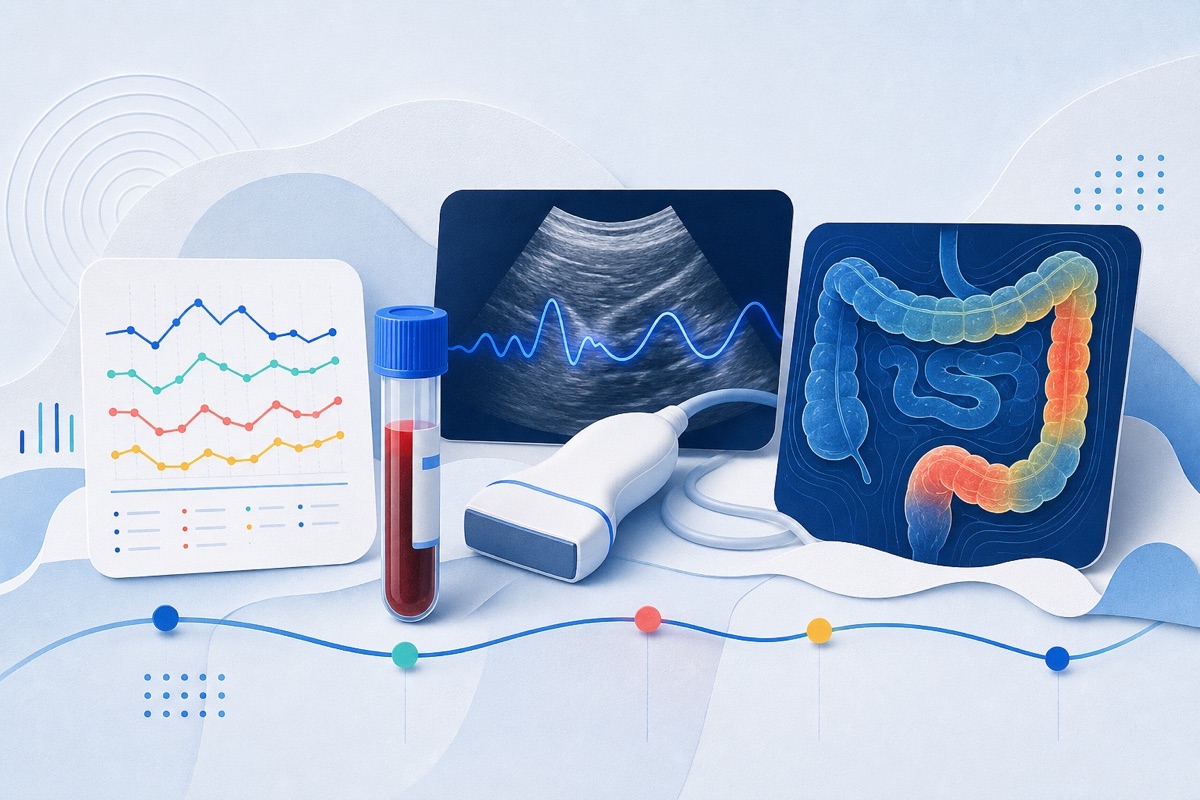
Surgery remains an important treatment option for Crohn’s disease and may be considered earlier for some patients. Decisions about timing, technique, and perioperative care can affect long-term outcomes and recurrence risk.
Who Should Pay Attention
Adult patients with Crohn’s disease (especially those with ileocecal disease, strictures, or perianal fistulas), clinicians (gastroenterologists and colorectal surgeons), and post-surgery patients monitoring recurrence risk.
Study Snapshot
Story typeResearch paper
Evidence typeResearch paper
Source depthJournal abstract
What To Know
This article is a focused narrative review of trials, meta-analyses, observational studies, and guidelines rather than a new randomized trial. It highlights that surgery is increasingly considered earlier in treatment algorithms for selected patients with Crohn’s disease and remains a core part of multidisciplinary care.
The review stresses preoperative optimization (nutrition and adjusting immunosuppression) as key to better perioperative outcomes, and notes laparoscopic approaches are preferred when feasible, with robotic platforms emerging.
It also summarizes that some surgical innovations that appeared promising (Kono-S anastomosis, extended mesenteric excision) have not consistently shown reduced postoperative recurrence in prospective studies.
Keep In Mind
This classification is based on the article abstract from Biomedicines (MDPI). The article is a narrative review that synthesizes randomized trials and guidelines; it does not report new primary trial data. Some surgical techniques remain under investigation and results across studies have been mixed.
Source Details
Review the original publication for the complete reporting, methods, and context.
This Cure8 brief is based on source text from the linked article. Cure8 is informational only and is not a substitute for professional medical advice, diagnosis, or treatment.
Capsule endoscopy can be helpful for small-bowel assessment in Crohn’s disease but carries a risk of retention when strictures are present. Retained capsules may be asymptomatic yet still require surgery, so better...
After bowel resection, Crohn’s often returns quietly at the surgical join (anastomosis). Early, planned monitoring can detect inflammation before symptoms appear and help prevent symptomatic recurrence or repeat surgery.