Materials today. Bio
Cure8 research brief
Cure8 research brief
A single agent that both highlights inflamed colon tissue on MRI and delivers anti-inflammatory therapy could improve how ulcerative colitis is monitored and treated, reducing reliance on metal contrast agents.
This preclinical study suggests a metal-free, TEMPO-based nanoparticle can image inflammation and reduce colitis in models, so it points to a possible future diagnostic-therapeutic approach.
Researchers in IBD imaging and nanomedicine; clinicians following emerging diagnostics/therapies for ulcerative colitis; patients interested in future imaging-guided treatments.
This paper reports a preclinical materials-biology study describing a metal-free, TEMPO-grafted polymer nanoparticle that carries the anti-inflammatory drug olsalazine (reported as TBATM@OS) and is proposed as a combined MRI contrast agent and therapeutic (theranostic) for ulcerative colitis.
In lab and animal-model experiments the authors report that TBATM@OS produces MRI signal at inflamed colon sites, scavenges reactive oxygen species, reduces inflammation compared with a standard gadolinium agent (Magnevist), and appears to affect TNF signaling, barrier integrity, and the gut microbiota.
The work is at an early, preclinical stage and appears focused on materials synthesis, imaging performance, and mechanistic readouts rather than human clinical data.
The main takeaways are that a metal-free nitroxide-based contrast/therapy nanoparticle may allow MRI-guided drug delivery and has multiple proposed anti-inflammatory actions in models of colitis. Practical points: this is a materials/animal study reported in a scientific journal abstract; it is not clinical evidence of safety or effectiveness in people.
Any clinical use would require further safety testing and human trials.
Abstract-level report of preclinical (materials and biological model) research. Not clinical trial data; safety and efficacy in humans are untested.
Review the original publication for the complete reporting, methods, and context.
This Cure8 brief is based on source text from the linked article. Cure8 is informational only and is not a substitute for professional medical advice, diagnosis, or treatment.
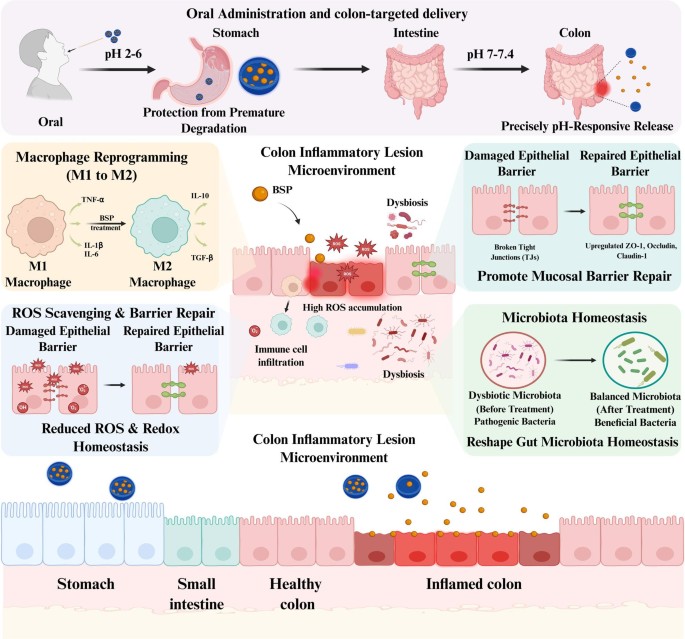
The study describes a new oral, colon‑targeted delivery system that improved outcomes in a mouse model of ulcerative colitis and shifted immune and microbiome markers—research that could inform future therapies focused...
Researchers are exploring methods to make probiotic therapies more stable through the digestive tract and to deliver anti-inflammatory molecules directly where intestinal inflammation produces high reactive oxygen...
This study reports a new colon-targeted delivery system for unconjugated bilirubin that reduced inflammation and improved mucosal healing in a mouse model of ulcerative colitis; it could inform future drug-development...