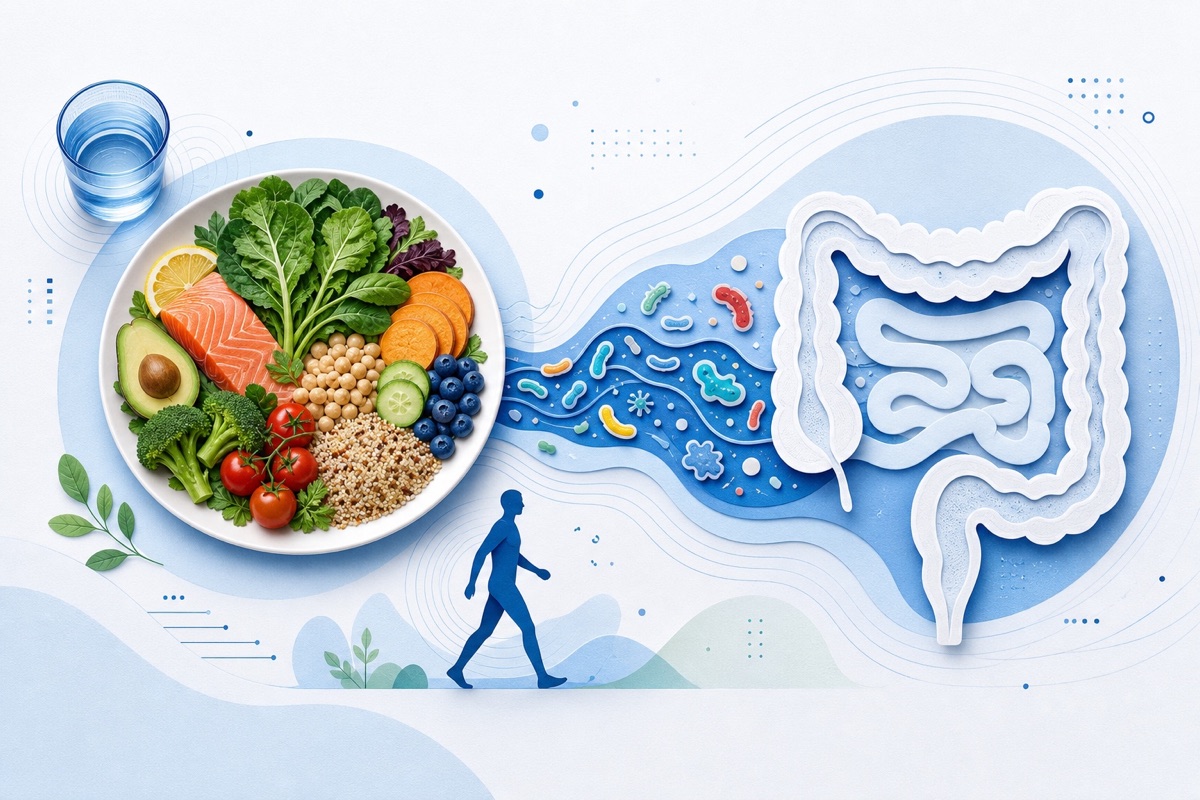
Microbial predictors of sustained clinical remission following the Crohn's disease exclusion diet in adults and microbiome shifts toward healthy pediatric controls.
If you or your clinician are considering dietary therapy like the CDED for Crohn's disease, microbiome features at baseline may influence who achieves sustained remission. Understanding these links could help personalize diet-based treatments in the future.
Who Should Pay Attention
Adult patients with Crohn's disease, clinicians considering diet-based therapies, and researchers studying the microbiome and biomarkers in IBD.
Study Snapshot
Story typeResearch paper
Evidence typeResearch paper
Source depthJournal abstract
What To Know
The authors analyzed microbiome data from randomized controlled trials in adults and children and found that patients who achieved sustained remission had different baseline microbial and functional profiles than those who did not.
SCR was linked with lower alpha diversity, higher levels of Alistipes and Faecalibacterium, and enrichment of genes related to redox balance, fatty acid metabolism, and DNA repair. Non-responders showed signatures associated with NAD biosynthesis, bacterial adhesion, and pro-inflammatory pathways.
The study reports that microbiome composition in adults shifted during CDED-induced remission toward a profile more similar to healthy pediatric controls, suggesting diet-driven microbial changes accompany clinical improvement.
The authors propose the gut microbiome might serve as a biomarker to identify patients most likely to benefit from the dietary therapy, supporting a personalized approach.
Keep In Mind
Results come from analyses of RCT microbiome samples and are reported at the abstract level. Microbiome-based biomarkers are promising but not yet established as clinical tests.
Source Details
Review the original publication for the complete reporting, methods, and context.
This Cure8 brief is based on source text from the linked article. Cure8 is informational only and is not a substitute for professional medical advice, diagnosis, or treatment.
This study suggests that higher intake of specific fibers (beta‑glucan and inulin) may be linked to lower Crohn’s risk in people with a family history, and it connects those fibers to biomarkers of inflammation, barrier...
This study suggests machine learning of stool microbiome data could eventually help distinguish IBD (especially Crohn’s) from healthy people and some other bowel or systemic conditions.
A coordinated national research network can accelerate studies that matter to people with IBD—like tracking real-world disease patterns, testing diet and psychosocial approaches, improving monitoring with biomarkers and...