The work suggests MSC-derived exosomes may reduce colitis and alter the gut microbiome and metabolites (notably SCFAs) in ways linked to lower inflammation, which could inspire future therapeutic research for IBD.
Who Should Pay Attention
Researchers studying IBD therapeutics, microbiome modulation, stem-cell/vesicle-based therapies; translational clinicians interested in novel anti-inflammatory approaches; and basic scientists focusing on host–microbiome metabolic interactions.
Study Snapshot
Story typeResearch paper
Evidence typeResearch paper
Source depthJournal abstract
What To Know
The study used a DSS-induced colitis mouse model to test whether MSC-derived exosomes (MSCs-Exos) aid colonic repair.
Treated mice showed reduced inflammation, improved epithelial restoration, higher MUC2 expression, and shifts in microbial composition (increases in taxa such as Akkermansiaceae, Lactobacillaceae, Lachnospiraceae and decreases in Escherichia coli).
Metagenomic pathway analysis and metabolomics indicated changes in microbiota-associated metabolism and increased short-chain fatty acids (SCFAs), with correlations reported between beneficial microbes/SCFAs and anti- versus pro-inflammatory cytokines.
This is a preclinical laboratory study (mouse model) and the article is presented as a preprint abstract; it has not completed peer review. Findings describe biological effects and correlations in mice and do not constitute evidence that the same treatment is safe or effective in people with IBD.
Keep In Mind
this is a preclinical mouse study reported as a preprint abstract. It shows associations and mechanistic signals in animals but does not provide clinical safety or efficacy data in humans. Peer review and human studies are needed before clinical relevance can be established.
Source Details
Review the original publication for the complete reporting, methods, and context.
This Cure8 brief is based on source text from the linked article. Cure8 is informational only and is not a substitute for professional medical advice, diagnosis, or treatment.
The study shows a probiotic strain reduced inflammation and improved gut barrier and microbiome/metabolite profiles in a mouse colitis model, indicating a possible new avenue for UC therapies worth further research.
The paper describes a preclinical demonstration that a plant-derived compound reduced inflammation and changed gut microbiota and metabolite profiles in a mouse colitis model, suggesting a possible route for future...
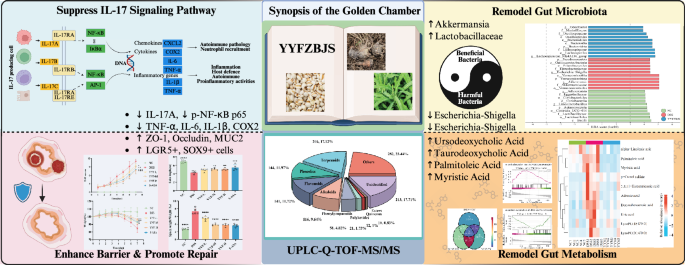
The study suggests a multi-component herbal formula may affect inflammation, the intestinal barrier, epithelial repair, the gut microbiome, and fecal metabolites in a mouse colitis model—topics relevant to understanding...