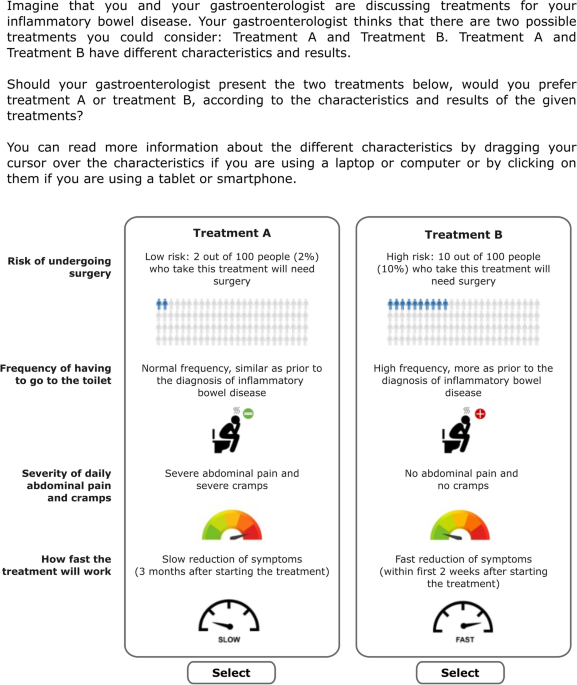
Patient engagement in treatment decisions can affect satisfaction, adherence, and care planning. This study identifies practical factors (treatment options, trusted providers, community support) associated with higher engagement scores in people with IBD.
Who Should Pay Attention
Clinicians and care teams treating adults with IBD (UC and Crohn's), patient advocates and support-group organizers, researchers studying shared decision-making and patient-reported engagement.
Study Snapshot
Story typeResearch paper
Evidence typeResearch paper
Source depthJournal abstract
What To Know
The researchers used a web-based questionnaire and regression analysis to explore which background factors correlate with PTES scores. Key positive associations included number of available treatment options, presence of complications, trust in the attending physician, number of trusted healthcare professionals, and availability of supportive communities.
Subgroup analysis suggested the number of treatment options had a larger influence for ulcerative colitis patients, while having more trusted healthcare professionals mattered more for Crohn’s disease patients.
Practical takeaway: The paper supports the idea that offering patients clear choices and building trust with care teams are linked with greater patient engagement. This may be useful when clinicians and care teams design consultations and support resources for people with IBD.
Keep In Mind
Structured content depth is abstract: the supplied text is an abstract from a journal article (BMC Research Notes). The study used a web questionnaire and regression analysis; this brief summarizes the abstract and does not reflect a full-text review of the complete paper.
Source Details
Review the original publication for the complete reporting, methods, and context.
Research paperEvidence type derived from source or registry metadata.
PublicationBMC research notes
AuthorsHisao Toyoshima, Chiharu Yashima, Tomohide Akase +1 more
InstitutionPharmacy Management Institute, Graduate School of Business, Japan University of Economics, 25-17 Sakuragaokacho, Shibuya-Ku, Tokyo, Japan. toyoshima.hisao@gmail.com.
Conflict statement: Declarations. Ethics approval and consent to participate: Ethics approval was obtained from the Research Ethics Committee, Japan University of Economics (Approval number: 2022-0328-02). The survey was conducted with consent interpreted as having been obtained with the submission of responses. Consent for publications: Not applicable. Competing interests: The authors declare no competing interests.
This Cure8 brief is based on source text from the linked article. Cure8 is informational only and is not a substitute for professional medical advice, diagnosis, or treatment.
This global survey shows that people with IBD prioritize symptom relief and psychological well-being over treatment features like administration route or speed of onset. That matters for shared decision-making, trial...
This registry study shows many people with IBD in Kazakhstan had clinically active disease at enrollment and identifies factors linked with active UC and CD. It highlights potential gaps in disease control and...
Registries that automatically extract clinical data with AI/NLP can speed research, help identify patient cohorts for studies or trials, and may eventually support better clinical decision-making for people with IBD....