The Patient - Patient-Centered Outcomes Research· via Crossref
Cure8 research brief
Patient Preferences for Inflammatory Bowel Disease Treatment: Results from a Global Survey Conducted in Partnership with the European Federation of Crohn’s & Ulcerative Colitis Associations
This global survey shows that people with IBD prioritize symptom relief and psychological well-being over treatment features like administration route or speed of onset. That matters for shared decision-making, trial endpoint selection, and health-technology assessments that aim to reflect patient priorities.
Who Should Pay Attention
Patients with Crohn’s disease or ulcerative colitis, clinicians treating IBD, researchers designing trials and patient-centered outcomes, and patient advocates/HTA stakeholders.
Study Snapshot
Story typeResearch paper
Evidence typeResearch paper
Source depthMetadata only
What To Know
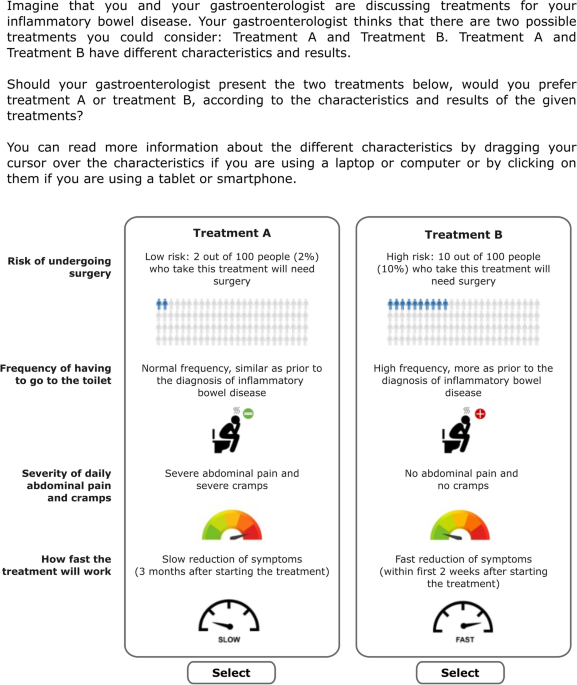
This study reports results from a large international patient-preference survey (discrete choice experiment) of people with IBD (n=1,452 across 40 countries). It measured how patients weigh 14 treatment- and disease-related attributes when choosing between hypothetical therapies.
Results: psychological impact, abdominal pain/cramps, and bowel urgency were the strongest drivers of treatment choice; attributes tied to specific treatments (mode of administration, endoscopic remission, speed of onset) were less influential. Preferences varied by diagnosis (CD vs UC/IBD-U), age, gender, region, treatment history, and surgery history.
Implication: the authors argue that symptom relief and psychological well-being matter most to patients and recommend integrating quality-of-life and symptom-focused outcomes into trial design, regulatory assessment, and health-technology evaluation.
Keep In Mind
The article is a discrete choice experiment (survey) reporting stated preferences from a large, international sample; it reflects what patients say matters most, not clinical trial or effectiveness outcomes. Subgroup differences were observed and may inform individualized discussions.
Source Details
Review the original publication for the complete reporting, methods, and context.
Funding disclosed by the source: Fonds Wetenschappelijk Onderzoek, award 1SE9425N; Clinical Research fund (KOOR) at the University Hospitals Leuven; Research council at the KU Leuven
This Cure8 brief is based on source text from the linked article. Cure8 is informational only and is not a substitute for professional medical advice, diagnosis, or treatment.
The article explains how gut bacteria may contribute to IBD and summarizes common tests and treatments people are likely to encounter. It highlights emerging microbial therapies (probiotics and FMT) that some patients...
Understanding the differences between Crohn’s and ulcerative colitis helps patients and caregivers recognize likely symptom patterns, know which tests and treatments are commonly used, and when to seek specialist care....
This press release reports phase 2 evidence that a new experimental antibody (duvakitug) showed clinical, endoscopic, and histologic improvements in both UC and Crohn’s disease, which could lead to a new treatment option...