Materials today. Bio
Cure8 research brief
Cure8 research brief
The study describes a colon-targeted delivery system that enhanced local anti-inflammatory, barrier-repair, and microbiota-restoring effects of celastrol in a mouse UC model. If translatable, this approach could lead to non‑invasive therapies that act locally in the gut with lower systemic exposure.
Researchers and clinicians working on IBD drug delivery, microbiome therapeutics, and immunomodulation; patients and advocates interested in emerging non‑systemic treatments and microbiome-targeted approaches.
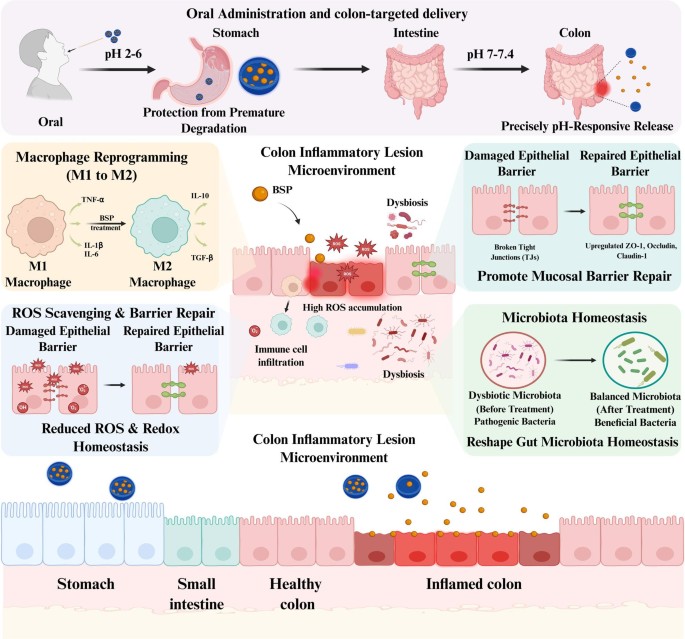
This Materials Today Bio paper reports a preclinical drug-delivery system for ulcerative colitis: pH-responsive chitosan–alginate microgels carrying ginsenoside Rh2–substituted liposomes loaded with celastrol (M/Rh2-LPs@Cel).
In mouse DSS-colitis models the formulation targeted the colon after oral dosing and produced multiple effects reported by the authors — shifting macrophage polarization toward an anti-inflammatory phenotype, improving epithelial barrier markers, increasing short-chain fatty acids, and altering gut microbiota composition toward control-like profiles.
The study is preclinical and focused on formulation, mechanistic readouts, and efficacy in a chemical-colitis mouse model rather than clinical outcomes in people. Safety tests reported no significant toxicity in the in vitro and in vivo assays described by the authors.
If you follow research in IBD, this work is primarily interesting as an example of a combined-targeted delivery strategy (bioactive carrier + colon-targeting microgel) that aims to concentrate a poorly soluble natural compound (celastrol) in the colon and produce multi-modal effects (immune, barrier, microbiota).
This is preclinical, performed in DSS-induced colitis in mice with formulation and mechanistic endpoints; it does not demonstrate safety or efficacy in humans. Celastrol has poor oral bioavailability, and the paper focuses on addressing that via a novel carrier rather than reporting clinical results.
Review the original publication for the complete reporting, methods, and context.
Conflict statement: The authors declare that they have no known competing financial interests or personal relationships that could have appeared to influence the work reported in this paper.
This Cure8 brief is based on source text from the linked article. Cure8 is informational only and is not a substitute for professional medical advice, diagnosis, or treatment.
The study describes a new oral, colon‑targeted delivery system that improved outcomes in a mouse model of ulcerative colitis and shifted immune and microbiome markers—research that could inform future therapies focused...
The study describes a novel hydrogel designed to deliver sinapic acid directly to the inflamed colon and release drug in response to a reducing environment—an approach that could improve targeted oral therapies for...
This research describes a new nanoparticle/hydrogel delivery system that reduced inflammation and helped restore the intestinal barrier in mouse models of ulcerative colitis. It suggests a potential future therapeutic...