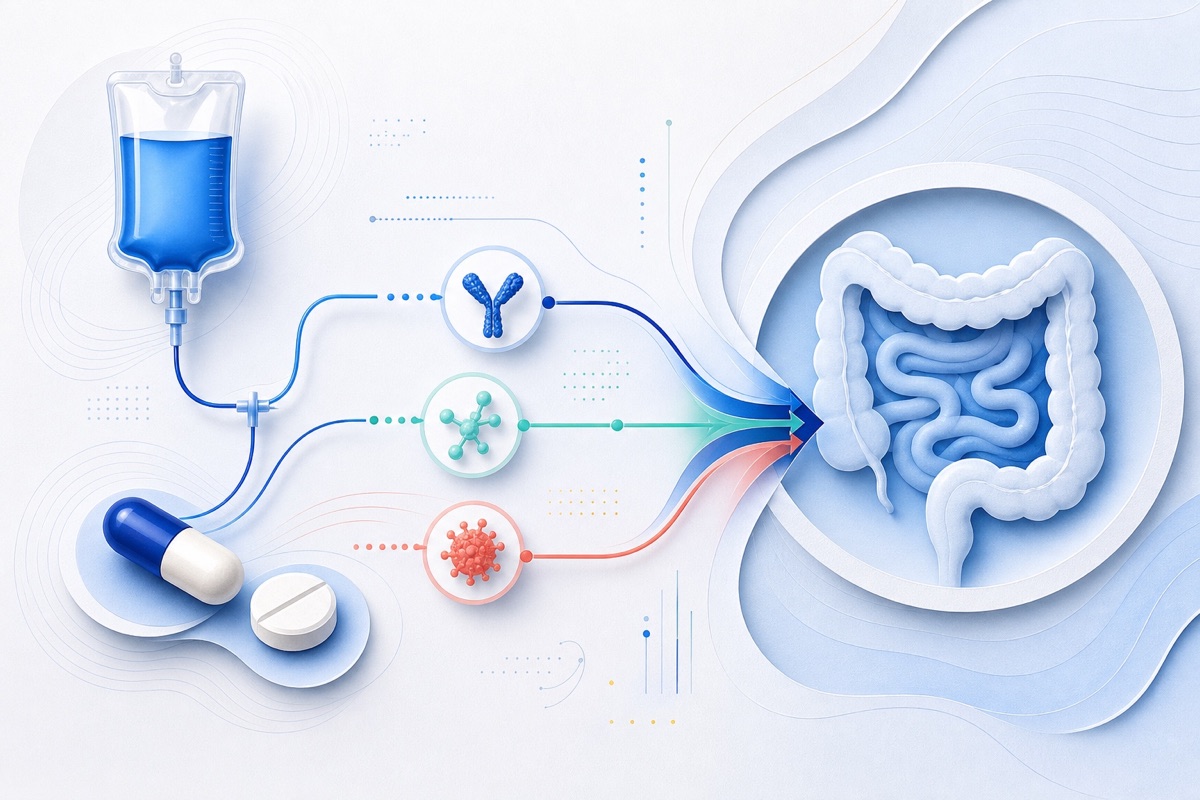
This research links molecular subtypes of ulcerative colitis to infliximab (anti-TNF) response using an interpretable machine-learning method, which could help identify which patients are more or less likely to respond to biologic therapy and guide future biomarker-driven trials.
Who Should Pay Attention
Researchers in IBD molecular profiling and AI, clinicians interested in biologic response prediction (infliximab/anti-TNF), and patients interested in personalized treatment research.
Study Snapshot
Story typeResearch paper
Evidence typeResearch paper
Source depthJournal abstract
What To Know
This study describes an interpretable machine-learning framework that creates “response-aware” molecular subtypes of ulcerative colitis by training on cohorts with known infliximab response, then applying the learned subtype model to other datasets.
Four subtypes were reported with different immune and molecular profiles and varying infliximab response rates; one subtype showed relatively low immune activation and the highest response rate.
The authors used SHAP values from a treatment-response predictive model to build representations for spectral clustering, identified subtype-associated biomarkers, and validated subtype patterns across independent cohorts. The approach is positioned as a way to stratify patients by likely biologic response and to generate hypothesis-driving biomarkers.
The paper is framed as a methodological advance (interpretable ML + response-aware subtyping) rather than a clinical trial showing treatment benefit. It suggests potential utility for patient stratification and biomarker development but does not itself change treatment guidelines or provide validated clinical decision rules.
Keep In Mind
Structured-content depth: abstract. Findings are based on computational analyses and cross-cohort validation described in the paper; prospective clinical validation is required before clinical use.
Source Details
Review the original publication for the complete reporting, methods, and context.
This Cure8 brief is based on source text from the linked article. Cure8 is informational only and is not a substitute for professional medical advice, diagnosis, or treatment.
Subcutaneous infliximab may let children on infliximab avoid regular IV infusions while keeping drug levels high and maintaining remission. Results are relevant to families and clinicians considering switching pediatric...
Fatigue is common in people with Crohn’s disease and ulcerative colitis and can persist even when standard measures say the disease is in remission. This study suggests stricter definitions of remission don’t necessarily...
Extrapulmonary TB can be triggered or revealed during immunosuppressive biologic therapy and may mimic other causes of liver injury; early recognition and TB-specific testing are important for timely treatment and to...