
Surgery Today
Cure8 research brief
Cure8 research brief
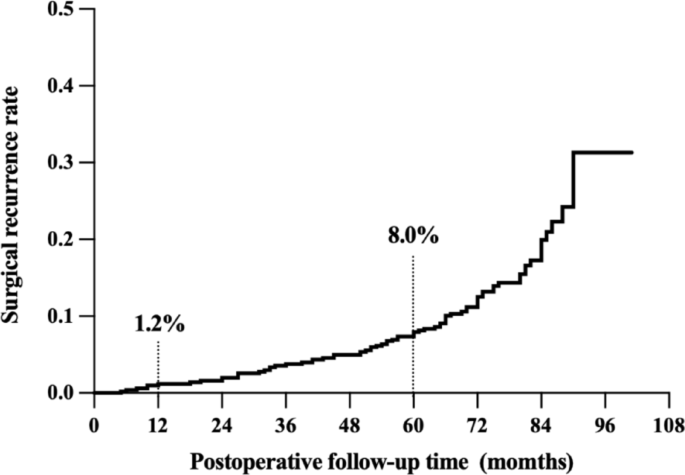
The study highlights factors linked to needing another operation after ileocecal resection for Crohn’s disease and suggests postoperative biologic therapy may lower long-term reoperation risk. That directly affects treatment planning after surgery.
Post-surgery patients with Crohn’s disease, gastroenterologists and colorectal surgeons, and researchers studying postoperative recurrence and biologic prophylaxis.
The study is a retrospective cohort with median follow-up around 6+ years and reports associations (hazard ratios) rather than causal proof.
The finding that postoperative biologic prophylaxis was protective supports current interest in using biologics after surgery to reduce re-resection, but treatment decisions depend on individual clinical context and guideline recommendations.
If you are a patient planning or recovering from ileocecal resection, discuss with your gastroenterologist or surgeon whether postoperative biologic prophylaxis is appropriate for your case; clinicians may consider prior anti-TNF exposure and history of multiple surgeries or perianal disease when assessing recurrence risk.
This summary is grounded in the article abstract and metadata provided; Cure8 did not review the full subscription content PDF.
This is a retrospective observational study reporting associations; it does not prove causation. The article preview is subscription content — the summary is based on the provided abstract and metadata, not a full-text appraisal.
Review the original publication for the complete reporting, methods, and context.
This Cure8 brief is based on source text from the linked article. Cure8 is informational only and is not a substitute for professional medical advice, diagnosis, or treatment.
The study is comparing common biologics given after Crohn's surgery to prevent endoscopic recurrence—a key issue for people who have had bowel resection. Knowing which drugs perform better in real‑world practice could...
This trial is testing whether adding vedolizumab after autologous stem cell transplant can improve remission rates for people with severe Crohn's disease that has failed multiple therapies.
This study looks at upadacitinib in people with Crohn’s disease who did not respond to anti-TNF drugs — a common and challenging clinical situation.