Researchers can use these human tissue slice cultures to study inflammation and test drugs on a patient’s own biopsy tissue, which could eventually help explain treatment response or resistance in IBD and related diseases.
Who Should Pay Attention
Researchers and translational scientists; clinicians involved in IBD research or personalized medicine collaborations; adult patients interested in research on IBD mechanisms and drug-response testing.
Study Snapshot
Story typeResearch paper
Evidence typeResearch paper
Source depthJournal abstract
What To Know
This article describes a laboratory protocol to create patient-derived tissue slice cultures from endoscopic biopsy specimens (ePDTC) including inflamed mucosa from people with IBD.
The method preserves epithelial, stromal, and immune compartments and is intended as a translational platform to study inflammatory signaling, cell death pathways, and to test pharmacologic agents on human tissue samples.
The protocol is presented as a general-purpose research tool for mechanistic studies and for individualized drug-response profiling in cancer and inflammatory diseases.
It is not a clinical treatment; rather it is a preclinical model that may help researchers or clinicians study why some tissues resist therapy and to screen candidate anti-inflammatory or anticancer drugs in patient-derived samples.
Because the article is an abstract/protocol description, it does not report clinical results or recommend changes in patient care. It may be most useful to researchers designing translational studies and to clinicians collaborating on ex vivo testing programs. Structured content depth: abstract.
Keep In Mind
This paper is a methods/protocol abstract describing a laboratory model (patient-derived tissue slice cultures) rather than clinical trial results. It outlines a research platform for mechanistic and drug-testing studies but does not provide patient-level outcomes or validated clinical applications.
Source Details
Review the original publication for the complete reporting, methods, and context.
This Cure8 brief is based on source text from the linked article. Cure8 is informational only and is not a substitute for professional medical advice, diagnosis, or treatment.
This study describes a local rectal therapy that combines mesalamine with probiotic‑derived extracellular vesicles to promote mucosal healing and reduce inflammation in ulcerative colitis models, which could point toward...
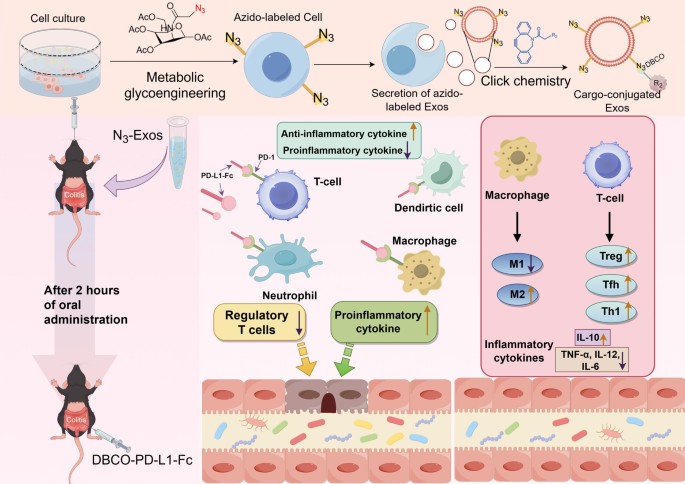
This study presents a targeted immunotherapy approach designed to concentrate an immune‑modulating protein (PD‑L1‑Fc) in the inflamed colon, which could in future reduce systemic side effects of biologic immunomodulators...
This work explores a novel, programmable way to deliver anti-inflammatory protein therapy (IL-10) directly in the gut using engineered yeast and wearable electronics. If further developed and translated, it could offer a...