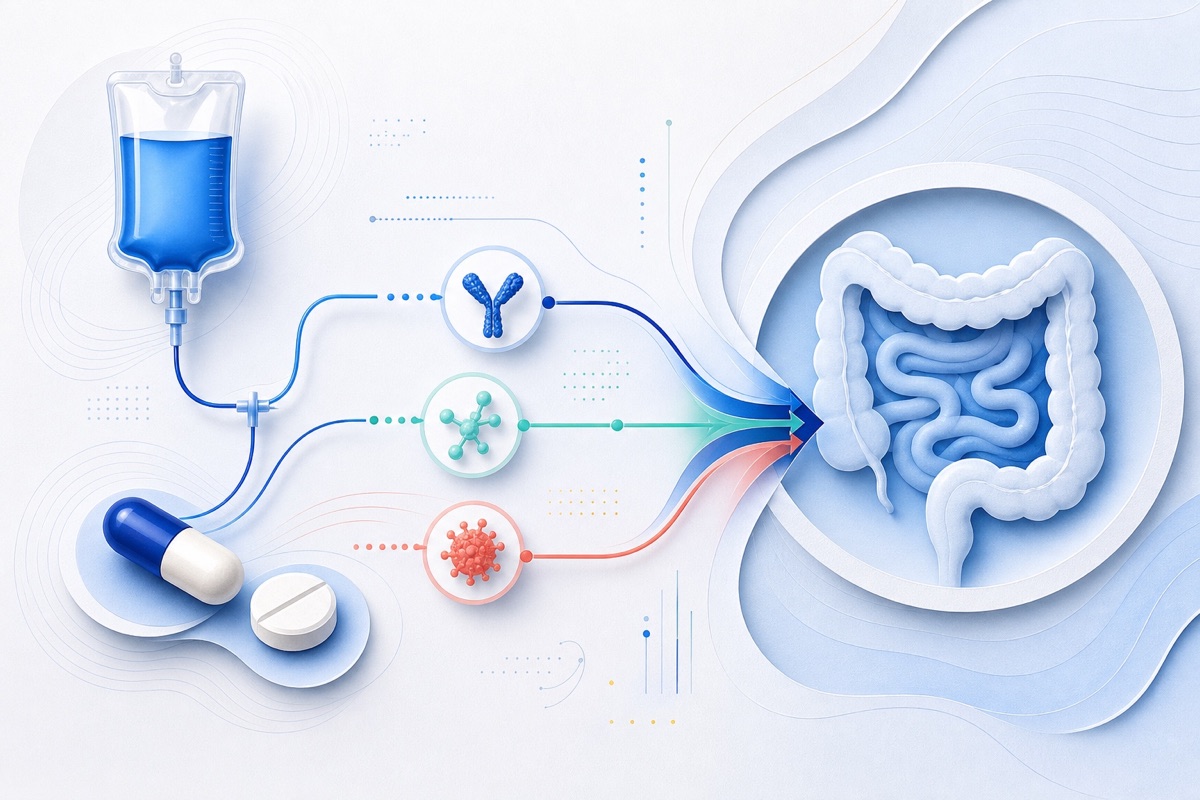
Some people with moderate-to-severe Crohn’s who don’t fully respond to one advanced therapy may hear about adding a second drug. This article explains when clinicians might consider that approach, the potential benefits for hard-to-treat disease or fistulas, and the safety concerns to weigh.
Who Should Pay Attention
Adults with Crohn’s disease, especially those on biologics or small-molecule therapies, clinicians treating IBD, and caregivers of people with refractory or perianal Crohn’s disease.
Study Snapshot
Story typeClinical Reference
Evidence typePatient Education
Source depthFull source text
What To Know
Experts say stacking may be considered for people who get partial benefit from a first advanced therapy, have refractory disease after many treatments, have extraintestinal manifestations, or have perianal fistulizing disease.
Gut-specific agents (vedolizumab) combined with IL-23 inhibitors (e.g., risankizumab, guselkumab) are mentioned as combinations some clinicians find relatively appealing. The article stresses weighing risks (higher infection risk, limited trial data) and close monitoring when dual therapy is used.
The piece does not present new trial data or definitive safety conclusions; it reports clinician perspectives and limited real-world/observational evidence.
Keep In Mind
The article summarizes expert opinion and observational/real-world experience rather than randomized clinical trial results. It emphasizes individualized decision-making and careful monitoring; it does not provide treatment recommendations or new efficacy/safety data.
Source Details
Review the original publication for the complete reporting, methods, and context.
This Cure8 brief is based on source text from the linked article. Cure8 is informational only and is not a substitute for professional medical advice, diagnosis, or treatment.
The study suggests upadacitinib may improve both symptoms and MRI‑documented healing of perianal fistulas in Crohn’s disease, offering a potential treatment option especially for patients who have not previously received...
Perianal fistula complications are serious and difficult to treat. This study suggests starting anti-TNFα therapy early in pediatric Crohn disease may substantially lower the risk of developing these complications,...
Perianal fistulas are serious, hard-to-treat complications in pediatric Crohn disease. The study suggests starting anti-TNFα therapy early — especially for kids with perianal lesions — may lower the chance of developing...