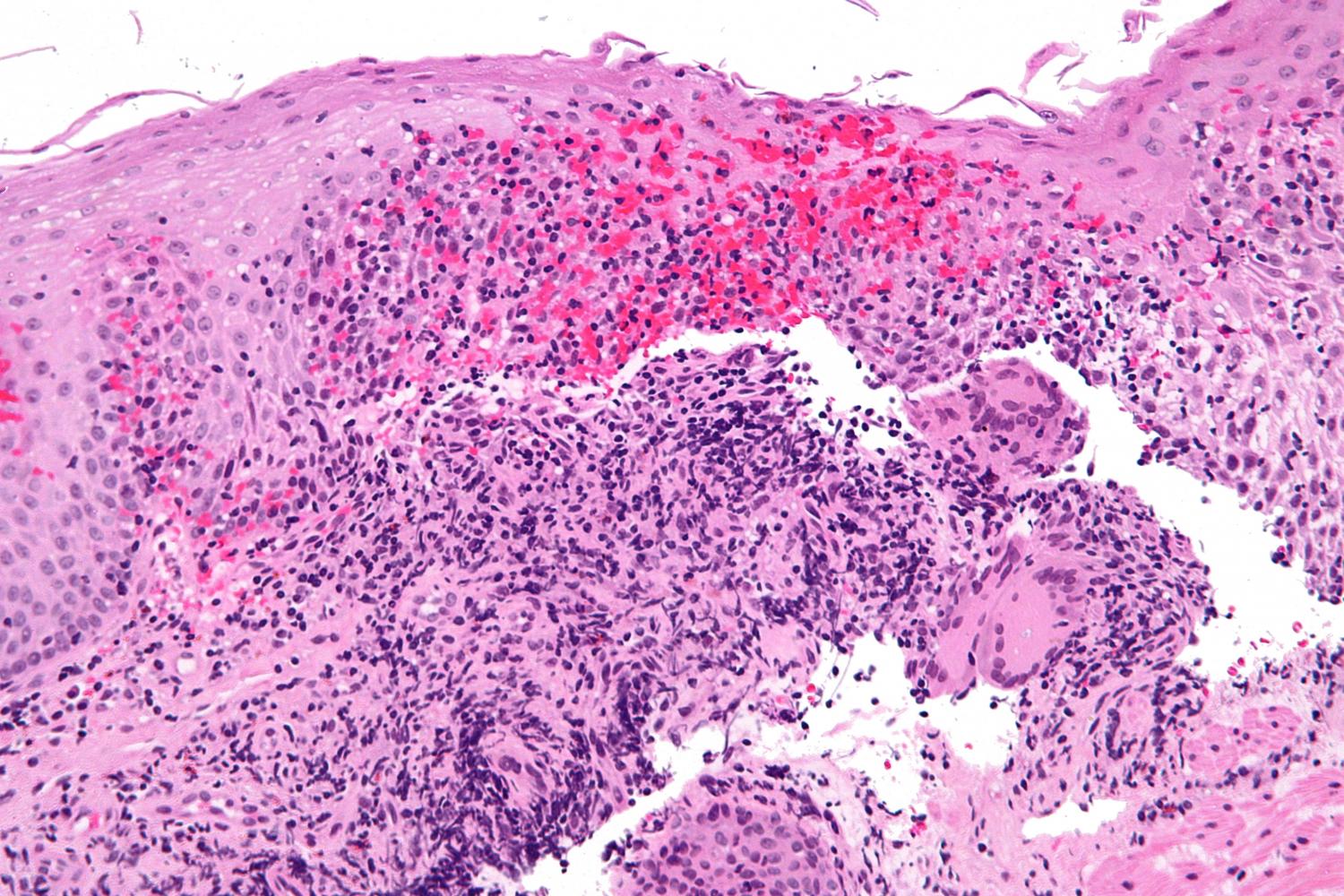
If EBV exposure increases the risk of later Crohn's disease, it could help explain one environmental trigger for IBD and point to new research directions for prevention or treatment. Patients may be interested because the study links a common virus to Crohn's onset years before diagnosis.
Who Should Pay Attention
Researchers studying IBD causes, clinicians who follow IBD research, adult patients with Crohn's disease, and relatives of people with Crohn's interested in disease risk factors.
Study Snapshot
Story typeResearch news
Evidence typeObservational study
Source depthFull source text
What To Know
This article reports that researchers used high-throughput antibody testing (VirScan) and follow-up data to link prior EBV exposure with higher risk of developing Crohn's disease in one adult cohort. The finding strengthens evidence that EBV infection may precede and possibly contribute to Crohn's in some people, but it is not proof of causation.
The authors attempted replication in a pediatric cohort of first-degree relatives and did not find a significant association there; the article discusses several possible reasons (shared genetic risk, age-related immune responses).
Researchers are planning follow-up studies to investigate molecular mechanisms and whether EBV-related immune responses could point to new therapies. This is early-stage, hypothesis-generating research.
It informs where scientists are looking next but does not change clinical care or recommend testing or treatment for EBV in people with or at risk for Crohn's disease.
Keep In Mind
This report summarizes observational cohort findings, not a clinical trial. Associations do not prove causation; the finding was cohort-dependent and did not replicate in a pediatric relative cohort. The article outlines plausible biological mechanisms but experimental confirmation is needed before clinical implications are clear.
Source Details
Review the original publication for the complete reporting, methods, and context.
Observational studyArticle type assigned from Cure8 classification; confirm details in the original source.
Publicationmedicalxpress.com
Indexed viaGoogle News
Source typeResearch news
PublishedMar 3, 2025, 7:57 PM
Content availableFull source text
This Cure8 brief is based on source text from the linked article. Cure8 is informational only and is not a substitute for professional medical advice, diagnosis, or treatment.
This study links an HLA gene (DRB1) to shared T cell receptor patterns in both Crohn’s disease and ulcerative colitis, suggesting common immune targets across IBD subtypes. That could help researchers identify antigens...
This research suggests genetic risk scores could help identify people with IBD who are more likely to have severe disease, which might eventually inform earlier monitoring or treatment decisions. It’s a step toward more...
People with both psoriasis and hidradenitis suppurativa appear to have higher overall morbidity and a greater observed risk of Crohn’s disease. Genetic findings suggest shared biological pathways that could affect how...