
Clinical Journal of Gastroenterology
Cure8 research brief
Cure8 research brief
If a serious infection occurs while on an anti‑TNF drug, patients and clinicians face difficult decisions about when and whether to restart biologic therapy. This case shows one example where switching to mirikizumab after infection control was followed by durable remission without infection recurrence.
Patients with ulcerative colitis on biologics, clinicians managing IBD biologic therapy, patients considering biologic switches after infections.
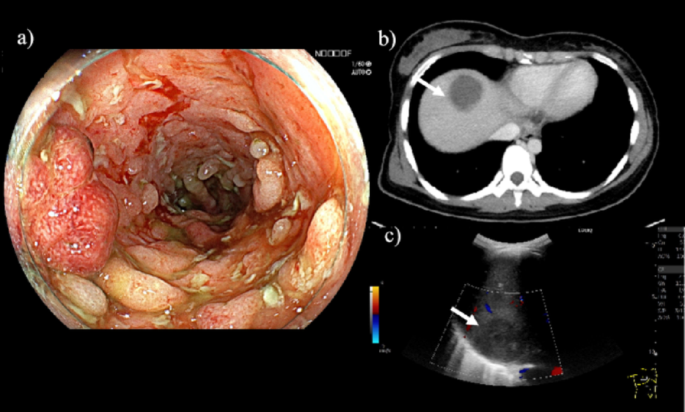
This is a case report of a 19-year-old woman with pancolitis-type ulcerative colitis who developed a pyogenic hepatic abscess while on adalimumab (an anti-TNF). Adalimumab was stopped, the abscess was treated with IV antibiotics and the patient’s infection improved.
After the abscess regressed, induction therapy with mirikizumab (an IL‑23 p19 inhibitor) was started; the patient achieved sustained clinical and endoscopic remission without abscess recurrence on follow-up.
The report suggests mirikizumab can be introduced after adequate control of a deep infection that occurred during anti‑TNF therapy, but it is a single case and not proof of safety for all patients. If you are on or considering biologic therapy, discuss timing of restarting or switching biologics after serious infections with your gastroenterologist.
Decisions depend on infection control, underlying disease activity, and individual risk factors.
Structured-content depth: abstract from Clinical Journal of Gastroenterology. Single-case evidence only; not peer-reviewed beyond journal processes and not a substitute for clinical guidance.
Review the original publication for the complete reporting, methods, and context.
Funding disclosed by the source: Saitama Medical University
This Cure8 brief is based on source text from the linked article. Cure8 is informational only and is not a substitute for professional medical advice, diagnosis, or treatment.
People with ulcerative colitis who have had colectomy can rarely develop inflammation of the small intestine and high-output stomas that are hard to control.
For people with ulcerative colitis treated with infliximab for acute severe disease, whether to keep giving systemic corticosteroids afterward affects infection risk, steroid side effects, and disease control.
This study reports real-world outcomes with granulocyte and monocyte adsorptive apheresis (GMA) in patients with refractory IBD, showing steroid-free remission by week 14 in about one-third of patients and continued...
