Free radical biology & medicine
Cure8 research brief
Cure8 research brief
This preclinical work suggests a new mechanism (NEK7 inhibition) and a colon-targeted formulation of an existing drug could reduce inflammatory cell death in IBD models—an approach that might lead to future therapies that act on epithelial pyroptosis rather than classic immune suppression.
Researchers studying IBD pathogenesis or drug delivery, translational researchers interested in drug repurposing and nanoparticle targeting, and clinicians who follow emerging preclinical therapies.
This study (abstract) reports a lab and mouse-model project identifying nebivolol—an FDA-approved beta-blocker—as an inhibitor of NEK7, and testing a lactoferrin-modified liposomal formulation (LF-Lipo@N) for targeted delivery to the colon.
In vitro assays showed nebivolol binds NEK7 and reduces epithelial pyroptosis; chronic DSS-colitis mice treated with LF-Lipo@N had improved histology and reduced pyroptosis markers compared with free drug, and the targeted formulation limited systemic heart-rate effects.
The work combines target identification, repurposing of an approved drug, and nanoparticle delivery development. Results are reported in cellular assays and a mouse colitis model; the article is an abstract-level journal report rather than a clinical trial. Decisions about human use, dosing, or safety in people are not addressed here.
If you follow research on new IBD treatments, this is an interesting preclinical advance showing a potential anti-pyroptosis approach and a colon-targeted delivery method. It does not change current clinical care.
This report is based on an abstract/full-text from a lab and mouse study (preclinical). Findings in cell cultures and animal models do not predict safety or effectiveness in humans. Nebivolol is currently used as a beta-blocker; repurposing and nanoparticle delivery would require clinical trials.
Review the original publication for the complete reporting, methods, and context.
Conflict statement: Declaration of competing interest The authors declare that they have no known competing financial interests or personal relationships that could have appeared to influence the work reported in this paper.
This Cure8 brief is based on source text from the linked article. Cure8 is informational only and is not a substitute for professional medical advice, diagnosis, or treatment.
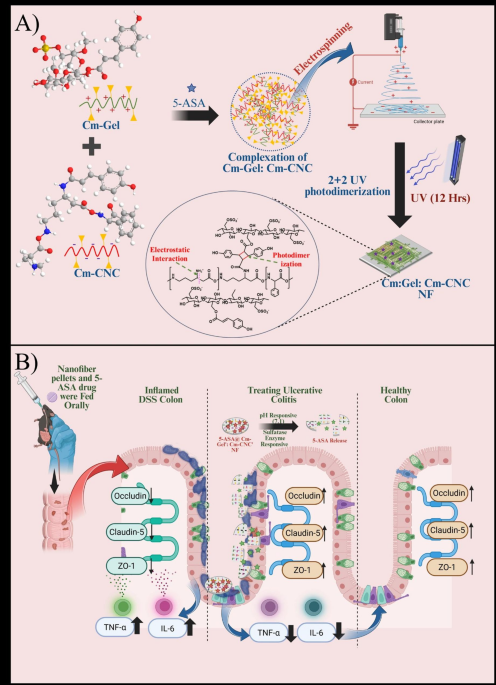
Targeted release of mesalamine to the colon could increase local drug levels and reduce upper-GI exposure and systemic side effects. New delivery platforms may improve effectiveness for ulcerative colitis without...
This work describes a novel engineered probiotic designed to survive the gastrointestinal tract and act specifically at inflamed colitis sites, which could lead to new targeted therapies for IBD if validated in humans.
This study describes a new formulation of baicalein that improved drug solubility and oral absorption and showed benefit in a mouse model of ulcerative colitis—early-stage research that could inform future...