The study suggests a Moringa-derived polysaccharide may reduce inflammation in a mouse model of ulcerative colitis by altering gut microbiota, metabolites, and inflammatory/antioxidant signaling — a potential preclinical step toward new prebiotic-based therapies.
Who Should Pay Attention
Researchers (microbiome, natural products, prebiotics), clinicians following translational IBD research, and patients curious about preclinical dietary-supplement research
Study Snapshot
Story typeResearch paper
Evidence typeResearch paper
Source depthJournal abstract
What To Know
The paper isolated and chemically characterized an acidic Moringa leaf polysaccharide and tested it in mice with DSS-induced colitis.
Treated mice showed changes in gut microbiota (increased relative abundance of taxa such as Intestinimonas) and metabolites (for example DL‑lysine) alongside alterations in NF-κB/MAPK and Keap1‑Nrf2‑HO‑1 pathway–related protein expression, lower pro-inflammatory cytokine release, and higher antioxidant markers.
This is preclinical research in mice; it demonstrates biological plausibility for a Moringa-derived polysaccharide as a functional prebiotic but does not provide evidence that the compound is safe or effective in humans with UC.
Keep In Mind
This is an abstract/animal-study report (preclinical). Results in mice do not establish safety or efficacy in humans; the paper characterizes chemical structure and reports mechanistic associations but not clinical outcomes.
Source Details
Review the original publication for the complete reporting, methods, and context.
This Cure8 brief is based on source text from the linked article. Cure8 is informational only and is not a substitute for professional medical advice, diagnosis, or treatment.
Researchers tested a ginger-derived glucan that reduced inflammation and reshaped the gut microbiota in a mouse colitis model — a potential prebiotic approach that could inform future IBD therapies or dietary strategies.
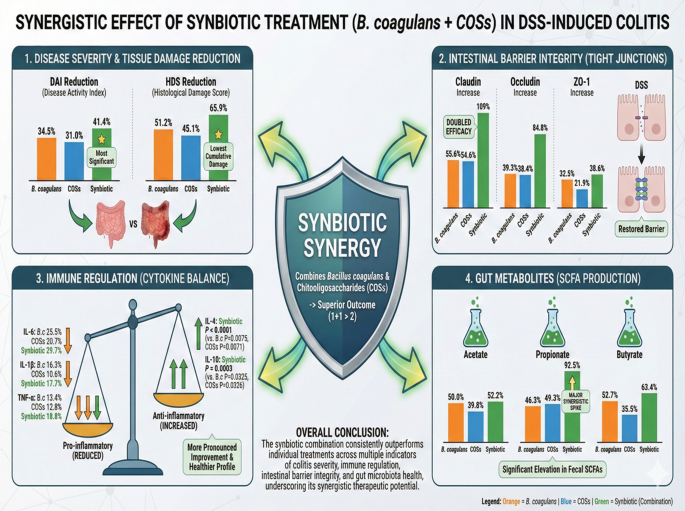
People with ulcerative colitis may be interested because synbiotic approaches aim to change the gut microbiome and intestinal barrier and therefore could become a future therapeutic option or adjunct. The paper...
The study shows a probiotic strain reduced inflammation and improved gut barrier and microbiome/metabolite profiles in a mouse colitis model, indicating a possible new avenue for UC therapies worth further research.