Altered NAD metabolism may influence inflammation and tissue repair in IBD; understanding host and microbial contributions could open new research directions for metabolic biomarkers or therapeutic targets.
Who Should Pay Attention
Researchers studying IBD pathophysiology, microbiome scientists, metabolic biomarker developers, and clinicians interested in emerging mechanisms of intestinal inflammation.
Study Snapshot
Story typeResearch paper
Evidence typeResearch paper
Source depthJournal abstract
What To Know
Researchers used multi-omics and stable isotope–labeled NAD precursors given by IV infusion in a DSS mouse model of colitis to trace NAD biosynthesis and flux in tissues and the gut lumen.
They found that during acute colitis host tissues compensated for reduced de novo NAD synthesis from tryptophan by increasing flux through the salvage pathway, while gut microbes increased their own de novo NAD production — suggesting a coordinated host–microbiota metabolic response under inflammatory stress.
These results highlight dynamic, tissue-specific rewiring of NAD metabolism in inflammation and identify microbial metabolism as a potentially important contributor to overall NAD homeostasis during colitis.
Keep In Mind
This report is based on an abstract/partial extraction from a preclinical (mouse DSS colitis) study published in Cell Reports. Findings are mechanistic and in an animal model; they do not directly establish effects in people with IBD.
Source Details
Review the original publication for the complete reporting, methods, and context.
Research paperEvidence type derived from source or registry metadata.
PublicationCell reports
AuthorsAbrar I Alsaadi, Lina Wehkamp, Anant A Pothakamury +15 more
InstitutionDepartment of Biochemistry and Molecular Biology, The Huck Institute of Life Sciences, Pennsylvania State University, University Park, PA, USA.
Conflict statement: Declaration of interests The authors declare that they have no known competing financial interests or personal relationships that could have appeared to influence the work reported in this paper.
This Cure8 brief is based on source text from the linked article. Cure8 is informational only and is not a substitute for professional medical advice, diagnosis, or treatment.
Researchers used machine learning to prioritize microbiome-related regulatory targets in Crohn's disease, which may guide future lab and clinical research into microbial pathways (like butyrate-related metabolism) that...
Researchers report links between copper-driven cell death pathways and IBD biology; identifying cuproptosis-related biomarkers or drugs could open new diagnostic or therapeutic avenues for people with Crohn's disease or...
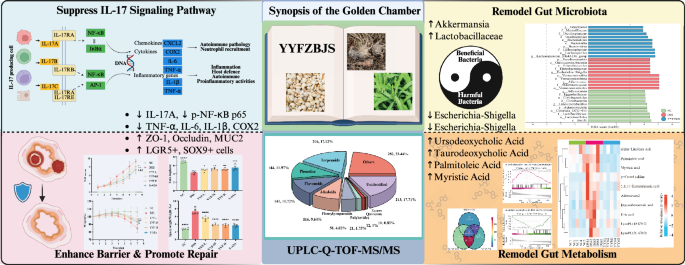
The study suggests a multi-component herbal formula may affect inflammation, the intestinal barrier, epithelial repair, the gut microbiome, and fecal metabolites in a mouse colitis model—topics relevant to understanding...