eurekalert.org
Cure8 news brief
Cure8 news brief
This study suggests a different treatment target for Crohn’s disease: fixing damaged intestinal lining rather than only suppressing inflammation. If validated in humans, repurposed cancer drugs could speed development of therapies that help the gut barrier heal.
Patients with Crohn's disease, clinicians treating IBD, and researchers working on epithelial biology, drug repurposing, or translational gastroenterology.
University of Houston-led researchers report lab findings that Crohn’s disease may be driven by persistent stress signaling in intestinal epithelial cells that prevents normal repair.
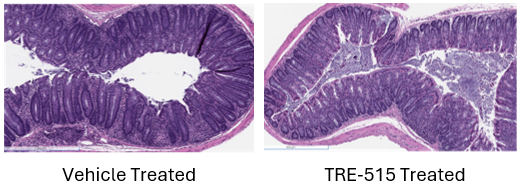
In patient-derived organoids, low doses of two existing cancer drugs (pazopanib and ponatinib) reduced that stress signaling and cell death, and promoted epithelial regeneration.
The team frames this as shifting focus from immune suppression to restoring the gut barrier, and highlights the potential advantage of repurposing FDA-approved cancer drugs to shorten development time. The work used patient-derived organoids and was published in Gastro Hep Advances.
This is preclinical research (lab and organoid experiments) describing a possible therapeutic approach; it does not report results from human clinical trials or change current treatment recommendations.
Early-stage, preclinical research using patient-derived organoids; results do not equal clinical efficacy yet and further trials would be needed. The article is a university press release summarizing a study published in Gastro Hep Advances.
Review the original publication for the complete reporting, methods, and context.
This Cure8 brief is based on source text from the linked article. Cure8 is informational only and is not a substitute for professional medical advice, diagnosis, or treatment.
The story describes a new drug mechanism (dCK inhibition) that reduced inflammation in an IBD mouse model, which could point to a different way to target overactive immune cells in Crohn’s disease. It’s early-stage...
Patients with Crohn’s disease and other IBD forms may see new research directions aimed at blocking immune cell proliferation by targeting nucleotide metabolism. This is early-stage, preclinical work presented at a...
Researchers are exploring circRNAs as new molecular players in IBD inflammation; that could lead to future biomarker tests or novel treatments targeting immune pathways relevant to Crohn’s disease and ulcerative colitis.