Food & function
Cure8 research brief
Cure8 research brief
This study identifies a specific probiotic–commensal interaction that improved colitis in mice and points to a metabolite (phosphatidylcholine) and metabolic pathway that might help repair the gut barrier — a pathway potentially relevant to IBD therapy development.
Researchers, clinicians, and patients interested in probiotics, microbiome therapies, and IBD mechanisms.
This research suggests a specific probiotic (Lactobacillus pentosus) might help colitis in mice by changing the microbiome (boosting Muribaculum) and increasing a host lipid (phosphatidylcholine) important for the gut barrier. The findings highlight a possible microbe–metabolite pathway rather than a direct probiotic drug effect in people.
The work appears to be mechanistic and preclinical: helpful for understanding how probiotic strains could work, but not an endorsement to use this probiotic in humans without clinical trials. Methods mentioned include database mining, strain screening from fermented vegetables, mouse colitis models, and multi-omics analyses.
Findings are from database mining and mouse experiments reported in the article abstract (structured content depth: abstract). Human clinical benefit is not demonstrated; treat this as mechanistic/preclinical evidence.
Review the original publication for the complete reporting, methods, and context.
This Cure8 brief is based on source text from the linked article. Cure8 is informational only and is not a substitute for professional medical advice, diagnosis, or treatment.
This study suggests a specific probiotic strain may help reduce colitis in mice by changing the gut microbiome and boosting host phosphatidylcholine production — a pathway that could be relevant to gut barrier repair in...
Fibrosis and stricturing are key problems in Crohn’s disease with limited therapies; this study identifies a microbiota–bile acid–GPBAR1 pathway by which a specific probiotic mix reduced inflammation and fibrosis in...
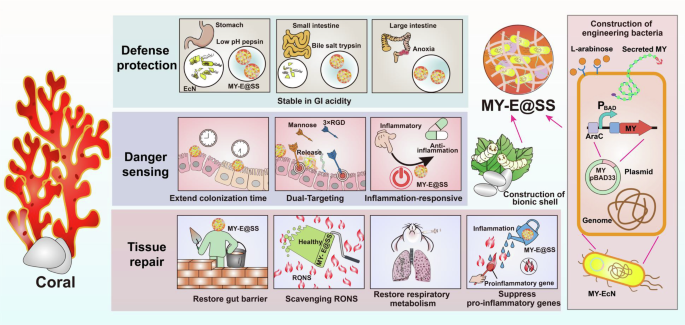
This study presents an engineered probiotic delivery platform that could improve survival and targeted action of live microbial therapies for IBD, potentially reducing local inflammation while affecting the gut...