The paper links ileitis and changes in enterohepatic bile-acid composition to altered Th17 immune activity, suggesting bile-acid balance could influence inflammation in Crohn’s disease and might be a target for future precision therapies.
Who Should Pay Attention
Researchers (microbiome, immune-pathways, bile-acid biology), IBD clinicians, and patients interested in emerging preclinical research on Crohn’s disease mechanisms.
Study Snapshot
Story typeResearch paper
Evidence typePreprint
Study statusPreprint
Source depthJournal abstract
What To Know
The study uses mouse experiments and analyses of Crohn’s patient tissue to show that different bile acids compete for nuclear receptors that regulate Th17 cells. In healthy mice, the primary bile acid tβMCA counteracts two secondary bile acids (tDCA, tLCA) that activate RORγt and support Th17 responses.
When ileitis reduces enterocyte bile-acid transport, tβMCA levels fall and Th17-promoting activity of tDCA/tLCA increases. In the TnfΔARE mouse model, restoring tβMCA levels rebalanced bile-acid–dependent control of Th17 cells, suggesting a possible avenue for targeted therapies that modify bile-acid pools or signaling.
This is preclinical/basic-science work: it generates mechanistic insight and a potential therapeutic concept but does not report clinical trials or treatments ready for patient use.
Keep In Mind
Preprint on bioRxiv: results are preliminary and not peer-reviewed. Main evidence comes from mouse models (TnfΔARE) and Crohn’s patient tissue; clinical relevance and therapeutic safety/effectiveness remain to be established.
Source Details
Review the original publication for the complete reporting, methods, and context.
This Cure8 brief is based on source text from the linked article. Cure8 is informational only and is not a substitute for professional medical advice, diagnosis, or treatment.
Fibrosis and stricturing are key problems in Crohn’s disease with limited therapies; this study identifies a microbiota–bile acid–GPBAR1 pathway by which a specific probiotic mix reduced inflammation and fibrosis in...
The study identifies a new compound that reduced colitis severity in mice by acting on macrophage NF-κB signaling, lowering MMP7, improving epithelial barrier markers, and altering the gut microbiome — mechanisms...
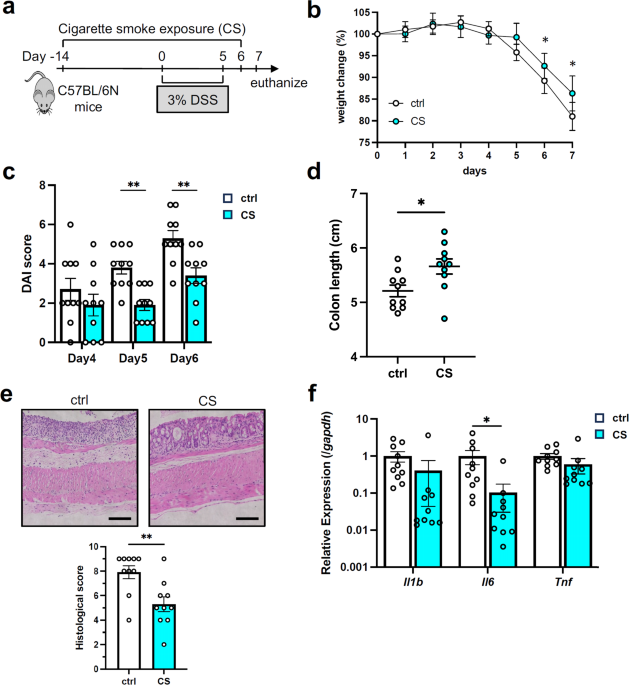
This preclinical study suggests cigarette smoke alters gut microbes and metabolites in ways that can either protect or worsen colitis depending on the model; it identifies 4-HBA as a metabolite that reduced inflammation...