ClinicalTrials.gov
Cure8 trial brief
Cure8 trial brief
This national pediatric IBD network aims to collect clinical data and biological samples to study causes of early-onset IBD, track outcomes including intestinal healing and growth, and improve treatment strategies — work that could inform future prevention, diagnostics, and personalized care for children with IBD.
Pediatric patients with IBD and their caregivers; pediatric gastroenterologists and clinical teams; researchers focused on genetics, microbiome, and biomarkers; patient advocacy groups.
The Canadian Children Inflammatory Bowel Disease Network (CIDsCaNN) is an observational, prospective inception cohort and biobank enrolling Canadian children and adolescents with IBD to study why pediatric IBD develops and to evaluate best treatment strategies.
The project will collect clinical data, demographic and lifestyle information, and biological samples (biobank) for long-term storage so future genetic, microbiome, and biomarker research can be performed.
The network will follow approximately 2,400 participants from diagnosis until transfer to adult care and use REDCap for centralized data capture and quality control. The Network emphasizes multi-site governance, training, and processes for data integrity. Access to stored samples or data for future studies will require committee and REB review.
The coordinating centre is at The Hospital for Sick Children (SickKids) in Toronto.
The record describes study design, goals, cohort size (~2400) and infrastructure (biobank, REDCap, national coordinating centre). It does not report results; future research proposals using the biobank will require REB approval.
Review the original publication for the complete reporting, methods, and context.
This Cure8 brief is based on source text from the linked article. Cure8 is informational only and is not a substitute for professional medical advice, diagnosis, or treatment.
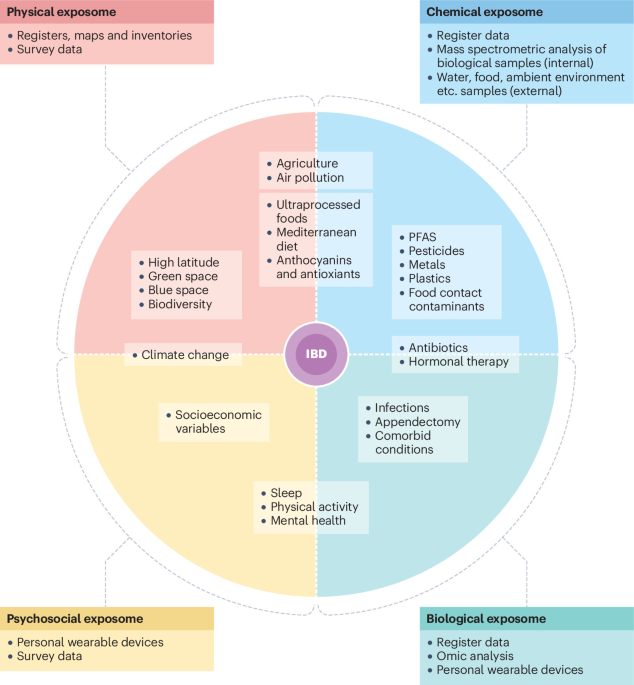
The exposome perspective emphasizes that many non-genetic, potentially modifiable environmental factors likely influence IBD risk. Understanding these factors could help guide prevention research and public-health...
The work suggests specific host genes and cell types that might mediate links between gut microbes and IBD, which could direct future laboratory research into mechanisms and potential biomarkers.
The review highlights how microbial metabolites, epigenetic regulation, and mitochondrial metabolism interact to shape inflammation and barrier function in IBD. Understanding these links could help identify new...