International Journal of Molecular Sciences
Cure8 research brief
Cure8 research brief
The work suggests specific host genes and cell types that might mediate links between gut microbes and IBD, which could direct future laboratory research into mechanisms and potential biomarkers.
Researchers studying IBD genetics, microbiome–host interactions, and single‑cell biology; clinicians interested in the biological drivers of IBD; translational scientists seeking candidate targets for functional follow‑up.
The paper applied two‑sample Mendelian randomization using instruments for 211 microbial taxa and tested associations with IBD, CD, and UC. They report 13 primary associations after heterogeneity filtering, with three associations replicating in an independent cohort (FinnGen) and several additional associations showing concordant directions.
Colocalization and cis‑eQTL analyses highlighted SENP7 (blood eQTL) and ZBTB11‑AS1 (colon epithelium) as prioritized candidate host mediators. Single‑cell mapping localized SENP7 expression mainly to T/NK cells and ZBTB11‑AS1/VIPR1 to epithelial/goblet cells in colon tissue.
The study integrates genetic inference (MR), replication, eQTL colocalization, and single‑cell localization to move from population associations toward specific host genes and cell types that might mediate microbe–host effects. These results are hypothesis‑generating and intended to guide lab-based functional follow-up rather than change clinical care.
This article presents an abstract/summary of integrative genetic and single‑cell analyses. Findings are prioritized candidate genes from statistical and genomic colocalization methods and require experimental validation before clinical application.
Review the original publication for the complete reporting, methods, and context.
This Cure8 brief is based on source text from the linked article. Cure8 is informational only and is not a substitute for professional medical advice, diagnosis, or treatment.
The review highlights how microbial metabolites, epigenetic regulation, and mitochondrial metabolism interact to shape inflammation and barrier function in IBD. Understanding these links could help identify new...
The study synthesizes many stool metagenomes to find consistent microbial species, functional pathways, and strain-level differences linked to IBD and to distinctions between Crohn’s disease and ulcerative...
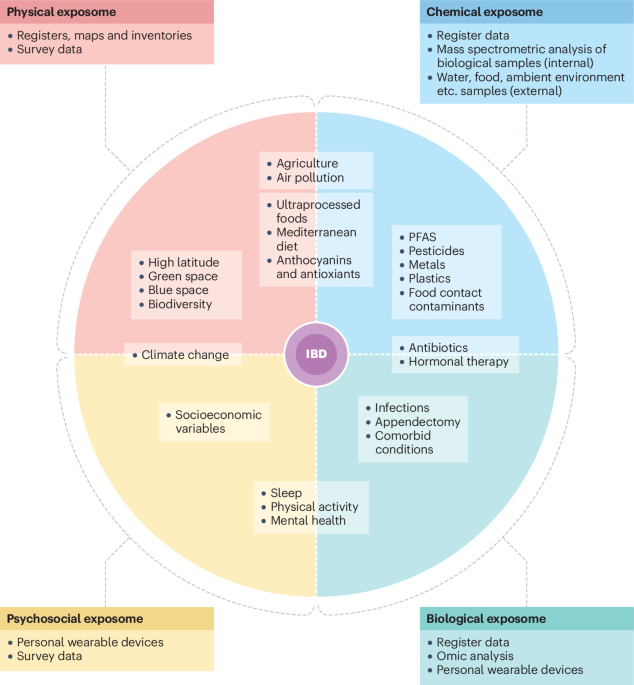
The exposome perspective emphasizes that many non-genetic, potentially modifiable environmental factors likely influence IBD risk. Understanding these factors could help guide prevention research and public-health...