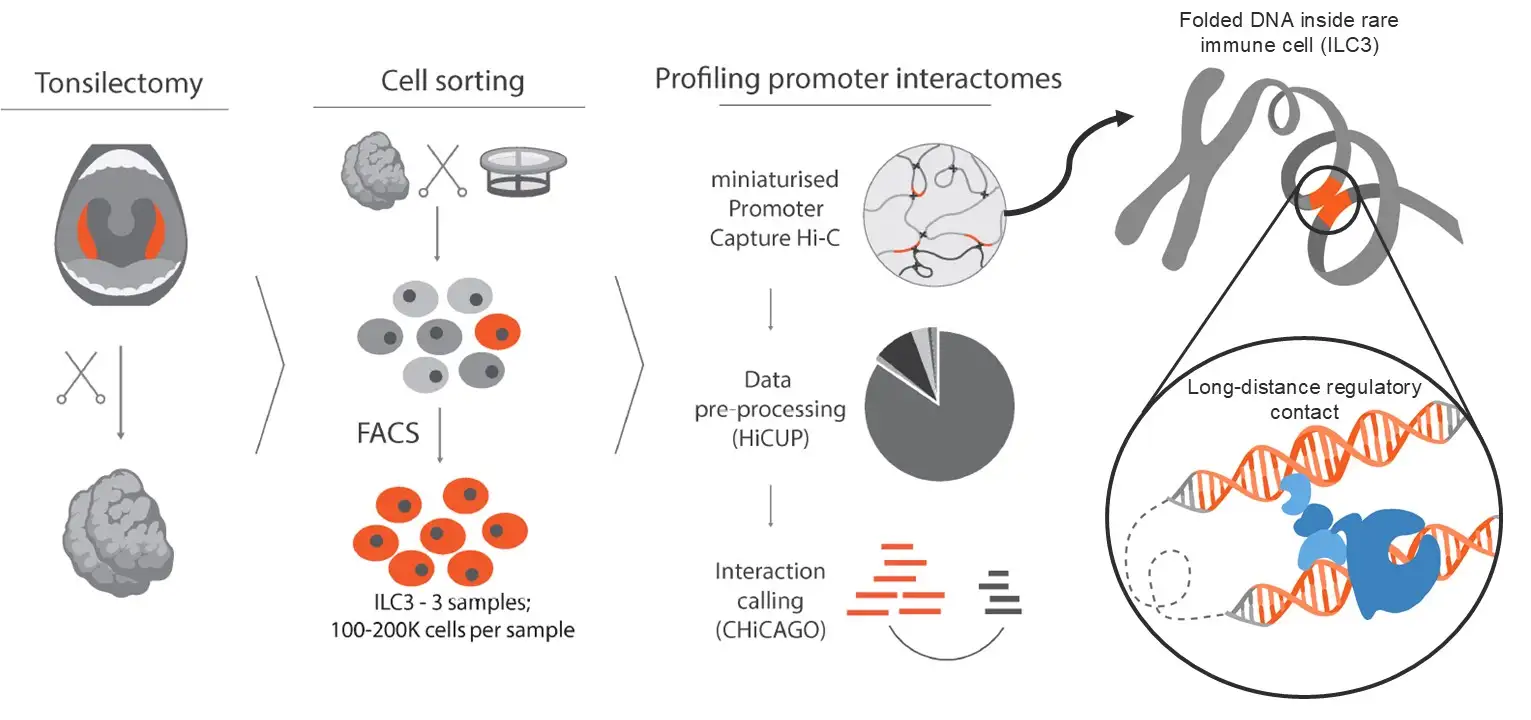
This work points to new genes and immune-cell mechanisms that could help explain unexplained genetic risk for Crohn’s disease and suggests that genes known for other diseases might play unanticipated roles in gut immunity.
It’s mainly relevant to research planning and future biomarker or therapeutic discovery rather than current patient care.
Who Should Pay Attention
Researchers studying IBD genetics, immunologists focused on tissue-resident gut immune cells (ILC3s), clinical researchers planning functional follow-up studies, and informed patients interested in IBD research developments.
Study Snapshot
Story typeMainstream News
Evidence typeEarly laboratory research
Source depthFull source text
What To Know
This paper reports a technical advance—mini-Capture Hi-C—that can map enhancer–gene contacts in scarce tissue-resident immune cells (ILC3s) and thereby assign likely target genes for Crohn’s disease genetic signals. The map nominated >100 candidate genes active in ILC3s; about half were previously implicated in IBD and the rest are new leads.
One unexpected candidate was CLN3, a gene classically linked to childhood Batten neurodegeneration. The researchers showed that altering CLN3 levels in a mouse ILC3-like cell line changed gene expression after stimulation and affected cytokine secretion, but they explicitly state this does not prove CLN3 causes Crohn’s disease.
The main takeaways are methodological: the miniaturized approach opens the door to studying 3D genome contacts in rare gut immune cells, generating testable hypotheses about genes and pathways involved in IBD. Clinical implications are speculative at this stage; more work in human patient samples and in vivo models is needed.
Keep In Mind
Findings are based on a new mapping method and on functional tests in a mouse cell line, not in human patient tissues; the authors caution CLN3 is a candidate, not a proven causal gene for Crohn’s. This is early-stage basic research reported in a mainstream science news story summarizing a Nature Genetics paper.
Source Details
Review the original publication for the complete reporting, methods, and context.
This Cure8 brief is based on source text from the linked article. Cure8 is informational only and is not a substitute for professional medical advice, diagnosis, or treatment.
ILC3s are rare but important for gut immunity; linking Crohn’s disease genetic risk to the genes they regulate helps move from statistical association toward biological mechanisms that could explain disease pathways.
The work helps bridge genetic association signals and the specific immune cells in the intestine where they may act, offering new candidate genes and a method that can probe rare cell types important to IBD biology.
People with Crohn’s disease may benefit from research that identifies the specific genes and immune pathways driving inflammation — this study points to over 100 genes in gut ILC3 cells that could explain how genetic...